






 Portuguese
  Spanish


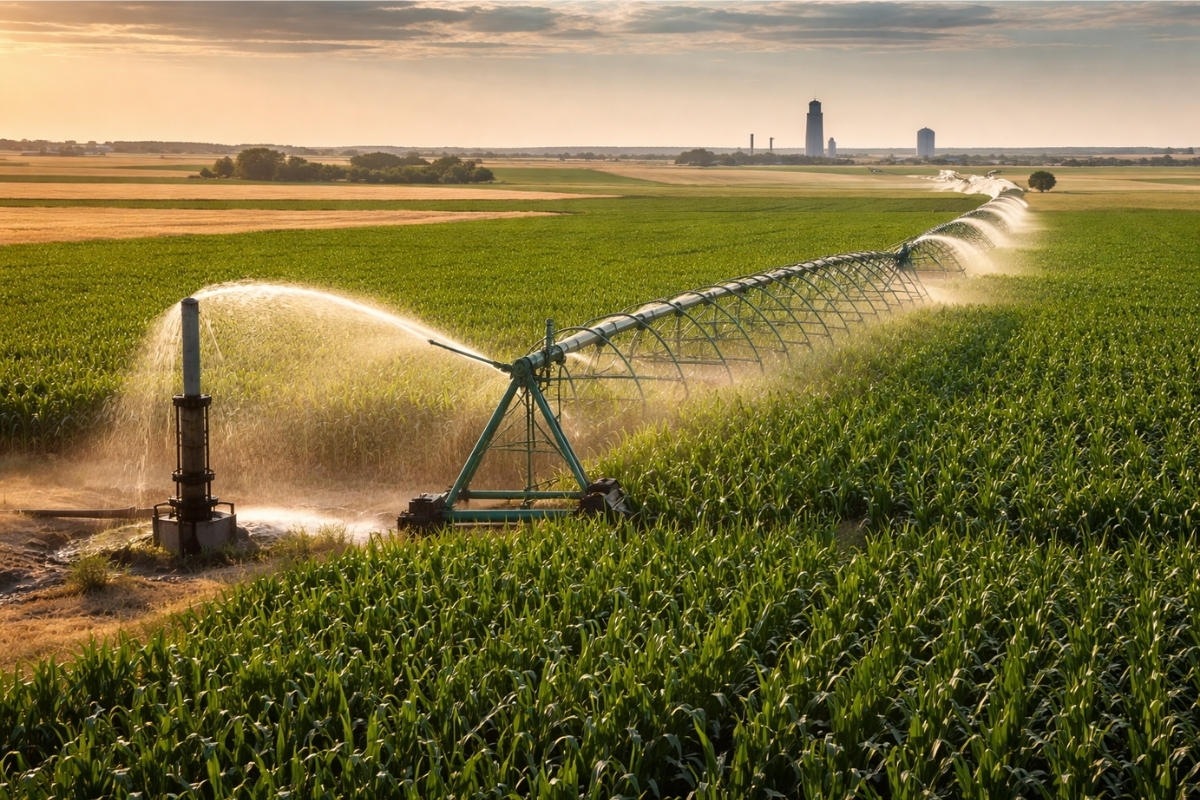


The Fall of the High Plains Aquifer Pressures Crops, Drives Up Pumping Costs, and Puts at Risk the Stability of One of the Largest Agricultural Regions on the Planet
The foundation of modern agriculture in the central United States relies on a resource that almost no one sees. The High Plains Aquifer supplies farms, cities, and irrigation systems that keep crops productive even when rainfall fails.
The problem is that this underground reservoir is being drained faster than it can recover. As the level drops, the cost of accessing water increases, and entire areas may lose the ability to irrigate as before, directly affecting food production.
This change does not happen all at once, nor with obvious signs on the surface. The fields may remain green for a while, but the risk grows when water ceases to arrive with the same intensity, and the agricultural model begins to operate at its limits.
-
Ancient Ritual Circle, Hidden for 5,000 Years, Discovered in Scotland’s Machrie Moor Using Sensors, Revealing a “Phantom Stonehenge”

-
Engineers Develop Fridge-Sized Machine to Produce 95-Octane Synthetic Fuel from Air and Water, Aiming to Sustain Combustion Engines Without Oil
-
Two-Armed Robot Uses AI to Reassemble Destroyed Pompeii Frescoes, Solving an “Impossible” Puzzle
-
New Law in Brazil Requires Breaks for Type 1 Diabetes Management at Work, School, and Public Exams


What Happened to the High Plains Aquifer and Why It Became an Agricultural Alert
The High Plains Aquifer is one of the largest underground water systems in the United States, covering parts of eight states, from South Dakota to Texas. It became essential because it supports irrigation in a region that concentrates large-scale production.
When modern irrigation expanded, the aquifer began to function as a significant buffer against lack of rain. Water pumped from the ground ensured more stable harvests and allowed naturally dry areas to maintain productivity for decades.
Over time, continuous extraction created an imbalance. Levels began to drop in various areas, changing the logic of the fields since access to water was no longer guaranteed in many regions.
Why Water Extraction Outpaced Natural Replenishment

An aquifer is not an open underground lake but a collection of layers of soil, sand, gravel, and rocks that store water in the pores. This water can be replenished, but the process is slow and depends on infiltration and recharge over time.
Agricultural pumping, on the other hand, is immediate and intense. With thousands of irrigation systems operating for long periods, extraction can exceed natural replenishment, especially in areas where recharge is already limited.
This is the crux of the collapse: water leaves faster than it comes back. The consequences appear in a chain, with declining levels, rising costs, and an increasing risk of well failures.
What Changes in Practice When the Aquifer Level Begins to Drop
When the level drops, the first change is technical and financial. Wells need to be deepened, pumps work harder, and the energy required to draw water increases, raising operational costs in the fields.
Even with irrigation functioning, the safety margin decreases. During periods of heat or drought, pressure on the system grows, and the producer becomes increasingly reliant on a resource that is more expensive and less available.
In some areas, the impact may be direct on production. With less water, irrigation loses strength, and planting may require adjustments, reducing yield potential and increasing risk in more challenging harvests.
Why Collapse Can Happen Without Clear Surface Signs
A drought is usually visible, with rivers receding and vegetation drying. The decline of an aquifer is different because the problem lies beneath the soil and can progress while the crops still appear normal.
The fields may remain green because pumping keeps the system running. However, this stability is temporary, as it depends on a reserve that diminishes with each intense use season.
The most critical point appears when the well fails to provide the necessary volume. At that moment, the impact is not gradual; it becomes a practical rupture, with insufficient irrigation and urgent decisions to maintain production.
Who Can Be Affected and Why This Affects Food Prices
The High Plains Aquifer supports a region that supplies domestic markets and also influences global food chains. When water becomes scarcer, production can become less predictable and more expensive.
This pressures producer costs, increases the risk of losses during dry periods, and may reduce the capacity to maintain large irrigated areas. The effect spreads because agriculture is not an isolated sector; it feeds industries, logistics, and exports.
In the long term, water instability tends to reflect on supply, prices, and security of supply. Even those living far from the fields may feel the impact when production weakens and costs rise.
What May Happen From Now On With Irrigation in the Central United States
The most likely path involves adaptation. Irrigation may continue to exist, but with adjustments that reduce waste and limit dependence on constant extraction in more vulnerable areas.
The producer may be compelled to rethink practices and choose more efficient strategies to keep water available longer. In some regions, the change could mean planting with less irrigation or seeking management alternatives to reduce consumption.
The scenario also demands monitoring and planning because the aquifer’s decline does not affect the entire territory in the same way. Areas with higher usage pressure tend to feel it first, while others may maintain stability for longer.
The High Plains Aquifer has ceased to be just a quiet resource and has become a decisive factor for the future of agriculture in the central United States. The decline in levels does not appear dramatically, but it changes the field from within, increasing the cost of water access and reducing the safety margin for crops.
If the trend continues, the impact will go beyond local production and may affect supply chains and prices. The groundwater that sustained decades of agricultural expansion has now become a real limit, with direct effects on food stability both domestically and abroad.







Muito bom. Lembrei-me de um produtor de manga de Livramento de Nossa Senhora, Bahia, em franco plantio de uma nova lavoura de manga, usando um poço tubular de 11 mil litros de vazão. Alertei: cuidado, o poço pode secar. E secou. Perderam todo o trabalho de plantio.
Obrigado pelo texto. Bem escrito, bem embasado. Parabéns @
Excelente texto. Parabéns. O que incomoda são os anúncios que desviam a leitura. Professor da Fatec Taquaritinga SP, pesquisador com uso de geotecnologias para avaliação de mudanças ambientais no espaço geográfico.
Muito obrigado pelo seu comentário e pelas palavras de incentivo!
Fico muito feliz que tenha gostado do texto.