






 Portuguese
  Spanish


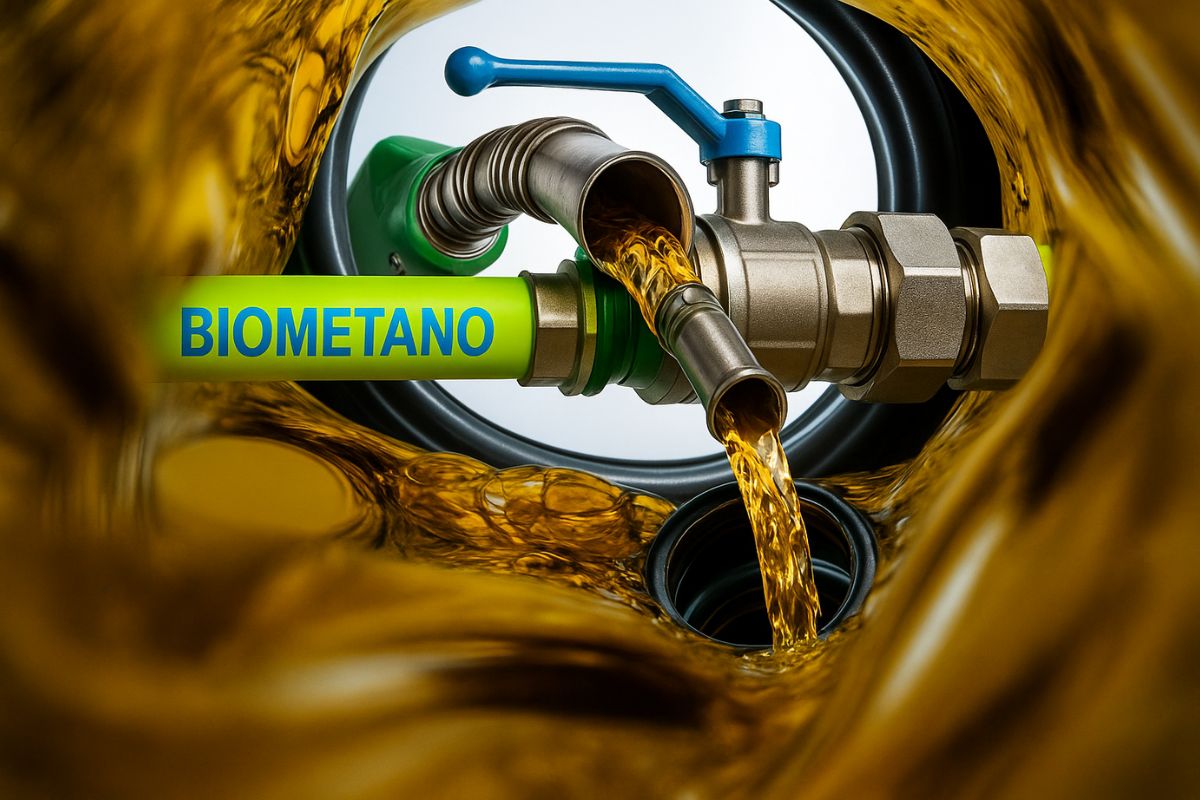

Approved in 2024, the Future Fuel Law Makes the Blending of Renewable Gas with Fossil Gas Mandatory Starting in 2026, Boosting Biogas Projects in Landfills, Power Plants, and Companies Like Petrobras, Gas Verde, and Orizon
Biomethane, a renewable fuel derived from biogas, is consolidating as one of the pillars of Brazil’s new energy matrix. With the potential to replace up to 70% of diesel consumed in the country, the sector is expected to attract R$ 25 billion in investments by 2030, mobilizing large companies and projects spread across various regions.
The regulatory milestone came with the Future Fuel Law, which will require, starting in 2026, the blending of renewable gas with natural gas. As a result, producers, distributors, and state governments have already started a race to increase production, build pipelines, and offer tax incentives to accelerate the use of biomethane in transportation and industry.
What Is Biomethane and Why Has It Gained Momentum Now
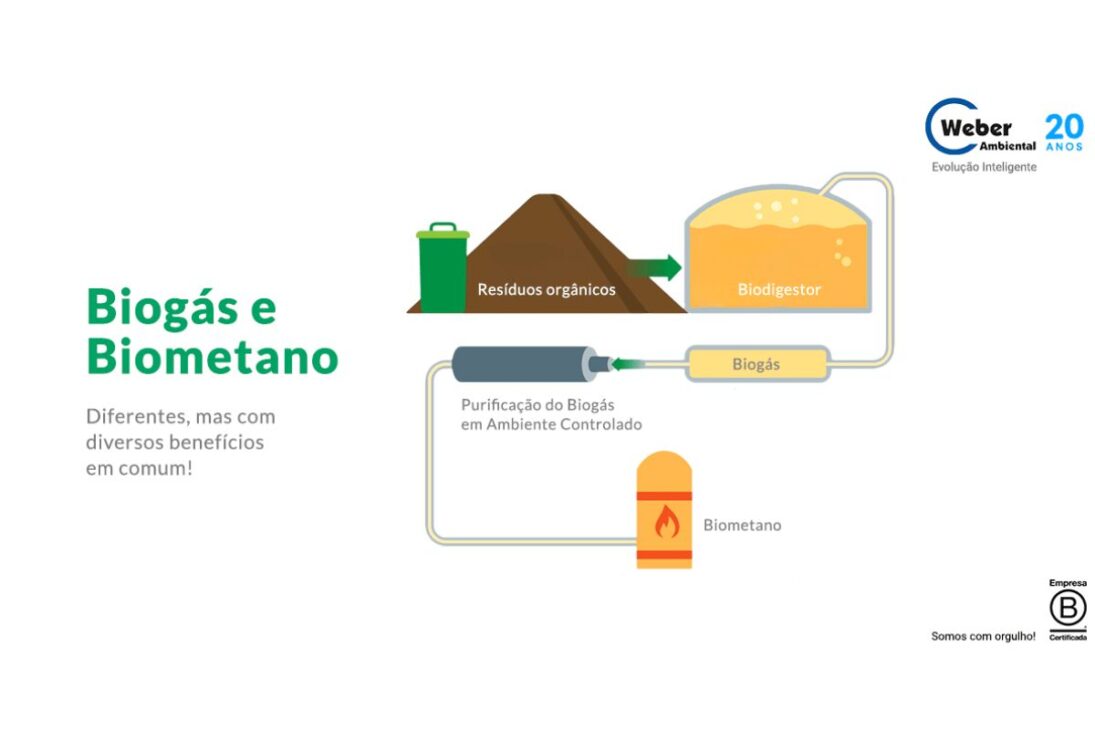
Known as “country pre-salt,” it has a chemically similar composition to natural gas, and can be used directly in networks, vehicles, and industries without adaptations.
-
Brazil’s Federal Revenue Auction: iPhone 13 for $95, PlayStation 4 for $80, and Volkswagen Jetta for $2,600 Among 232 Lots Available

-
Tech Giant Oracle Lays Off 21,000 Employees and Invests $70 Billion in Artificial Intelligence

-
Chilean Giant Acquires St. Marche, Expanding from Discount to Premium Supermarkets in São Paulo’s High-End Retail Market
-
After 60 Years of Selling Cheap Milk, Brazilian Family Invests in $4,000 Equipment to Transform Farm’s Milk into Premium Sweets, Producing 2 Tons Daily and Aiming for $6.4 Million


The recent turnaround in the sector came with the regulation of the Future Fuel Law, which establishes mandatory biomethane usage targets — starting at 1% in 2026, but potentially rising to 10%.
It will be possible to use Guarantee of Origin Certificates (CGOB) as an alternative for achieving the target, which attracts investors and creates a parallel market.
Despite the enthusiasm, the sector still faces uncertainties. The 1% target has not yet been officially set by the National Energy Policy Council (CNPE), which may hinder the compliance with the timeline already in 2026.
Traceability and the credibility of the certificates are also open technical and regulatory challenges.
Who Is Investing and What Will Be the Impact
Companies like Petrobras, Gas Verde, and Orizon are among the protagonists in this new cycle.
Petrobras is already negotiating with sector players to invest in existing plants, expecting to announce contributions by the second quarter of 2026.
Gas Verde, the largest producer in Latin America from landfills, has two operational units producing 160 thousand m³ per day and plans to reach 650 thousand m³/day by 2028, distributed across six states.
In addition to serving industry, biomethane already fuels heavy fleets of companies like Henkel and L’Oréal.
Orizon is also accelerating. With a plant in Paulínia (SP) and two more about to operate, the company estimates reaching 1.3 million m³/day by 2029.
Circularity is an asset: urban waste becomes gas, creating value where there was once environmental liability.
The Logistics Challenge and the Construction of New Green Corridors
Despite the great potential, logistics is a significant bottleneck.
As the plants are located inland and the pipelines are on the coast, transportation relies on trucks — which increases costs and emissions, countering decarbonization efforts.
To address this, companies like Necta, part of the Cosan Group, plan to create sustainable corridors linking production hubs to consumer centers.
The distributor has already defined 20 biomethane fuel stations, with 10 in operation by the end of the year, and is mapping routes between São Paulo, Mato Grosso, Minas Gerais, and Paraná.
The goal is clear: replace diesel with biomethane in cargo transportation, especially in regions with busy highways and significant agro-industrial production.
Necta’s concession area includes, for example, Presidente Prudente, the first city in Brazil fully supplied with biomethane.
State Incentives and the Role of Public Policies
States like São Paulo, Rio de Janeiro, and Mato Grosso do Sul already offer significant tax benefits, such as ICMS reduction and IPVA exemption for vehicles powered by biomethane.
These incentives are considered crucial by companies in the sector when deciding where to invest.
Additionally, BNDES has already begun financing new plants.
Gas Verde, for instance, received R$ 131 million for two units, with one of them in Pernambuco having a capacity of 45.6 thousand m³/day, set to start operating in 2026.
The Brazilian potential is enormous. There are around 3,000 open-air dumps that can be transformed into productive landfills, and sugarcane plants with the capacity to produce millions of cubic meters of gas per day.
The country has the raw material, demand, and scale to lead globally.
Do you believe that biomethane will actually be able to replace diesel in heavy transportation? Do you think the current incentives are sufficient to unlock this market? Leave your opinion in the comments — we want to hear from those who live this in practice.


