Portuguese
  Spanish


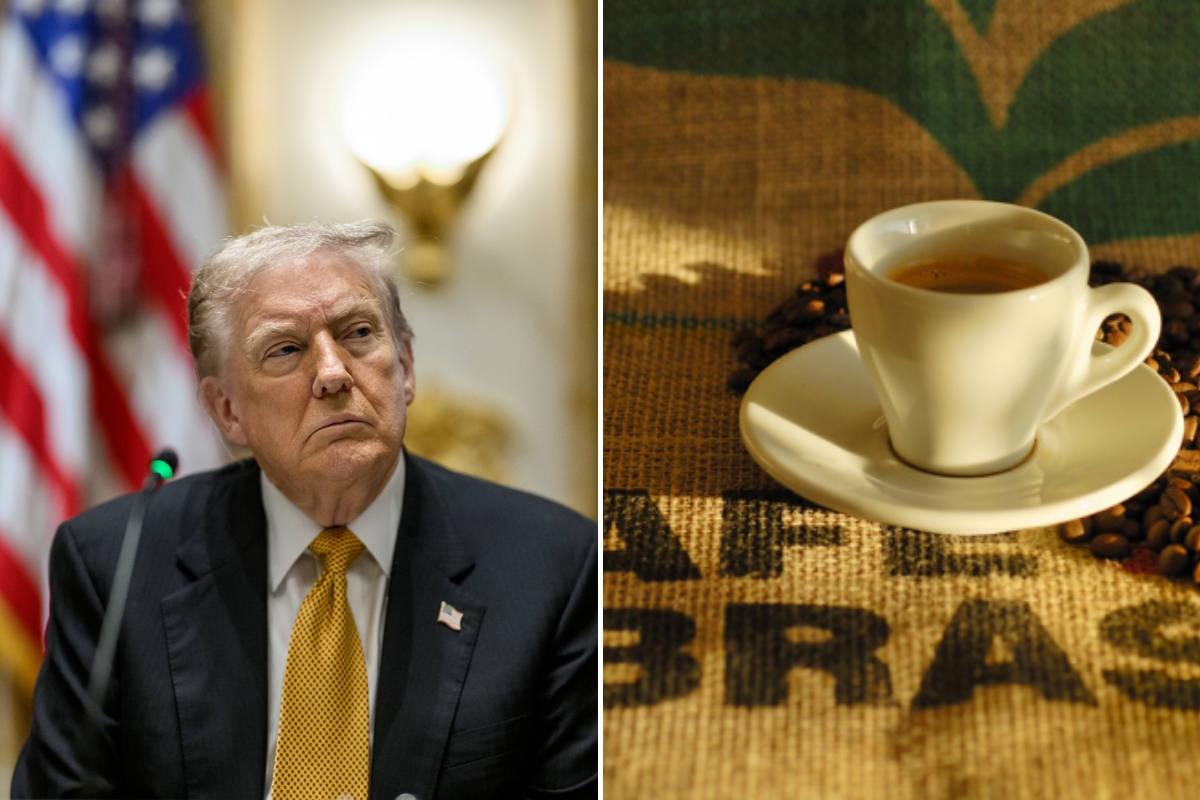

Donald Trump Announced That He Intends to Reduce Tariffs on Imported Coffee, but Without Mentioning Countries. Brazil, the Main Supplier of the Product, Awaits Details on the Measure That Could Revitalize Trade Between the Two Nations
The President of the United States, Donald Trump, announced that he intends to reduce “some tariffs” imposed on coffee imports, but without specifying which countries would benefit from the measure. The statement was made during an interview given to Fox News on Tuesday (11), and quickly resonated among Brazilian producers and exporters, as Brazil is the main supplier of coffee to the North American market.
Trump’s statement comes at a delicate moment for the sector. Since the U.S. government imposed a 50% surtax on Brazilian products, coffee has become one of the most affected items by rising prices in the United States. The inflation of the product, which was already increasing due to rising logistical and climatic costs, was amplified by the tariff, putting pressure on both importers and consumers.

During a meeting with President Luiz Inácio Lula da Silva (PT) in October in Malaysia, Trump publicly acknowledged that the U.S. is “missing” some Brazilian products, especially coffee, according to BBC News Brasil. The gesture was interpreted as a sign of a commercial rapprochement between the two countries, although there are still no defined timelines for the complete or partial removal of the tariffs.
-
At 14 years old, she worked in a factory in Hong Kong, studied economics abroad, and then entered the Chinese real estate market, which helped change the landscape of Beijing.

-
While NATO secured more than $10 billion in missiles and space surveillance at a single forum, Brazil still spends 1.1% of its GDP on defense and is stalling its own anti-aircraft system.

-
Corn ethanol attracts R$ 23 billion in 21 new plants and prepares for a nearly 50% jump in Brazilian production by 2027, even with high interest rates.
-
A newly opened terminal in the middle of the Amazon has begun transporting soy and corn through Amapá, eyeing the queue of ships that is congesting the ports in the South.


The bilateral meeting also served as a starting point for new trade negotiations, but no concrete decisions were made. Sources close to the Brazilian government indicate that the Palácio do Planalto seeks to ensure that coffee re-enters the North American market competitively, especially in light of the growing global demand for Brazilian Arabica, recognized for its quality and volume of production.
Lula stated on the last day 4 that he intends to resume dialogue with Washington if talks do not progress before the end of the COP30, scheduled to occur in Belém. “If negotiations do not progress, I will call President Trump again,” said the Brazilian head of state.
So far, the United States has not sent representatives to the climate conference, which has been interpreted as a sign of temporary diplomatic distancing.
The decision to reduce tariffs could represent a significant opportunity for Brazilian agribusiness, which exports millions of sacks of coffee to the U.S. annually. According to data from the Ministry of Agriculture and Livestock, the North American market absorbs about 20% of all coffee exported by Brazil, generating billions of reais annually.
A positive tariff review could stimulate new trade partnerships, boost the production chain, and reinforce Brazil’s position as the world’s largest coffee exporter.
For now, the sector remains attentive to the next steps from the White House. Despite the optimistic statements, Trump has not set dates or clear criteria for tariff reduction, which keeps the scenario uncertain for producers and importers.
Analysts point out that the gesture may be linked to a political strategy aimed at reapproaching Latin American countries amid domestic pressure to reduce costs of essential products in the North American market.