





 Portuguese
  English
  Spanish
  4 min of reading
  0 comments


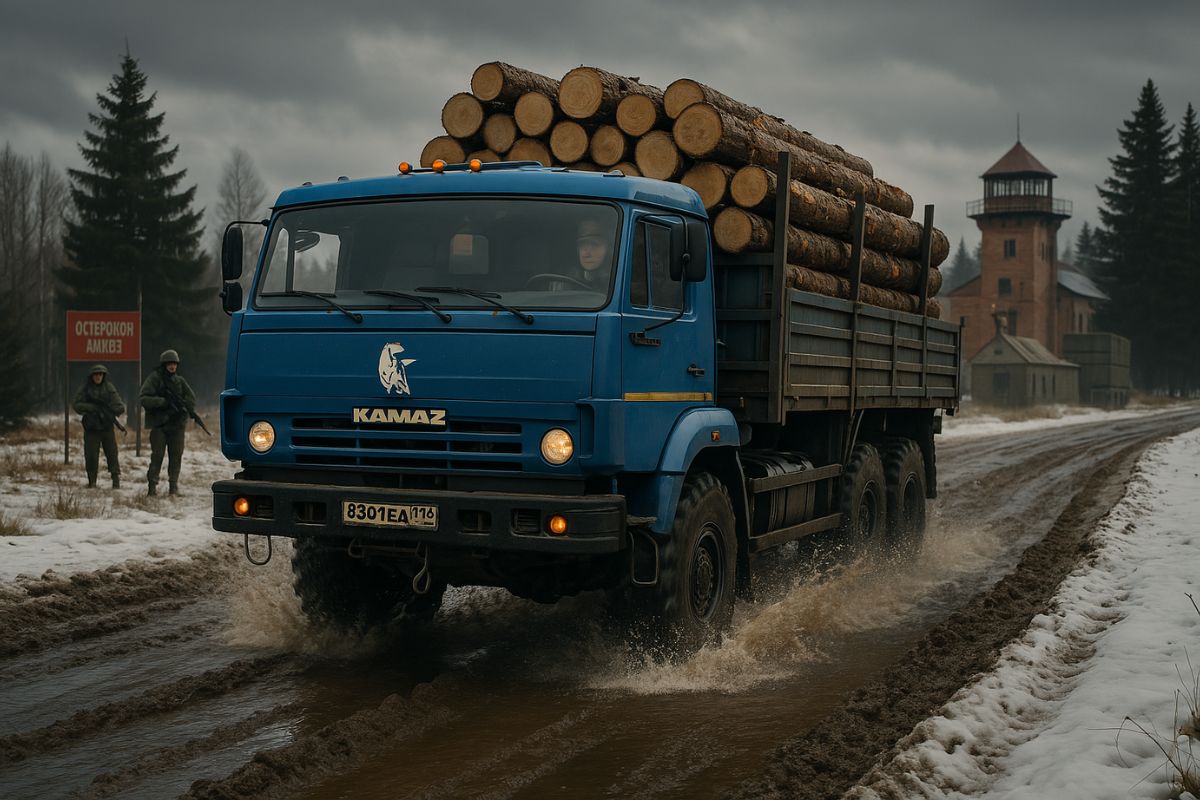
The Russian Truck from the Kamaz Brand Became a Legend for Crossing Rivers, Facing Blizzards and Challenging Dunes, and Its History Is More Unpredictable Than the Terrain It Travels
You’ve probably seen a video like this: a Russian truck plunges into a river, tackles an impossible hillside, or disappears into freezing fog. And it comes back. It always comes back. Behind this cinematic scene lies a real, surprising story of a giant named Kamaz, the Russian truck created in the Soviet era that became a symbol of strength, resilience, and, why not, steel stubbornness.
The Russian truck Kamaz is the type of vehicle that seems to have come out of a post-apocalyptic movie. But it didn’t. It was born in 1976, in the heart of the Soviet Union, and continues today to cross impassable trails, drive over frozen lakes, cut through deserts, and now face a new enemy: international sanctions. Its history blends sports glory, economic collapse, phoenix-like rebirths, and a stubborn survival in times of war, literally.
Forged for the Impossible
It all started with a political decision in 1969: the Soviet government wanted a heavy truck factory that could supply the continental country. The chosen location was Naberezhnye Chelny, in Tatarstan, where Kamaz would be born, by the Kama River.
-
Man pays only R$ 17,500 for a 2021 Hyundai Creta at auction, finds SUV covered in mud and with a stalled engine, but discovers the problem was much smaller than everyone imagined.

-
Cheaper than the JAC T60 Plus: with a 1.5 flex engine, 1.6 option with 138 hp, CVT-type automatic transmission, 360 camera, panoramic sunroof, and 10-inch central unit, this used Chinese SUV tries to convince those looking for a complete package: meet the JAC T40 Plus 2022.
-
Man spends 20,000 hours and 7 years building a functional wooden supercar with a Cadillac V8 engine, 20 types of wood, and a reported top speed of 320 km/h.
-
With a compact design and performance above expectations: 1.5 flex engine with up to 136 hp, 6-speed automatic transmission, 445-liter trunk, and four airbags make the Ford Ka Sedan Titanium 1.5 Automatic 2020 a well-equipped used car.


Before long, the city became a construction site, and the Russian truck began to take shape. In 1976, the first model was launched. With a 6×6 drivetrain and a structure that seemed built to face the end of the world, the Kamaz 5320 already showed what it was made for.
Production grew at breakneck speed. In 1979, just three years after its launch, Kamaz had already produced 100,000 units. The following year, it reached 150,000. The trucks began to be used for all types of tasks: grain transportation, construction, military missions, rescues, and even oil exploration in extreme conditions. The Russian truck became a postage stamp, a piece of state propaganda, and a point of pride for heavy industry.
The Monster That Flies in the Desert
But it was in sports that the Russian truck showed the world it could do more. In 1988, the Kamaz Master team was created to participate in the Dakar Rally. A several-ton truck among dunes? Many people laughed. Then they applauded. Kamaz racked up victories. In 2022, it won its 19th title in the race, remaining the most successful team in the truck category’s history. Videos of Kamaz flying over dunes are so surreal they look like digital animations — but they’re just the result of extreme engineering.
The end of the Soviet Union nearly dragged Kamaz down with it. Sales plummeted, the structure crumbled, and in 1993, a fire destroyed the main engine factory. Many bet it was the end. It wasn’t. The Russian truck rose from the ashes. With help from the government and new partnerships, such as with Daimler (owner of Mercedes-Benz), it resumed production and modernized everything: engines, cabins, technology. The new generation had a European look but a Soviet soul.
From Snow to Electricity
With the 2000s, the Russian truck adapted to new times. The K3, K4, and K5 models came, featuring modern cabins, onboard electronics, electric versions, hydrogen-powered models, and even autonomous prototypes. Kamaz supplied city buses for Moscow, developed vehicles for mining, and tested driverless trucks in polar regions. But in 2022, another blow came: the war in Ukraine.
Sanctions and Global Isolation
With the start of the Russian invasion of Ukraine, the Russian truck came under the radar of international sanctions. Foreign partners broke agreements. Daimler withdrew. Components stopped arriving. Kamaz, with strong ties to the government and the Armed Forces, was included on embargo lists. In 2023 and 2024, the Kamaz Master team was barred from the Dakar Rally for refusing to sign a document condemning the war. Not willing to race under a neutral flag, the brand chose to withdraw.
To dodge isolation, Kamaz joined in reviving the Moskvitch brand, now renaming Chinese SUVs assembled at the former Renault factory. It also expanded its line of military trucks and industrial models, targeting the domestic market and countries still aligned with Russia. With or without external support, the Russian truck insists on rolling, and this, perhaps, is its most fascinating characteristic.





-

1 person reacted to this.