






 Portuguese
  Spanish


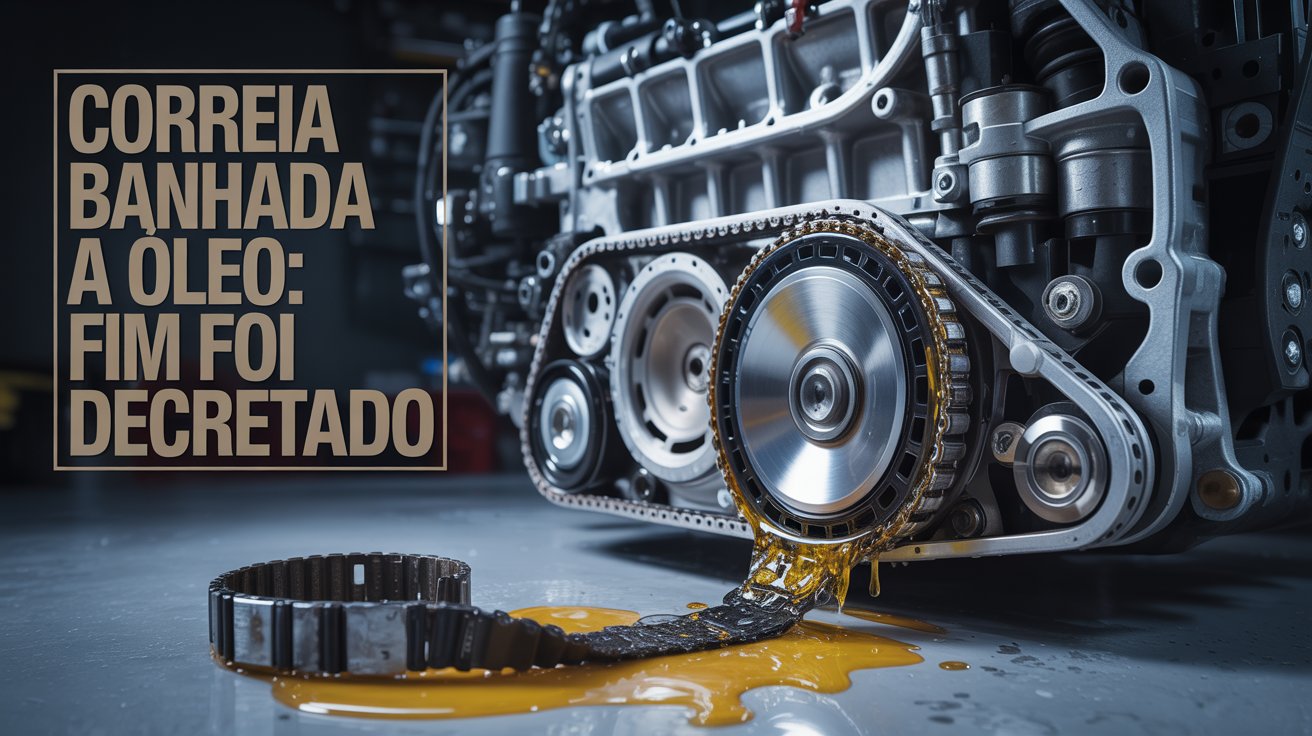


Crisis Involving The Oil-Soaked Timing Belt Leads Stellantis To Change Engines, Adopt Timing Chain, And Abandon The PureTech Name, Impacting Maintenance And Warranty Of Thousands Of European Vehicles.
The crisis involving the oil-soaked timing belt forced one of the largest car manufacturers in the world, Stellantis, to make profound changes to its vehicles in Europe.
After a series of serious failures and reported losses by consumers, the company announced a broad recall, replacing the problematic component with a timing chain and also decided to eliminate the PureTech name from the affected lines on the European continent.
Recall Of The Oil-Soaked Belt And Adoption Of The Timing Chain
The issue of the oil-soaked belt gained prominence mainly in vehicles of the brands Peugeot, Citroën, DS, Opel, and Vauxhall, all belonging to Stellantis.
-
2027 Toyota Corolla Cross Unveiled: New Design, Enhanced Fuel Efficiency, Reduced Maintenance Costs, Advanced Technology, Connected Services, and Up to 10-Year Warranty

-
Fiat Cronos Precision 2018: Affordable Sedan with Spacious Trunk and Reliable Maintenance
-
Volkswagen to Cut Production by 1 Million Cars by 2030, Reducing Jobs and Platforms, Focusing on More Profitable Models

-
Toyota Launches First 100% Electric Car in Brazil: bZ4X with 343 HP, All-Wheel Drive, 361 km Range, Priced at $419,990 BRL, Limited to 99 Units




The component equipped older versions of the three-cylinder 1.0 and 1.2 PureTech engines, whose initial promise was greater efficiency, less noise, and a lifespan comparable to that of a metal chain, which is normally more resistant.
However, what was presented as innovation resulted in headaches for thousands of European consumers.
The main criticism directed at the oil-soaked belt was related to its durability.
In Europe, Stellantis claimed that the component would last up to 240,000 km — an expectation similar to that announced by Chevrolet for its models equipped with a similar belt.
However, recurring cases of failures led to a reduction of this timeframe to 60,000 km or three years of use, a significant difference that impacted the maintenance costs of the vehicles.
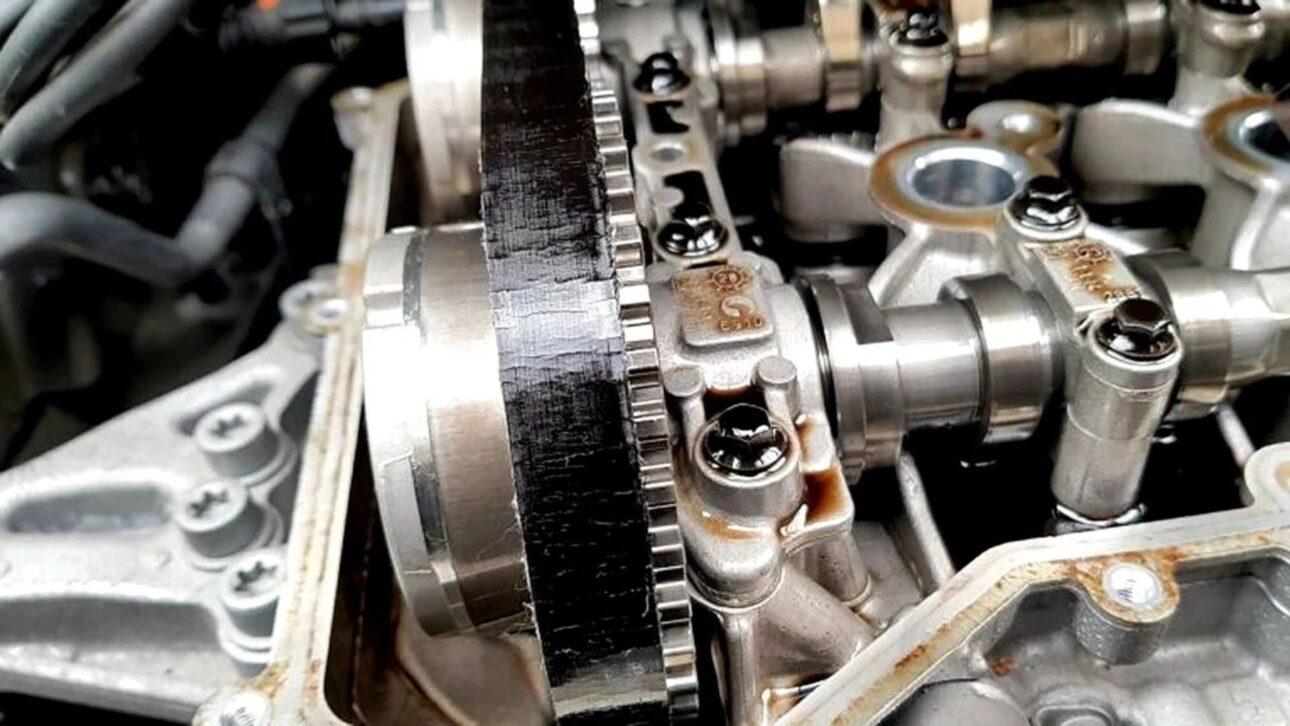
Chevrolet And The Failures Of The Oil-Soaked Timing Belt
The challenge was not exclusive to Stellantis.
In Brazil, Chevrolet had to rethink its strategies in light of reports of premature wear of the belt in 1.0 (naturally aspirated and turbo) and 1.2 (turbo) engines.
A central point in the Brazilian case was the use of oil outside the recommended specifications, a factor that contributed to the drying of the belt and the consequent formation of rubber particles, responsible for obstructing internal components of the engines.
Operation Of The Oil-Soaked Belt And Causes Of The Failures
The idea behind the oil-soaked belt was to provide a balance between the quiet operation of conventional belts and the long durability of metal timing chains.
The direct contact with the engine’s lubricating oil, in theory, would protect the belt from premature wear.
However, in practice, the use of inadequate lubricants — without specific additives required by manufacturers — resulted in accelerated deterioration.
Additionally, loose particles caused by the wear of the belt began to damage other components, such as the vacuum pump, lubrication lines, intake filter, and oil filter, generating lubrication problems and increased oil consumption in PureTech engines.
Corrective Measures By Stellantis In Europe
Upon realizing the extent of the damage, Stellantis notified the component supplier, Continental, and sought emergency solutions, such as coating the belt with lacquer to attempt to prevent oil penetration from the sides.
This strategy, however, proved ineffective in light of the seriousness of the problem.
As a definitive response, the manufacturer summoned hundreds of thousands of owners to replace the belt with a new, reinforced one, and extended the warranty for vehicles with PureTech engines to up to 10 years or 175,000 km, a measure valid for units sold on the European continent.


Another important step was the creation of a digital platform aimed at reimbursing customers who carried out repairs related to the failure of the oil-soaked belt, provided the service was performed at authorized workshops and met the requirements set by the company.
The cost of the belt replacement service in Europe is estimated at around 800 euros, an amount that can be converted to approximately R$ 5,200, considering the exchange rate from July 2025.
Change To Timing Chain And End Of The PureTech Line
Beginning in 2022, Stellantis commenced production of 1.2 engines with timing chains, a mechanism that was already adopted in the group’s mild hybrid vehicles and also in Fiat and Jeep models, including the 1.0 and 1.3 GSE families.
Engines with timing chains tend to be more resistant over time, reducing maintenance costs for owners.
Despite the transition to chains, some specific versions, such as the conventional Peugeot 308 with 1.2 engine and 130 hp, still utilize the reinforced oil-soaked belt.
Meanwhile, the Peugeot 308 mild hybrid, equipped with a 48V system and 136 hp, adopts the new timing chain.
This coexistence of systems is transitional, until full standardization is implemented across all models.
Amid the reputation crisis caused by failures of oil-soaked belts, Stellantis opted to eliminate the PureTech name from its lines in Europe.
The decision aims to distance the negative image associated with the component and signals a new moment for the company’s engine engineering.
Brazilian Context And Local Impacts
In Brazil, only the old Peugeot 208 used the 1.2 PureTech engine with an oil-soaked belt.
However, the history of the national model is distinct from the European one, as the maintenance plan already anticipated the replacement of the component every 80,000 km, avoiding the problems recorded in other countries.
Fiat and Jeep, in turn, employ only engines equipped with metal timing chains, both in 1.0 and 1.3 versions, with no reports of similar failures.
Global Trend For Greater Engine Durability
The crisis of the oil-soaked belt highlights the challenge faced by automakers in the search for components that combine performance, silence, and low maintenance costs.
With the widespread adoption of timing chains, Stellantis and other manufacturers signal a trend towards greater mechanical reliability in the coming years, reinforcing the commitment to consumer safety and satisfaction.
In light of the changes and losses faced, the question arises: how do you assess confidence in large manufacturers after episodes such as the recall of oil-soaked belts?









Na Europa as leis funcionam,
Teoria interessante da Stellantis aguardo há meses o reembolso sem resposta da plataforma, porque será?
Enfim, é à vontade deles.
Somente os engenheiros da GM não sabiam que correia no óleo não iria dar b.o.
Agora gastam uma fortuna em propaganda, para anunciar uma “nova correia” no Brasil. Muita cara de ****.
Quem comprou essas jacas, que se ferrem. Onix e Tracker (que já foram líderes de mercado), agora estão mais encalhados que barcos na maré baixa.
Quem subestimar o mercado, sucumbe à arrogância.