






 Portuguese
  Spanish
  5 min of reading
  25 comments


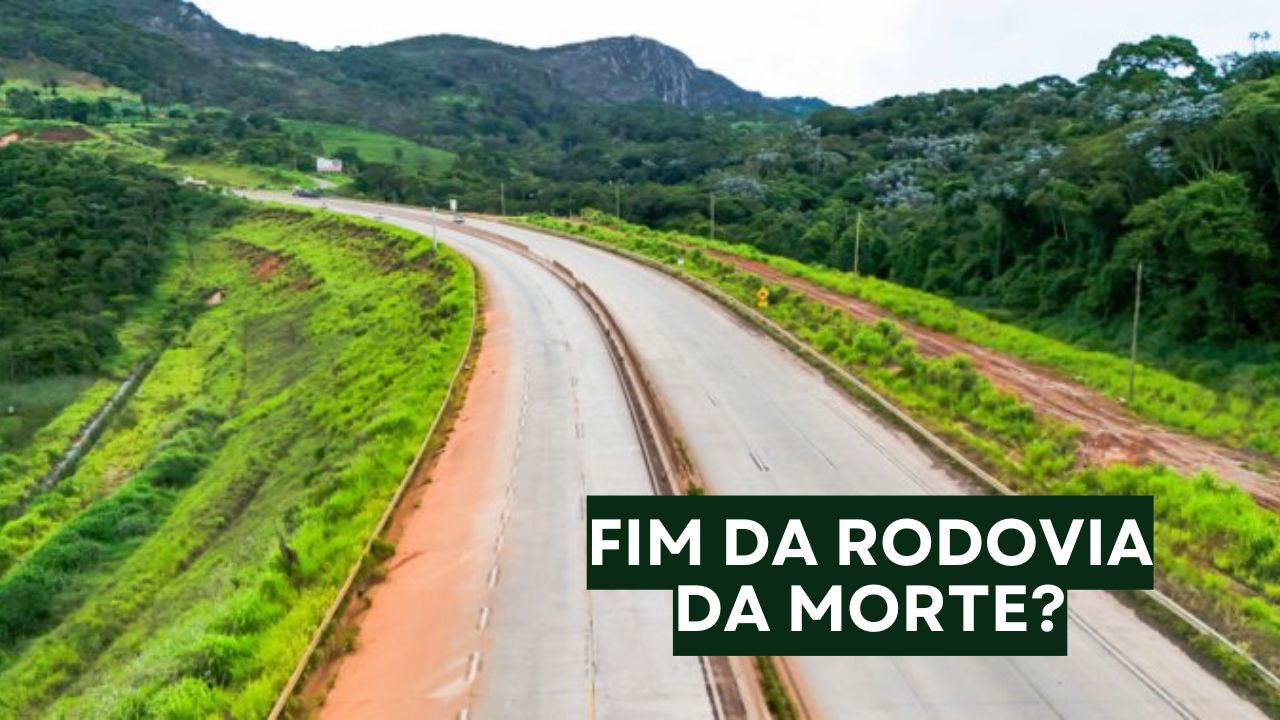


Transformation Advances with New Concessionaire, Marking the End of an Era of 2,641 Accidents and 171 Deaths in a Year (2023), According to Agência Gov, with Tolls Already in Operation in November 2025.
BR-381, historically known as the Highway of Death, in the stretch connecting Belo Horizonte to Governador Valadares, is at the epicenter of a revolution in national infrastructure. After decades of failed concession attempts, the logistics corridor of Minas Gerais, crucial for the flow of steel and mineral production, is finally being transformed. The year 2025 marks the beginning of the definitive transition from the state model to private management, driven by the victory of 4UM Investimentos in the 2024 auction, consolidating an investment of nearly R$ 10 billion that is expected to save lives and unlock the economy of eastern Minas Gerais.
The macabre nickname is not mere rhetoric; it is supported by alarming road safety numbers. According to data from 2023, the last full year under purely state management before the auction’s success, the highway recorded 2,641 accidents and 171 deaths, averaging approximately 7.2 accidents per day, according to Agência Gov (Empresa Brasil de Comunicação). The complexity of the layout, combined with the mix of heavy traffic and light vehicles on a single lane, created an unacceptable risk environment. The transformation aims to eliminate this threat, promising to change the identity of the highway from “Highway of Death” to “Road of Life.”
Start of Toll Collection and Costs: The Cost of Safety
The transformation phase entered a new level in November 2025 with the start of toll collection at various plazas of the BR-381/MG. The operation of the plazas, a milestone that ensures cash flow to finance massive investments, was authorized after the concessionaire fulfilled the initial maintenance and safety obligations. This transition to a user-payer model requires that the logistical cost be absorbed, but in exchange, it promises a superior user service (SAU) and heightened road safety.
-
Bolivian Female Construction Workers Form Association to Combat Discrimination and 38% Pay Gap in the Industry

-
Near Amsterdam, residents buy land and discover they must also build streets, manage drainage, handle waste, and grow food on half their plot.
-
Brazil’s WEG to Open New Factory in China by 2027, Expanding Production of Large Rotating Electric Machines and Low to Medium Voltage Motors in Rugao

-
Chinese Shipyard Secures $1 Billion in Orders for Low-Carbon Container Ships Amid Global Fleet Renewal Efforts


The toll plazas are strategically distributed to cover the densest traffic flows, including the regions near the Vale do Aço. The Jornal O Tempo provided the latest data on the operation, confirming the start of toll collection at key plazas such as Jaguaraçu, Belo Oriente, and Governador Valadares. Specific rates vary, with the fee, for example, set at R$ 15.10 at the Jaguaraçu plaza. To mitigate the impact on the local population, who use the highway for daily commutes, the contract provides for the Frequent User Discount (DUF), which progressively reduces the toll for drivers who pass repeatedly through the same plaza in a month.
Risk Segregation: The Innovation That Enabled the Concession


The success of the 2024 auction, which resulted in the Nova 381 Concessionária de Rodovia S.A., was only possible due to an innovative restructuring of the concession model. Previous attempts (2013, 2022, and 2023) failed because the market considered the geological risk and the urban resettlement liability at the exit from Belo Horizonte as insurmountable, rendering the project “non-bankable.”
The solution found by the federal government and the National Land Transportation Agency (ANTT) was the segregation of responsibilities. The National Department of Transport Infrastructure (DNIT), as detailed on the Gov.br Portal, took over the management and execution of the most complex and high-risk works politically and legally: the duplication and resettlement in areas of unregulated urban occupation at the exit of Belo Horizonte (Lots 8A and 8B). This “cleaning of the asset” strategy allowed the private concessionaire (4UM Investimentos) to focus on the stretch of greatest viability (Caeté to Governador Valadares), ensuring private investment of around R$ 5.5 to 6 billion in duplication works, additional lanes, and tunnels.
The Critical Challenge: Integration Between DNIT and Private Initiative
Despite the progress of Nova 381, which has already applied more than 48 tons of asphalt in the first 40 days of operation, the full success of the logistics corridor depends on the coordination between the private pace and public execution. The exclusion of Lots 8A and 8B from the concession creates a bottleneck.
The stretch under the responsibility of DNIT (Ring Road of BH to Caeté) is the most severe logistical bottleneck in the state. If Nova 381 rapidly duplicates the stretch from Caeté to Valadares, but the resettlement and duplication works at the capital’s exit are delayed, a “funnel effect” will be created where the smooth traffic of the concessioned highway will stagnate upon reaching the Metropolitan Region of Belo Horizonte. The Gov.br Portal confirmed that DNIT has allocated resources to start work on Lot 8A still in 2025, which is viewed with optimism by leaders in Greater BH, but the risk of chronological mismatch remains the main governance challenge for the project.
Is the Highway of Death Worth It?
The transformation of BR-381/MG from Highway of Death to a modern logistics corridor is a crucial investment. The project, with a deadline of 30 years and nearly R$ 10 billion in total investments, promises to create 80,000 jobs and, more importantly, save hundreds of lives annually. Agência Gov projects that the duplication will eliminate head-on collisions, the primary cause of deaths.
The start of toll collection, reported by Jornal O Tempo, is the materialization of the financial model that will sustain this change. The central question is no longer whether the highway will be transformed, but when the government and the concessionaire will be able to finalize the total integration.
Are you a frequent user or do you live in the area? Do you think the cost of the toll is worth the real gain in safety and travel time? Do you believe DNIT will meet the deadline at the exit of BH? Leave your opinion in the comments; we want to hear from those living this transformation in practice and what the Highway of Death represents for you now.





381 todos os dias acidente graves
Sou usuário e acho muito caro o pedágio de R$15,50 em Caeté e pior ainda quando vou para Valadares wue tenho que pagar três pedágio na ida e três na volta. Estes pedágio deveriam ser a metade. Outra observação é que tem muito defeito na pista ainda não deveria ser liberado a cobrança do pedágio.
Acho bom o pedágio porque o governo não conssegui manter as estradas em boas condições eu só acho um absurdo a cobrança do ipva