Portuguese
  Spanish


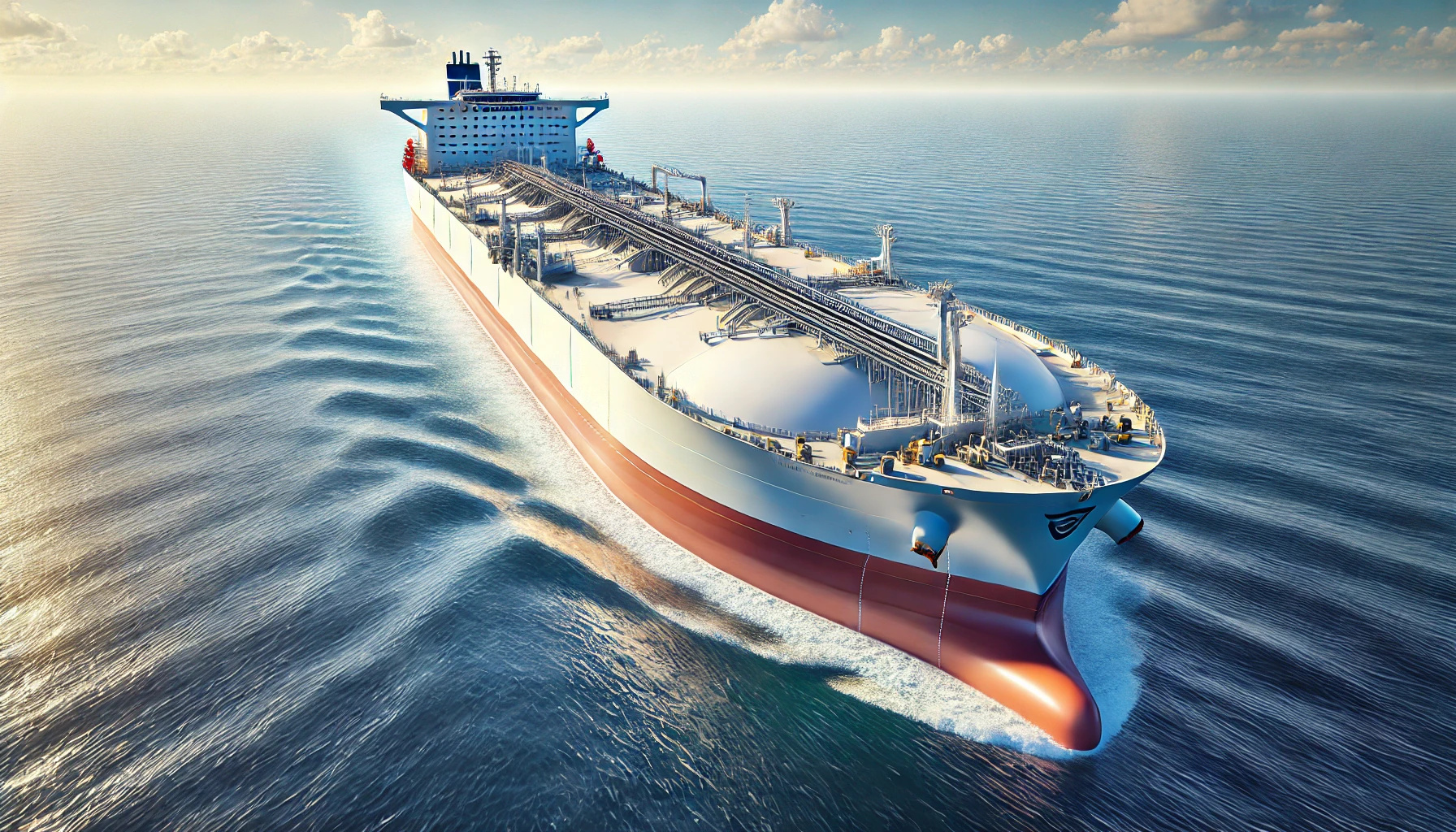


Understand How The Hellespont Alhambra, The Largest Oil Tanker Currently In Operation On The Planet, Can Carry Up To 3.2 Million Barrels Of Oil At Once — A Volume Greater Than The Daily Production Of Many Countries
The maritime transportation of oil is one of the most strategic sectors of the global economy. To meet the growing demand for energy, increasingly larger ships are being built, allowing the efficient movement of immense quantities of crude oil around the world. Among these ocean giants stands the Hellespont Alhambra, recognized as the largest oil tanker in operation on the planet.
Measuring an incredible 380 meters in length, the Hellespont Alhambra can carry up to 3.2 million barrels of oil in a single trip — an amount equivalent to the daily production of countries like Norway or Kuwait. This impressive oil tanker represents the pinnacle of naval engineering and current energy logistics, ensuring the global oil supply with maximum efficiency.
In this article, you will discover everything about the Hellespont Alhambra — from its technical specifications to its impact on the global oil industry — with updated data and detailed information for those seeking to understand the grandeur of the largest oil tanker in operation.
-
OPEC+ Boosts Oil Supply by 188,000 Barrels per Day in July 2026, Leading to Price Drop from $112 to $89 per Barrel in Under Two Months

-
TotalEnergies Signs 20-Year Deal to Purchase 2 Million Tons of LNG from Alaska, Boosting Project Viability
-
Turkey Deploys Çağrı Bey Drilling Ship to Explore New Oil Frontier Off Somalia’s Coast
-
Golden Pass LNG Ships First Liquefied Gas Cargo from the U.S., Completing $10 Billion QatarEnergy and ExxonMobil Investment

Hellespont Alhambra: The Largest Oil Tanker In Operation On The Planet And Its Giant Dimensions
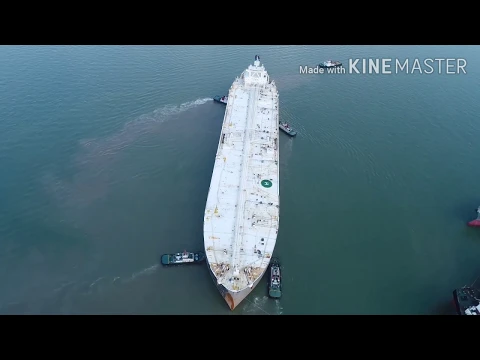
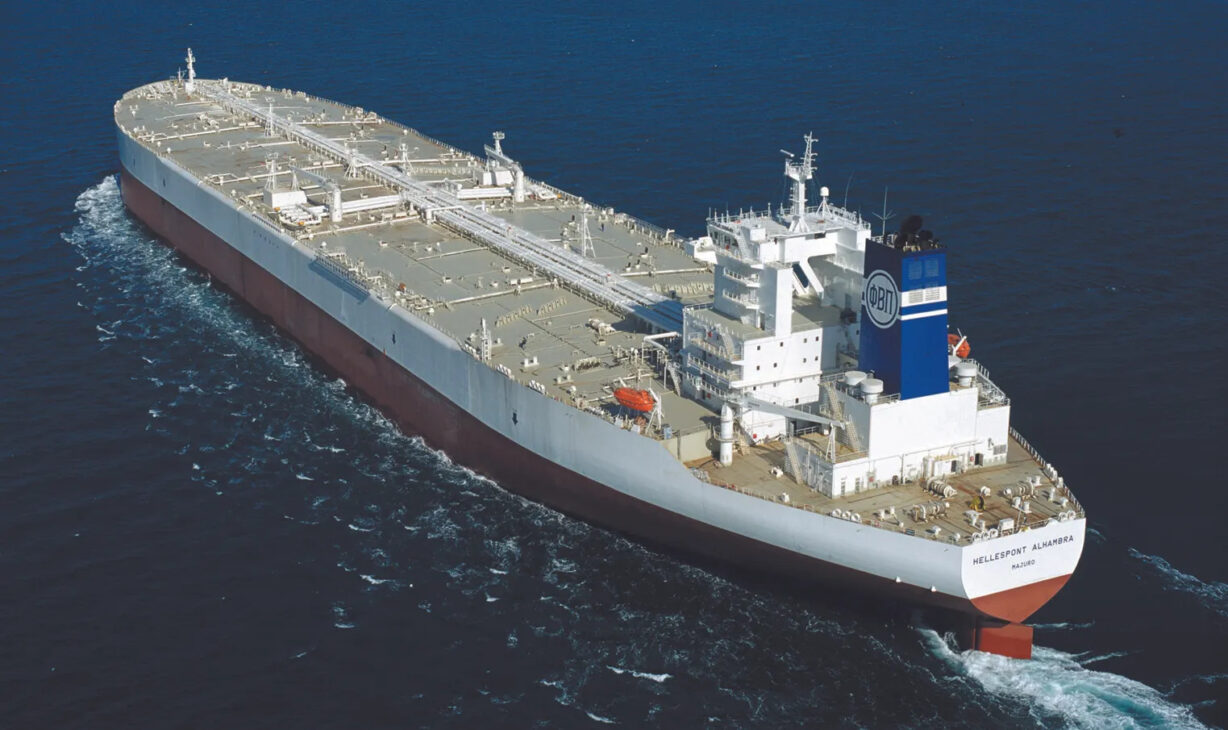
The Hellespont Alhambra is classified as an ULCC (Ultra Large Crude Carrier), the category of oil tankers with the largest capacity and size in the world. Built in the early 2000s, this maritime colossus measures 380 meters in length and 68 meters in width — a size capable of impressing any naval engineering enthusiast.


Its cargo capacity reaches 3.2 million barrels of oil, a number that places it at the top of the largest oil tankers currently in operation. To give you an idea, this amount is equivalent to the daily oil production of several nations, reinforcing the strategic role of the Hellespont Alhambra in the international energy trade.
Technical Specifications Of The Largest Oil Tanker In Operation
- Length: 380 meters
- Width: 68 meters
- Maximum Draft: 24.5 meters
- Cargo Capacity: 3.2 million barrels of crude oil
- Average Speed: 16.5 knots (approximately 30 km/h)
In addition to these impressive dimensions, the ship has special tanks that ensure the safe transport of oil, minimizing the risk of leaks and preserving the quality of the cargo throughout the trip.
Why The Hellespont Alhambra Is The Largest Oil Tanker In Operation And Its Importance To The Global Oil Market
The size and capacity of the Hellespont Alhambra bring significant benefits to the oil industry, both in economic and operational aspects.
Economies Of Scale And Logistical Efficiency
Transporting 3.2 million barrels of oil in a single trip reduces the total number of trips needed to ship large volumes of crude oil. This results in lower operational costs, decreased fuel consumption per ton transported, and less wear and tear on equipment.
The efficiency of the largest oil tanker in operation on the planet allows companies to serve distant markets more quickly and at lower costs, especially on long routes between oil-producing countries in the Middle East and consumers in Asia, Europe, and the Americas.
Environmental Impact
Although maritime oil transportation still relies on fossil fuels, larger ships like the Hellespont Alhambra provide a relative reduction in emissions per ton transported compared to smaller vessels. The rational use of capacity helps to reduce the sector’s environmental footprint.
Furthermore, the Hellespont Alhambra is equipped with modern systems to monitor leaks and prevent spills, complying with strict international environmental standards, which is crucial to prevent large-scale accidents.
The Operational Challenges Of The Largest Oil Tanker In Operation On The Planet
Keeping the Hellespont Alhambra navigating safely involves a series of technical and logistical challenges.
Adequate Port Infrastructure
Due to its deep draft (24.5 meters), the Hellespont Alhambra can only dock at ports with specialized infrastructure capable of accommodating ULCC ships. This limits its routes and requires meticulous planning to ensure that unloading and loading occur safely and efficiently.
Ports that accommodate this type of ship generally have terminals with state-of-the-art equipment and trained personnel to handle enormous volumes of oil.
Navigation Complexity
Navigating a 380-meter long ship requires a highly qualified crew, advanced radar technology, GPS, and automatic maneuvering control systems. Navigating in narrow waters or congested maritime areas presents an additional challenge, requiring extreme precision to avoid accidents.
Maintenance And Safety
Transporting oil is a sensitive operation. The Hellespont Alhambra is equipped with modern safety equipment, automatic fire-fighting systems, tank pressure monitoring, and strict protocols to prevent any leaks or accidents.
Constant maintenance of engines, hull, and equipment is essential to ensure the longevity of the largest oil tanker in operation and the safety of the crew and the environment.
History And Context Of The Hellespont Alhambra As The Largest Oil Tanker In Operation
The Hellespont Alhambra was a pioneer in the ULCC category when launched, paving the way for a new generation of giant ships. Its design took into account the needs of the oil industry for large-scale transport, combining cutting-edge technology and structural resilience.
Evolution Of Oil Tankers And The Role Of The Hellespont Alhambra
In the last half of the 20th century, maritime oil transportation evolved from smaller ships to VLCCs, which carry up to 2 million barrels. The growing demand for efficiency and scale prompted the emergence of ULCCs, such as the Hellespont Alhambra, which further expanded capacity to over 3 million barrels.
This growth reflects the constant pursuit of reducing logistical costs and maximizing transport capacity.
Geopolitical And Economic Impact
Ships like the Hellespont Alhambra directly influence global oil trade, impacting the supply and price of the commodity. Its capacity allows producing countries to export large volumes efficiently, strengthening their positions in the global market.
The Future Of Oil Transportation And The Role Of The Hellespont Alhambra
Despite its grandeur, the maritime oil transportation sector faces challenges that may influence the role of ships like the Hellespont Alhambra in the future.
Environmental Pressures And New Regulations
International organizations, such as the IMO, have been implementing increasingly stringent standards for reducing emissions in the maritime sector. This includes limits on sulfur in fuel and incentives for adopting cleaner technologies, such as hybrid engines and alternative fuels.
These changes require giant oil tankers to adapt, whether through technological retrofitting or by constructing more sustainable new ships.
Physical Limits For Larger Ships
The capacity of the Hellespont Alhambra is already close to the practical limit for efficient transport on large ships. Port infrastructure and navigation challenges make it impractical to increase size further. Therefore, the trend is to invest in energy efficiency and the digitalization of operations rather than growth in size.
Energy Transition And Alternatives To Oil
The advancement of renewable energy and green hydrogen, along with the growing demand for less polluting fuels, is likely to influence the oil market and maritime transportation. Although still essential, oil may lose share, and oil tankers will need to adapt or diversify their cargoes in the future.
The Grandiosity Of The Hellespont Alhambra And Its Importance For Global Energy Logistics
The Hellespont Alhambra represents excellence in naval engineering and logistics in the oil sector. As the largest oil tanker in operation on the planet, it symbolizes the ability to transport immense volumes of crude oil safely and efficiently.
Its capacity of 3.2 million barrels of oil per trip reinforces the importance of maritime transport to ensure global supply, especially in a high-energy-demand scenario.
As the world moves towards an energy transition, the Hellespont Alhambra will continue to be a key player in oil transportation while paving the way for innovations that make the sector more sustainable and efficient.
For industry professionals, investors, and enthusiasts, understanding the magnitude and challenges of the largest oil tanker in operation is essential to keep up with the transformations of the oil industry and its global implications.