






 Portuguese
  Spanish
  3 min of reading
  0 comments


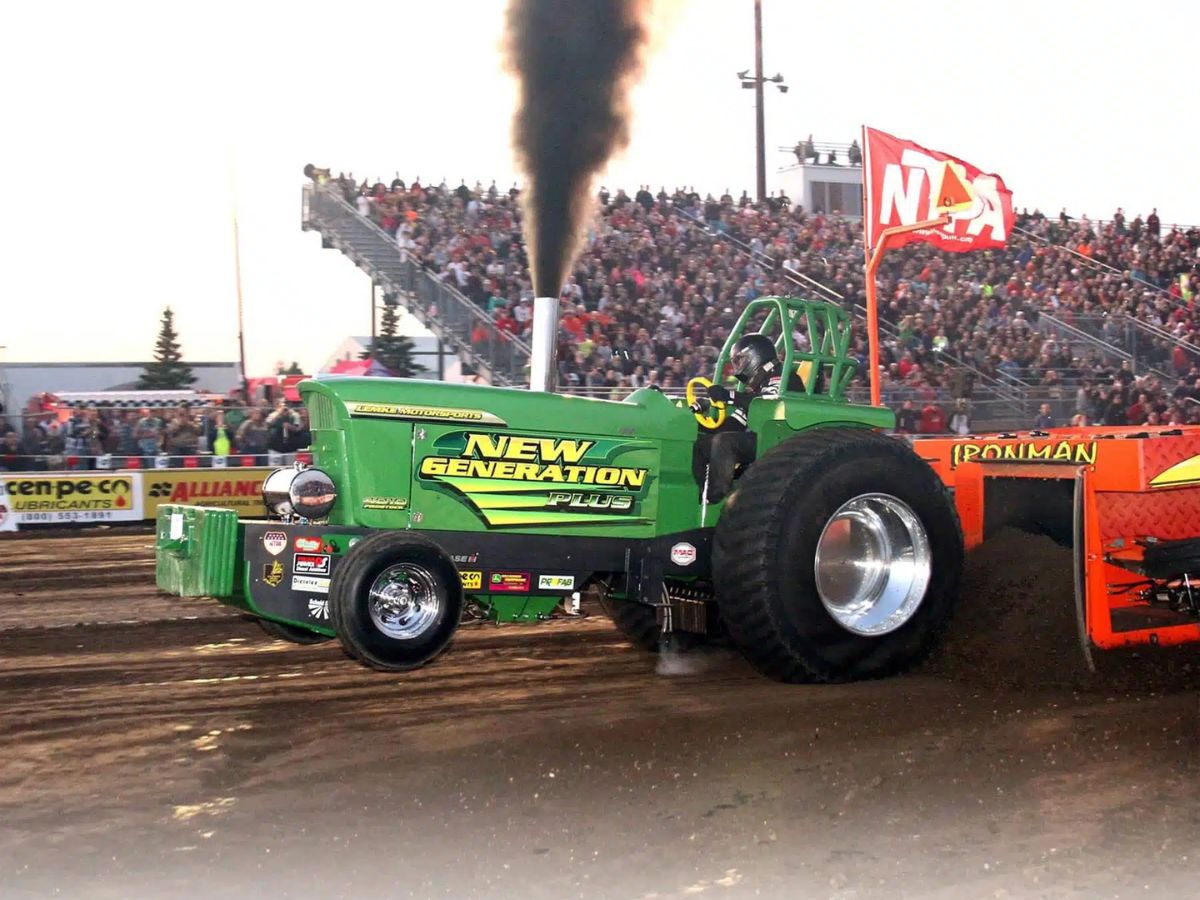
Know The Extreme Engineering Behind The Super Stock Tractors, Where Three Turbos, Black Smoke And A Complete Rebuild Every Run Are The Recipe For Power
The diesel engine of a pulling tractor in the Super Stock category is one of the most brutal and fascinating machines in motorsports. With the appearance of an agricultural tractor, it conceals a monstrously modified engine that can generate over 5,000 horsepower to pull extremely heavy loads on dirt tracks.
The spectacle is marked by the cloud of black smoke that envelops the track, but this is not just a show. The smoke is a direct consequence of the engineering necessary to prevent the engine from melting. This is a sport where “controlled self-destruction” is part of the life cycle of an engine that needs to be completely redone every 40 minutes.
The Engineering Behind The 5,000 Horses, 3 Turbos And Titanium Components
To achieve 5,000 horsepower, a diesel engine of a pulling tractor undergoes radical modifications. Although the rules require it to maintain a “factory” appearance, its internal components are competition-grade, including forged pistons and titanium connecting rods, capable of withstanding immense pressures.
-
The Caspian Sea, the largest lake in the world, is drying up due to climate change and no one can stop the loss: evaporation could lower the level by up to 21 meters this century and turn ports in Kazakhstan, such as Aktau, into desert.

-
How Romania became Hitler’s “gas station,” supplying about half of the oil used by Nazi Germany, and surprised the world by abandoning the Axis in 1944, just when the fuel shortage was beginning to suffocate the Third Reich.

-
Adored by more than 1.5 million fans and famous for crossing deserts and mountains with its owner, a famous dog is stolen and ends up being served in a restaurant in China.
-
Son of a Chinese immigrant who sold tea in the countryside of São Paulo, Zhang Ye almost went bankrupt in 2021 and today, at 28 years old, claims to earn 1 million reais per day and has become the number 1 on TikTok Shop in Latin America.




The heart of the power lies in the turbocharging system. The rules allow the use of up to four turbochargers, arranged in three pressure stages. These turbos work in series, compressing the air to over 150 PSI before forcing it into the engine, which can have up to 11.1 liters of displacement.
More Than A Show, A Strategy To Prevent The Engine From Melting
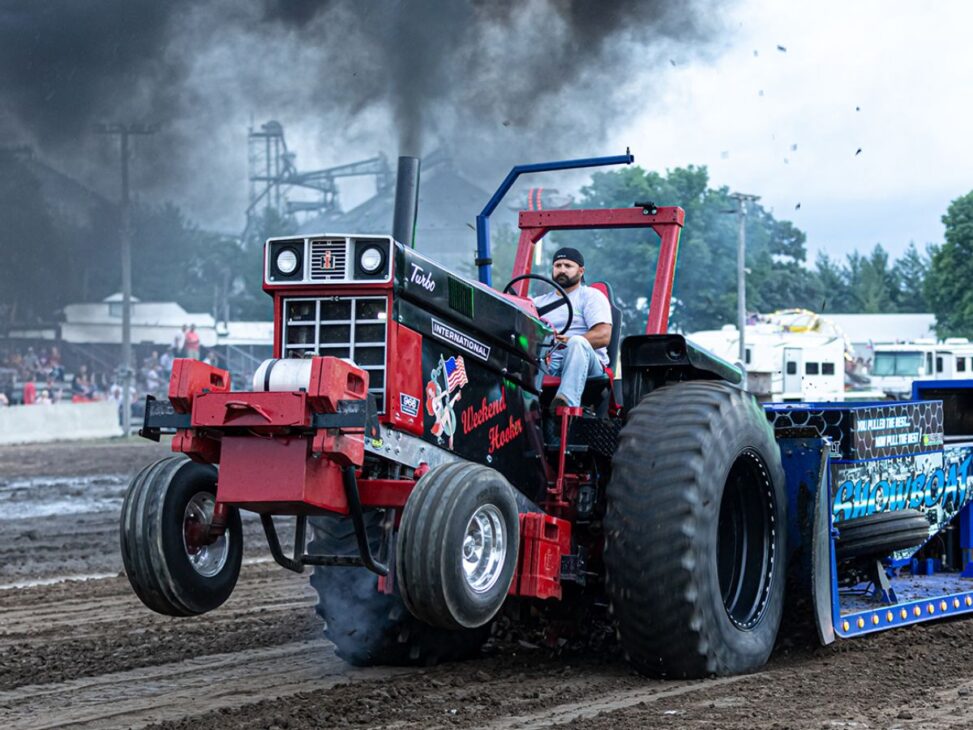
The cloud of black smoke is the visual signature of the sport, but its function is technical. To generate such power, the engine operates with a “super rich” fuel mixture, that is, with an excess of diesel. If the mixture were ideal, the heat generated would be so intense that it would melt the engine components.
The excess fuel that is not burned helps to cool the combustion chamber. The black smoke, therefore, is a byproduct of an engineering strategy to control extreme temperatures. To assist in cooling, many tractors also use water injection systems, which draw heat from the engine as they turn into vapor.
The Life Cycle Of 8 Seconds, Self-Destruction And Reconstruction In 40 Minutes
The claim that the engine “self-destructs” after each run refers to its extreme and planned wear. After each “pull,” which lasts only a few seconds, the team has between 40 and 60 minutes to completely disassemble the engine and rebuild it.
In this process, pistons, connecting rods, and bearings are routinely replaced. It’s not about fixing what broke, but about preventive replacement to ensure maximum performance in the next race. A complete Super Stock engine is designed to last only 11 to 12 runs before being completely replaced.
Why Mechanical Technology Beats Electronics In This Category
The sport is strictly regulated by associations like the NTPA (National Tractor Pullers Association). One of the most interesting rules is the prohibition of electronically controlled fuel injection systems and any type of computerized traction control.
This forces engineers to seek maximum performance through purely mechanical means. The fine-tuning of the fuel pump, the design of the injectors, and the timing of the camshaft become an art. This rule values mechanical engineering and the skill of the driver in controlling raw power without the aid of electronics.
The Evolution Of Brute Force, From Farms In 1929 To Today’s Technology
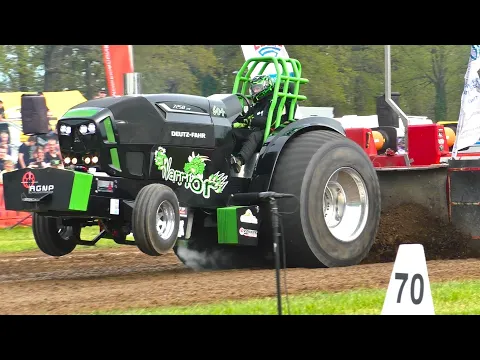

Tractor pulling originated humbly, with the first recorded events in 1929 on farms in the United States. The sport grew in the 1950s and 1960s, leading to the creation of the NTPA in 1969 to standardize the rules.
Since then, the sport has seen a constant “arms race” between engineers and regulatory bodies. When a rule limits power in one way, such as engine size, engineers innovate in another, such as in turbocharging systems. It is this relentless pursuit of more power that makes the diesel engine of a pulling tractor one of the most impressive machines in the world.






Be the first to react!