






 Portuguese
  Spanish
  6 min of reading
  0 comments


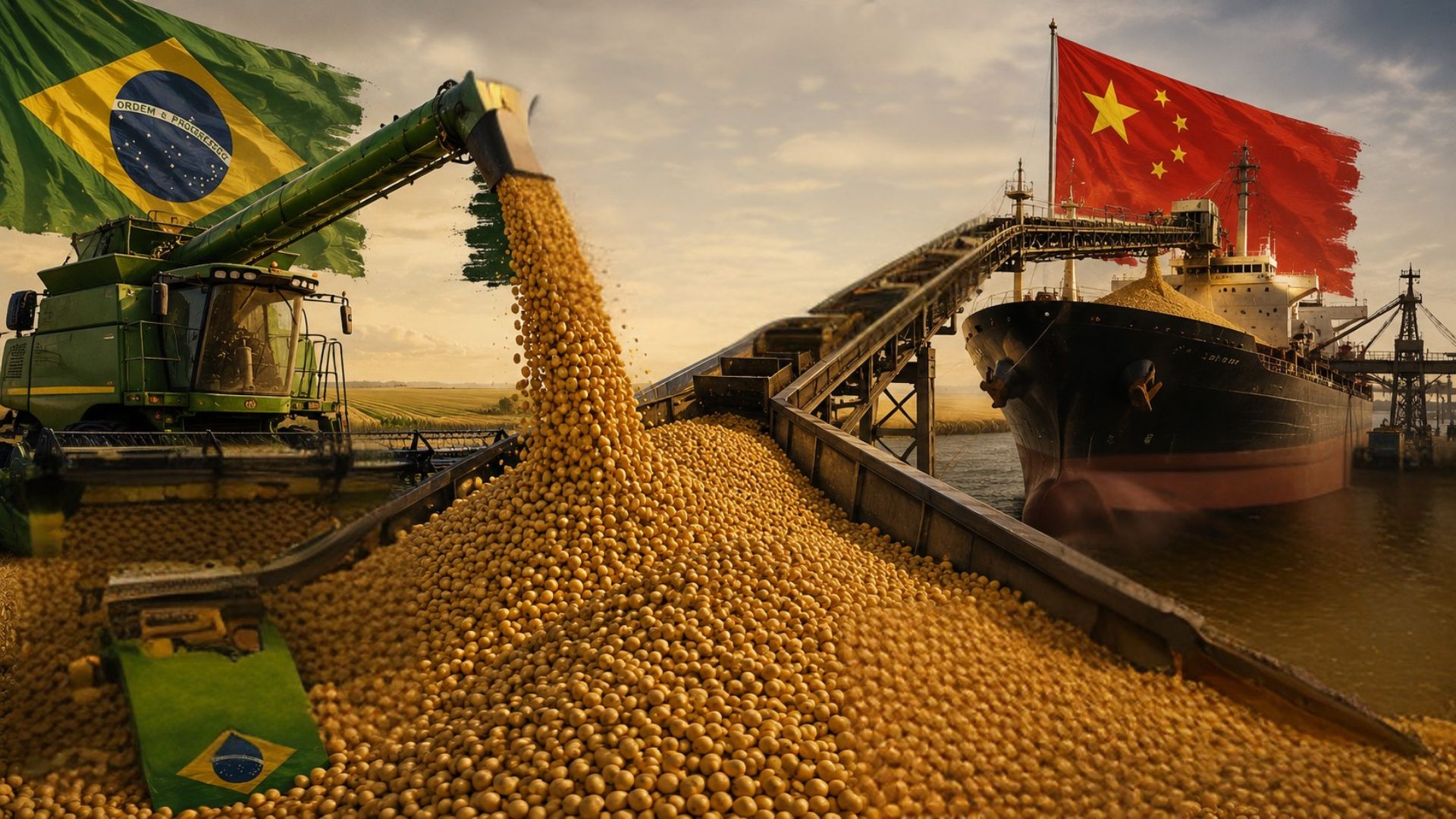
Brazil is the world’s largest soybean exporter, and China is by far the planet’s largest buyer, importing over 100 million tons per year, a volume that represents more than 60% of the global grain trade. According to CGTN America, with the tariff dispute between the US and China pushing the Chinese away from American soybeans, Brazilian exports hit a historic record in 2025.
Brazilian soybeans have never traveled so much or so fast. More than 70% of the production from the world’s largest exporter of the grain has China as its final destination, a market that consumes colossal volumes to feed livestock and supply the oilseed processing industry. In 2025, Brazil’s shipments reached a historic record, driven by a combination of factors including the tariff war between the United States and China, the price competitiveness of the Brazilian product, and decades of investment in agricultural technology that transformed the country into the great global soybean power.
What makes this scenario especially relevant is the geopolitical dynamic behind the numbers. The trade dispute between the world’s two largest economies directly affected American soybeans, making the US product less attractive to Chinese buyers. With high tariffs making the import of North American soybeans more expensive, China redirected its purchases to Brazil, which had the volume, infrastructure, and price to absorb this additional demand. The result was a record flow of grains leaving Brazilian ports towards the Asian market.
From coffee to soybeans: how Brazil became China’s breadbasket

Brazil’s transformation into the world’s largest soybean exporter did not happen by chance. In the 1960s and 1970s, many rural properties that produced coffee migrated to soybean cultivation, a change driven by market conditions and the development of varieties adapted to the tropical climate. Centuries-old farms like that of the Bautello family, in Paraná, exemplify this transition: a property with 200 years of history that swapped coffee for soybeans and today operates with high-tech machinery in a highly mechanized operation.
-
Foreign tree planted to combat drought invades more than 1 million hectares of the Caatinga, encroaches on riparian forests, and turns an old solution for the semi-arid region into a silent threat to biodiversity.

-
Invasive weed that withstands extreme heat advances with climate change, threatens crops on several continents, and raises a global alert about a silent plant capable of dominating soils, suffocating native species, and reshaping entire ecosystems.
-
While other coffees escape the American tariff hike, Brazilian instant coffee is excluded, raising an alert in the sector and may become up to 37.5% more expensive in the United States.
-
Degraded lands could become São Paulo’s new asset to expand planted forests, strengthen wood, cellulose, and biomaterials, as well as keep the state competitive in the international market.



China’s entry into the global soybean market in the 1990s sparked what Brazilian producers describe as a revolution in the production system. From the 2000s onwards, Chinese demand grew rapidly, and Brazil reorganized its production chain to meet this buyer who seemed to have an insatiable appetite. New planting areas were opened, productivity per hectare increased with investments in genetic research and management, and the logistics of outflow underwent expansions that are still ongoing.
The tariff war that pushed China towards Brazil
The trade dispute between the United States and China had direct effects on the global soybean market. The tariffs imposed by China on American agricultural products made US soybeans more expensive, making Brazilian grain more price-competitive even considering the maritime distance between the two countries. For Brazilian producers, the conflict between the two powers translated into increased demand and more favorable prices in negotiations.
Soybean price charts on the Chicago exchange track the fluctuations in negotiations between China and the US like a real-time thermometer. Brazilian traders who market grains to the international market report that the volatility generated by the trade war makes buying and selling decisions extremely difficult. When the world’s two largest economies clash, global agricultural markets experience fluctuations that affect everyone from the producer in rural Paraná to the importer in Shanghai.
A risk that Brazilian producers do not ignore
Despite the short-term benefits, Brazilian soybean producers do not treat the tariff war as a permanent market guarantee. A possible agreement between China and the United States could redirect part of Chinese purchases back to American soybeans, reducing Brazil’s share in global trade. Producers like Hodof Bautello recognize that this is not the best long-term situation for Brazil, as China may choose to diversify its suppliers or even prefer to buy from Americans even if it means paying more, as has happened during certain periods.
At the same time, producers themselves argue that Brazil has proven to be a supplier with strong potential and competitiveness for the international market. China knows Brazil’s productive capacity, knows that the country produces larger volumes at more accessible prices than the Americans, and has already built a solid commercial relationship with Brazilian exporters and ports. Even if an agreement between the Chinese and Americans temporarily reduces demand for Brazilian grain, the country’s position as a strategic soybean supplier to China will hardly be erased.
Brazilian ports race to keep up with soybean demand

The Port of Paranaguá, in Paraná, is the second largest in cargo volume in Brazil and one of the main gateways for soybeans destined for China. More than 70% of the cargo passing through the terminal goes to the Chinese market, which makes port infrastructure a strategic bottleneck for the export chain. Large investments are underway to build new railway unloading structures, including a conveyor complex that will receive trains loaded with grains and transfer the cargo to silos and conveyor belts that directly feed the ships.
The expansion of port infrastructure is not limited to Paraná. Other producing states are also investing in terminals and logistics corridors to cope with the expected growth in soybean exports in the coming years. The challenge is that Brazil’s production capacity has advanced faster than its outflow capacity, creating bottlenecks in highways, railways, and ports that increase freight costs and reduce the producer’s profit margin. Each day of queuing at the port or each truck stopped on the road represents an additional cost that erodes the competitiveness of Brazilian grain.
China as a client and as a risk variable
Brazil’s dependence on the Chinese soybean market is both the greatest strength and the greatest vulnerability of its export agribusiness. With China buying more than 100 million tons of soybeans per year and representing over 60% of the global grain trade, any change in Beijing’s commercial policy has an immediate impact on Brazilian fields and ports. A slowdown in the Chinese economy, a change in the country’s dietary habits, or a commercial rapprochement with the United States can quickly alter the balance that currently favors Brazil.
For Brazilian producers and exporters, the most prudent strategy is to maintain price and quality competitiveness while diversifying markets. Although China remains the priority destination, expanding soybean sales to other countries in Asia, the Middle East, and Europe can reduce exposure to political decisions beyond the control of Brazilian farmers. The grain leaving Paraná, Mato Grosso, or Goiás needs to have open doors on more than one continent so that the 2025 record does not depend exclusively on the geopolitical mood between Washington and Beijing.
Record in 2025, uncertainty in 2026
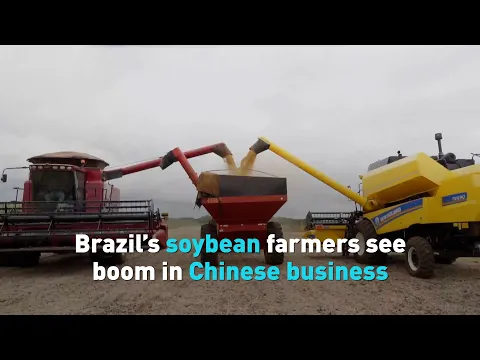

Brazilian soybeans are experiencing their best moment in terms of export volume, but the future depends on variables that no producer controls alone. The tariff war between the US and China pushed Chinese buyers to Brazilian ports, infrastructure investments are expanding outflow capacity, and national production continues to break records. However, the same geopolitics that benefited Brazil can reorganize at any moment.
Do you believe Brazil can maintain its dominance in the global soybean market even if the US and China reach a trade agreement? Leave your opinion in the comments about the role of Brazilian agribusiness in this geopolitical chessboard and whether dependence on China as the main buyer is an asset or a vulnerability for the country.





-

-

-

-

-

-

25 people reacted to this.