






 Portuguese
  Spanish


Inaugurated In 2018, The Symphony of the Seas Consolidated Royal Caribbean’s Dominance In The Global Cruise Market. At 362 Meters Long And With A Capacity For More Than Nine Thousand People On Board, It Is Not Only One Of The Largest Cruises In The World: It Is A Naval Engineering Project That Redefined What Is Understood By Maritime Passenger Transport.
Royal Caribbean International Delivered To The World, In March 2018, The Symphony of the Seas, A Vessel That Immediately Became One Of The Largest Cruises In The World In Terms Of Tonnage, Capacity, And Physical Dimension. With 228 Thousand Gross Tons, 362 Meters Long And Over 65 Meters Wide, It Is Longer Than The Eiffel Tower Is Tall, And Its Width Is Equivalent To Almost A City Block.
The Symphony Was Built At The Chantiers de l’Atlantique, In Saint-Nazaire, France, And Is Part Of The Oasis Class — The Largest Series Of Passenger Ships Ever Developed. The Project Consumed More Than Three Years Of Work, Involving Thousands Of Engineers, Workers, And Specialized Technicians. The Estimated Cost Of The Vessel Exceeds US$ 1.35 Billion. Meet The Ship That Consumes 300,000 Liters Of Fuel Per Day – And Still Is More Efficient Than An Airplane.
Designed To Accommodate Up To 6,680 Passengers, Distributed Across 2,759 Cabins, The Ship Also Operates With A Crew Of Approximately 2,200 People. In Full Operation, The Symphony Of The Seas Houses A Population Greater Than Towns Like Gramado (RS) Or Tiradentes (MG), Operating With Total Autonomy For Weeks, Which Justifies The Expression Often Used To Describe It: A Ship That Is A City.
-
Why Do Electrical Outlets and Switches Turn Yellow? Understanding the Impact of Light, Temperature, and Materials on Color Change

-
Former Brazilian laborer and ice cream vendor turns struggling company into $16.5 billion giant with 90,000 employees.

-
New Cyclone Expected to Hit Brazil, Changing Weather Within 72 Hours
-
Brazilian School Network Turns 7 Tons of Recyclables into 43 Wheelchairs, Aiming to Break Record by 2026


Discover The Floating Neighborhoods Of The Symphony Of The Seas, One Of The Largest Cruises In The World
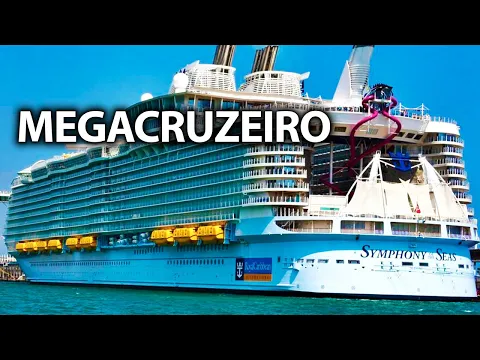

One Of The Concepts That Differentiates The Symphony Of The Seas From Any Other Cruise Is The Organization Of Its Internal Spaces. Royal Caribbean Adopted A Model Inspired By The Urban Logic Of Modern Cities, Dividing The Vessel Into Seven “Neighborhoods” Or Themed Areas.
Each Of These Neighborhoods Has Specific Functions, Aesthetics, And Audiences. Central Park, For Example, Is An Open-Air Garden With More Than 20,000 Live Plants, Trees, And Shrubs Maintained By An Automated Irrigation And Climate Control System. The Boardwalk Simulates A Beach Boardwalk, With A Carousel, Shops, And Restaurants. The Royal Promenade Functions As A Commercial And Social Center, While The Youth Zone Concentrates Areas Aimed At Children And Teenagers.
This Zoning Facilitates The Movement Of Thousands Of People And Helps Reduce The Sense Of Crowding, Distributing The Flow Of Visitors Across Distinct And Thematically Planned Areas. The Result Is A Navigation Experience With Spatial Organization Similar To That Of A Small Metropolis.
Symphony Of The Seas And The Engineering Behind One Of The Largest Cruises In The World
The Operation Of A Ship With More Than 9,000 People On Board Requires Engineering Solutions Similar To Those Used In Offshore Platforms Or Large Warships. The Symphony Of The Seas Is Equipped With A Diesel-Electric Propulsion System Comprising Six Wärtsilä Engines And Three ABB Azimuth Thrusters. These Engines Are Capable Of Generating Up To 100,000 kW Of Power, Allowing A Cruising Speed Of 22 Knots, Approximately 41 Km/H — Remarkable Performance For A Structure Of This Size.
The Ship’s Hull Was Developed With An Optimized Hydrodynamic Profile And Incorporates A Microbubble Release System Below The Waterline That Reduces Friction With The Sea And Enhances Energy Efficiency. The Fuel Consumption Is Monitored In Real Time By Sensors Distributed Along The Keel And In The Propulsion Compartments.
In Environmental Terms, The Symphony Adopts State-Of-The-Art Solutions. All The Ship’s Lighting Is Provided By LED Systems, And The Water Treatment Is Carried Out By Onboard Desalination Units Capable Of Producing Up To Two Million Liters Of Potable Water Per Day. Solid Waste Is Separated, Processed, And Recycled By Autonomous Systems, And Sewage Is Treated Before Disposal, Complying With International IMO (International Maritime Organization) Standards.
Large-Scale Entertainment: From The Theater To The Surf Simulator
A City Needs Services And Leisure. A Ship That Aims To Function As A Floating City Could Not Be Any Different. The Symphony Of The Seas Features An Entertainment Structure That Rivals Theme Parks On Solid Ground. There Are Two Large Theaters, The Main One Dedicated To Licensed Broadway Musicals, Such As “Hairspray,” With Professional Production And A Capacity For More Than 1,300 Spectators Per Show.
The Vessel Also Includes The AquaTheater, An Outdoor Aquatic Amphitheater At The Stern, Where Synchronization Diving And Acrobatics Shows Take Place. The Space Is Equipped With Varying Depth Swimming Pools, Mobile Platforms, And Immersive Sound Systems.
Besides The Theaters, The Ship Offers A Zip Line, Two 13-Meter Climbing Walls, An Ice Skating Rink, Sports Fields, And The Ultimate Abyss — A Dry Slide Extending Ten Stories High. For Those Seeking Technological Experiences, There Are Two FlowRider Simulators That Allow Passengers To Surf On Artificial Waves.
The Bionic Bar, Where Robotic Arms Prepare And Serve Drinks Under Digital Command, Is Another Example Of The Integration Between Entertainment And Automation. This Experience, Although Playful, Is Built On Industrial Technologies Applied To The Hospitality Sector.
A Logistics System Worthy Of An International Airport
Managing A Ship Like The Symphony Requires A Supply Chain And Logistics Equivalent To That Of A Large Airport. The Central Kitchens Operate 24 Hours A Day And Are Supplied With Over 300 Tons Of Food Per Week. The 22 Restaurants And 42 Bars Operate With Rotating Menus That Cater To A Highly Diverse Population In Terms Of Culture, Language, And Dietary Restrictions.
Storage Is Done In Refrigerated Chambers, Dry Compartments, And Pressurized Rooms Located Below The Main Deck. RFID Systems Monitor Stocks In Real Time, With Replenishment Done In Strategic Ports Such As Miami And Barcelona, Following Strict Food Safety Protocols.
The Symphony Also Has An Industrial Laundry System, Internal Power Plants, And Hospital Departments Equipped With Operating Rooms, ICU Beds, And Emergency Care Capacity. Crowd Control Is Managed By Proprietary Software From Royal Caribbean That Monitors Passenger Flow Through Real-Time Geolocation, Allowing Dynamic Operational Adjustments In High-Traffic Areas.
Itineraries, Terminals, And Global Operations
Since Its Debut, The Symphony Of The Seas Alternates Between The Caribbean And The Mediterranean. Its Main Routes Depart From Miami, In The United States, Or Barcelona, In Spain, With Stops In Destinations Such As The Bahamas, Cozumel, San Juan, Naples, Civitavecchia (Rome), And Marseille. Each Itinerary Lasts An Average Of Seven Nights, With Options That Can Extend Up To 12 Days.
Royal Caribbean Invested In Port Infrastructure To Facilitate The Ship’s Operation. At PortMiami, Terminal A Was Inaugurated, A Dedicated Facility That Allows The Boarding And Disembarking Of More Than Six Thousand Passengers In Less Than Three Hours, Featuring Biometric Systems, App Check-In, And Facial Recognition Boarding.
The Symphony Has Also Become A Showcase For The Shipbuilding Industry. Shipyards, Universities, And Regulatory Bodies Closely Monitor Its Energy Efficiency Indicators, Onboard Management, And Environmental Impact, As Its Solutions Tend To Anticipate The Next Steps In Commercial And Tourist Navigation.
The Symphony Of The Seas Redefines The Concept Of A Ship That Is A City
The Symphony Of The Seas Is, By Technical And Operational Merits, One Of The Largest Cruises In The World. But More Than Its Numbers — Which Impress On Their Own — What Makes It Unique Is Its Proposal To Be A Navigable City. A Space Where Housing, Work, Culture, And Leisure Coexist With The Same Degree Of Complexity As A Modern Urban Center, But Under Maritime Conditions.
Its Existence Is A Milestone For Naval Engineering, But Also A Case Study In Urban Management, Automation, Sustainability, And Large-Scale Hospitality. As It Sails, The Symphony Does Not Just Cross Oceans: It Traverses Boundaries Between Land And Sea, Between Architecture And Engineering, Between Tourism And Urbanism. It Is, Effectively, A Ship That Is A City — And Perhaps, Soon, A Model For Others Yet To Be Created.








Tive a oportunidade de viajar nele em Julho de 2018. É maravilhoso! Gostaria de fazer outras viagens com a Royal Caribbean.Ja viajei também no Oasis. É muito bom viajar em um navio completo como esses