Portuguese
  Spanish


With 933 Km and an Investment of R$ 20 Billion, Ferrogrão Aims to Transform the Logistics of Minerals and Grains in Brazil. But the Project Faces Environmental Disputes and STF Decisions That Could Change Everything.
A route of almost a thousand kilometers cutting through the Amazon, billions in private investments, and an ambitious promise: to redefine Brazil’s export logistics so it will no longer be at the mercy of the Southeast ports. Ferrogrão (EF-170), a proposed 933 km railway corridor between Sinop (MT) and Miritituba (PA), stands out as one of the most strategic — and also one of the most controversial — undertakings in the country. Budgeted at R$ 20 billion, the railway aims to transport minerals, grains, fertilizers, and ethanol via a new route called Arco Norte, seen as shorter, more economical, and efficient to meet the growing international demand for Brazilian commodities — especially with the appreciation of strategic minerals in times of war and energy transition.
But the railway, which interests Vale, VLI, Amaggi, and agri-giants, also cuts through indigenous areas and sensitive environmental zones, reigniting the clash between development and preservation.
What Is Ferrogrão and Why Is It So Important?
The EF-170, dubbed Ferrogrão, was envisioned as a logistics solution for the flow of agribusiness and mining in the north of the country. It will connect Sinop (MT), one of Brazil’s most important grain production hubs, to the port of Miritituba, in Itaituba (PA).
-
New Smart Radar Begins Issuing Fines to Solo Drivers in Carpool Lanes, Uses Cameras to Count Occupants, Changing Traffic Enforcement Rules on Busy European Roads

-
Why can the crane operator only obey the correct signalman on the construction site: among dozens of workers, a hand raised by the wrong person can confuse the maneuver and turn a load of tons into an immediate risk.
-
What changes with the new public transportation rules that can reduce pressure on fares and pave the way for zero fare in Brazil?
-
Argentina confirms Belgian giant to lead strategic Paraná River waterway and promises to reduce logistical costs on one of South America’s most important routes

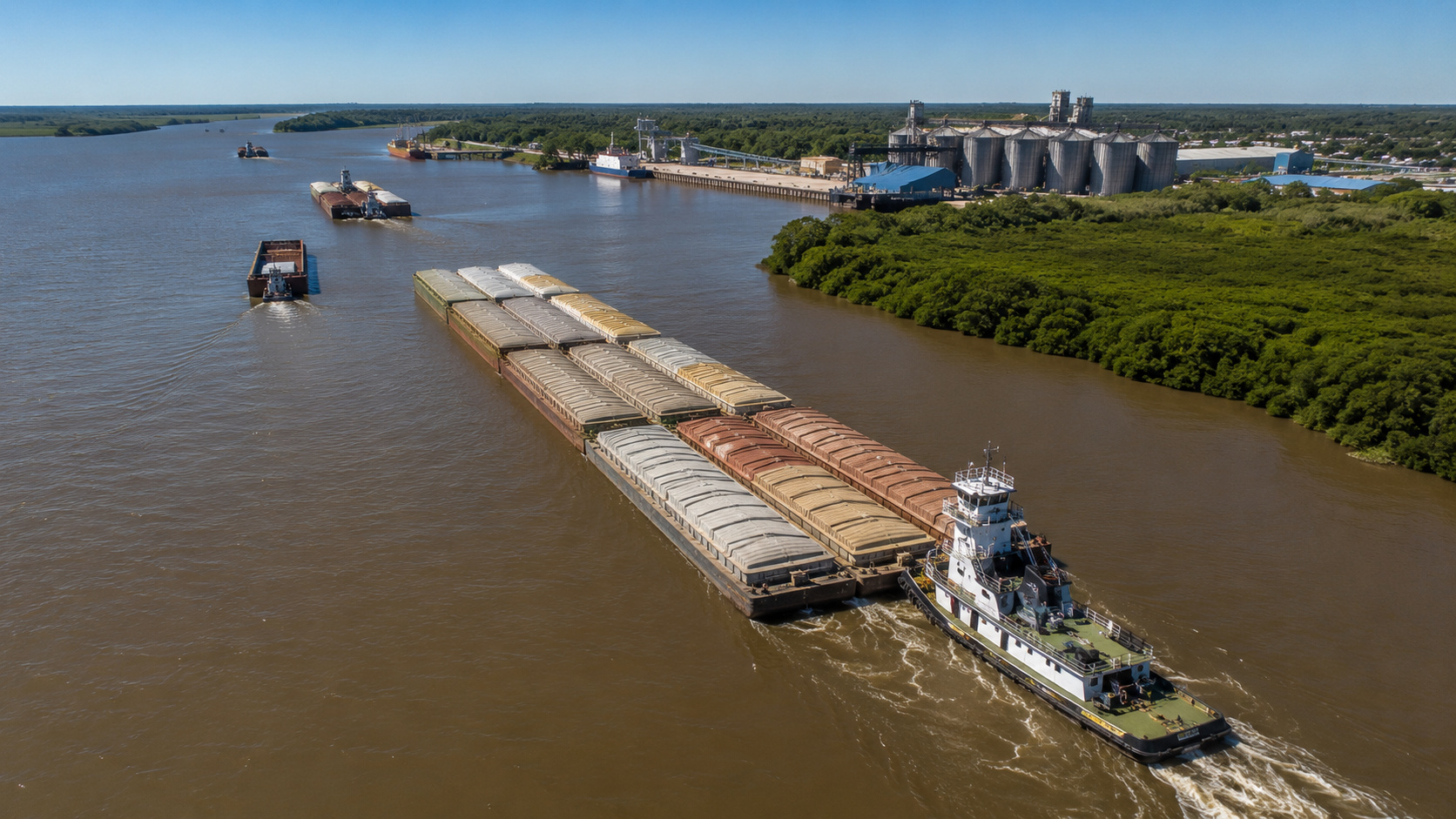
The choice of this route is not coincidental: it shortens the pathway of products to international markets via Amazonian rivers and Arco Norte ports, instead of relying on the ports of Santos or Paranaguá in the South and Southeast.

This change could reduce logistics costs by 30% to 40% for grain and mineral producers, according to data from CNA (National Confederation of Agriculture and Livestock of Brazil). Currently, heavy logistics affect Brazil’s competitiveness in the global scenario.
Ferrogrão appears as a response to this limitation — a modern railway, designed for high-volume transportation and with a lower environmental impact than traditional road transport.
And there’s more: the participation of Arco Norte in Brazil’s grain exports has jumped from 8% to over 20% in less than a decade. The trend is expected to continue growing, and Ferrogrão could further enhance this prominence.
Rising Minerals and the Interest of the Arco Norte Extractive Chain
Although the media focus is on the flow of grains, the mineral sector is one of the major stakeholders in Ferrogrão. The route has branch lines planned for Santarenzinho and Itapacurá — areas close to bauxite, copper, and even gold exploration projects. In addition, the Mato Grosso-Pará axis could integrate future transport routes for iron, manganese, phosphated fertilizers, and other essential minerals, connecting extractive centers to the international market faster and cheaper.
The geopolitical moment also contributes. With the war in Eastern Europe, global supply chains for strategic minerals are being restructured. Brazil is seen as a reliable supplier with significant reserves but needs infrastructure to compete with countries that already offer rail access to ports.
No wonder companies like VLI (Vale’s logistics arm), Amaggi, Cargill, ADM, and Bunge are actively participating in studies and efforts to make Ferrogrão a reality.
A Billion-Dollar Project Stalled at the Supreme Court
Despite the support of agribusiness and mining giants, the project faces strong judicial, environmental, and social resistance. In 2021, the Supreme Federal Court (STF) suspended the progress of Ferrogrão, claiming that the railway crosses the Jamanxim National Park, a conservation unit protected by law, without the necessary legal provisions and consultation with traditional populations.
Moreover, the route intersects indigenous lands and dense forest areas of the Legal Amazon, which has generated reactions from the Kayapó people, socio-environmental NGOs, and even international mobilizations. Critiques revolve around the risk of indirect deforestation, pressure on protected territories, and the expansion of illegal activities such as clandestine mining and land grabbing.
The judicial impasse has yet to be resolved. New environmental studies are being conducted, with attempts to reformulate the project to mitigate impacts and unblock the licensing processes. The government is considering using the authorization regime provided in MP 1065/21, which would facilitate the start of construction through block auctions or concessions.
Who Will Fund the Rails? The Hybrid Model and Private Appetite
The financing model for Ferrogrão is hybrid, structured through PPI (Investment Partnership Program), with technical support from EPL (Company of Planning and Logistics) and predominantly private funding. The current estimate is for investment between R$ 20 billion and R$ 21.5 billion, spread over nearly 10 years of implementation, operation, and maintenance.
The government’s expectation is to conduct block auctions, encouraging competition and regulatory flexibility. VLI, Vale’s logistics arm, has already expressed interest in participating as an investor, operator, or consortium partner — reinforcing the view that the railway could be vital not only for soy but also for iron.

Foreign companies are also paying attention. With the unstable geopolitical scenario, investors from the United States and Europe are seeking alternatives to supply chains dominated by Chinese routes. In this context, Ferrogrão presents itself as part of an alternative Atlantic chain, connecting Brazil directly to global markets through less congested routes with multimodal potential.
The Dilemma of Progress: Between Development and the Forest
Ferrogrão may be the most emblematic example of a dilemma that has followed Brazil for decades: how to grow without destroying. On one side, we have a genuine demand for flow infrastructure. The country loses billions each year due to logistical inefficiency, and producing regions lack competitive access to international markets. On the other hand, the Amazon is a sensitive biome, essential for climate balance and the preservation of global biodiversity.
What’s at stake is not just a railway, but the model of development that Brazil wants to adopt in the next 30 years. The decision to either keep the project stalled or adjust it with environmental responsibility and consultation with affected peoples will define the future of similar ventures, which are currently on paper but depend on the outcome of EF-170.