






 Portuguese
  Spanish


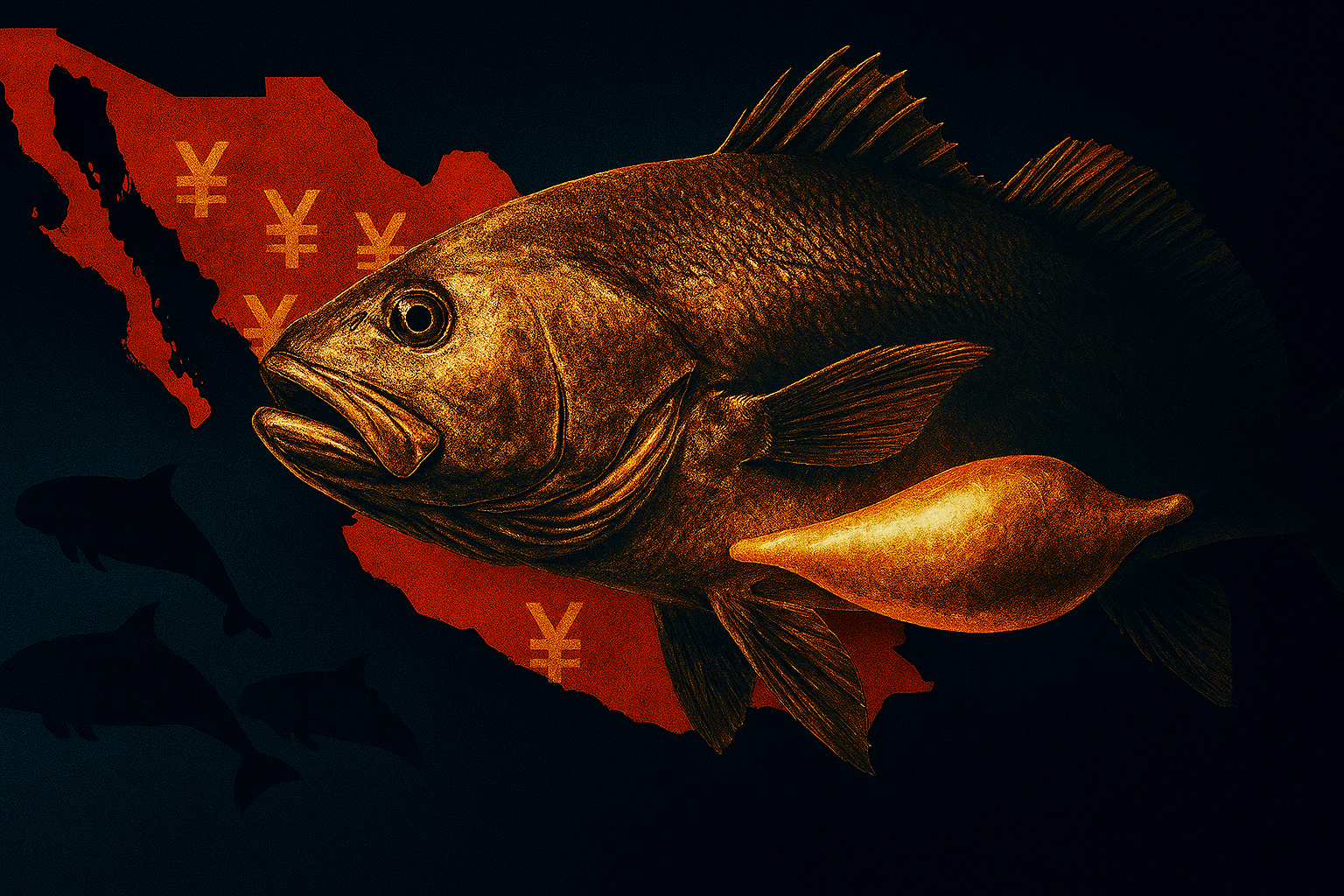


The Trafficking of Totoaba, A Fish from Mexico Whose Swim Bladder is Worth Up to US$ 80,000 Per Kilo, Threatens to Extinguish the Vaquita, the Rarest Marine Mammal on the Planet.
In the turquoise waters of the Gulf of California, also known as the Sea of Cortez, a little-known animal outside of Mexico has become the centerpiece of one of today’s biggest environmental crises. This is the totoaba (Totoaba macdonaldi), a large fish that can reach two meters in length and weigh over 100 kilos. Endemic to the region, it has been fished for centuries for local consumption but has, in recent decades, become the target of a billion-dollar smuggling operation.
The reason? Its swim bladder, referred to as buche by fishermen, is considered a rare delicacy and a supposed medicinal ingredient in China. On the Asian black market, this part of the fish can be sold for prices ranging from US$ 20,000 to US$ 80,000 per kilo, surpassing the value of gold, cocaine, and even some diamonds.
How the Vaquita Entered History
The problem is that the illegal fishing of the totoaba does not only affect the species itself. It has fatal consequences for one of the rarest animals on the planet: the vaquita (Phocoena sinus). This small porpoise, a relative of dolphins, measures just over 1.5 meters and exists only in a restricted area of the northern Gulf of California.
-
Award-Winning Japanese Restaurant Reveals It Has Preserved Part of the Same Frying Oil for 66 Years

-
American Youth Transforms from Severe Obesity to U.S. Air Force Enlistment, Losing 90 Kilograms in Two Years
-
11-Year-Old Entrepreneur Sells 60 Homemade Sweets Daily, Mastering Cost Calculation, Social Media Promotion, and Client Negotiation Since Age 7

-
Peruvian Mountain’s 5,200 Aligned Holes May Unveil Ancient Indigenous Market for Corn and Cotton




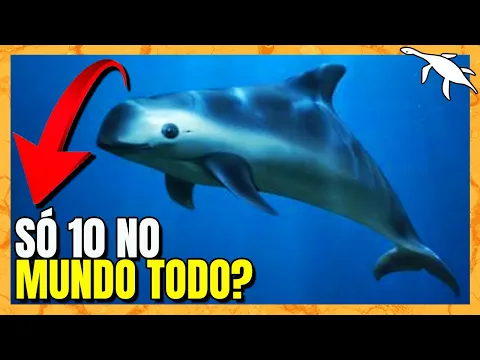
According to the International Committee for the Recovery of the Vaquita (CIRVA), there are less than 20 individuals left in the wild. The species is now considered the most endangered marine mammal in the world.
The vaquita is not hunted directly. Its fate is tied to the use of illegal gill nets, set to catch totoabas.
These gigantic nets act like invisible traps: in addition to totoabas, they entangle vaquitas, turtles, and other species. Once caught, vaquitas drown in minutes since they need to surface to breathe.
A Global Black Market
The totoaba smuggling chain operates like an international trafficking scheme:
- Illegal Fishing: local fishermen, often pressured by poverty, risk their lives by setting prohibited nets.
- Intermediaries: middlemen buy the swim bladders for relatively low prices, around US$ 1,000 to US$ 2,000.
- Illegal Export: the pieces are transported along illegal routes overland to the United States and then cross the Pacific, mostly through Hong Kong.
- Asian Market: in China, the same swim bladder can be resold for astronomical values, reaching US$ 80,000 per kilo at black-market auctions.
Reports from Interpol and CITES (Convention on International Trade in Endangered Species) confirm that the totoaba trafficking already generates figures comparable to the illegal trade in ivory and shark fins.
Local Impacts in Mexico
The illegal trade of totoaba not only threatens biodiversity but also the coastal communities of the Gulf of California.
The legal fishing sector, which depends on species like shrimp and commercial fish, suffers directly from the competition of black-market nets that devastate the marine ecosystem.
Moreover, there are reports that Mexican drug cartels have begun to control part of this trade, seeing in totoaba an alternative profit route with lower legal risk than drug trafficking. For local communities, this means living between two worlds: the one of economic necessity and the one of the threat of organized crime.
Attempts at Protection and Resistance
The Mexican government has implemented various measures to try to halt the disaster:
- Creation of the Upper Gulf of California and Colorado River Delta Biosphere Reserve, in 1993.
- Total Ban on totoaba Fishing, listed as an endangered species by the IUCN.
- Banning of gill nets, responsible for the accidental deaths of vaquitas.
- Joint Enforcement with the Mexican Navy, with seizures of illegal vessels.
Even so, the effectiveness has been limited. The high value of the swim bladder prompts many fishermen to continue risking it. Recent reports show that, even after illegal net removal operations by the NGO Sea Shepherd Conservation Society, hundreds of them continue to be reinstalled days later.
International Pressure
The crisis of the vaquita and totoaba is not merely Mexican — it has become an international case. In 2018, the United States went as far as suspending the import of seafood from certain regions of Mexico, citing non-compliance with environmental standards.
The European Union and the UN have also pressured the Mexican government to strengthen protective measures.
NGOs such as WWF and Sea Shepherd warn that the extinction of the vaquita could happen within a few years if nothing is done. In 2023, CIRVA issued an urgent report: “Time is up; we either completely eliminate illegal totoaba fishing or we will lose the vaquita forever.”
A Symbol of the Global Conflict Between Tradition and Conservation
The totoaba crisis exposes a larger dilemma: to what extent can cultural practices or culinary traditions justify the destruction of entire species? In China, advocates for the use of swim bladders argue that they have medicinal and cultural value, passed down through generations. For environmentalists, this practice is unsustainable and cruel.
The vaquita, in turn, has become a symbol of an unequal struggle: a discreet animal that has lived for millions of years without human contact now depends on the coordinated action of governments and international organizations to survive.
Scientists have attempted extreme measures, such as capturing vaquitas to keep them in captivity and prevent extinction, but the species has proven to be extremely sensitive to stress. The only viable alternative remains completely eliminating illegal fishing in the region.
With fewer than 20 individuals alive, each new death represents a massive loss. It is not just about saving a rare species, but about preserving an entire ecosystem threatened by organized crime and the insatiable demand of a black market on the other side of the world.
A Warning for the Planet
The case of totoaba and vaquita is more than just a Mexican drama. It shows how illegal wildlife trade can cross continents, linking criminal cartels to luxury markets and putting entire species on the brink of extinction.
If the vaquita disappears, it will be the first marine mammal to go extinct at human hands in the 21st century — a cruel reminder that creating laws is not enough: they must be enforced on a global scale.


Pelo que tenho visto, o comércio Chinês é o maior predador dos ecossistemas no mundo.
O Brasil é uma das vítimas, na questão do contrabando e a possível extinção dos jumentos tanto no Brasil como na África.
Se for colocar todas as espécies que a China consome, em breve a extinção de muitas espécies irá acontecer mais breve do que imaginamos.
Sempre os chineses
Sempre o mercado Asiático por trás da maioria das extinções de animais pelo mundo.