





 Portuguese
  English
  Spanish
  5 min of reading
  0 comments


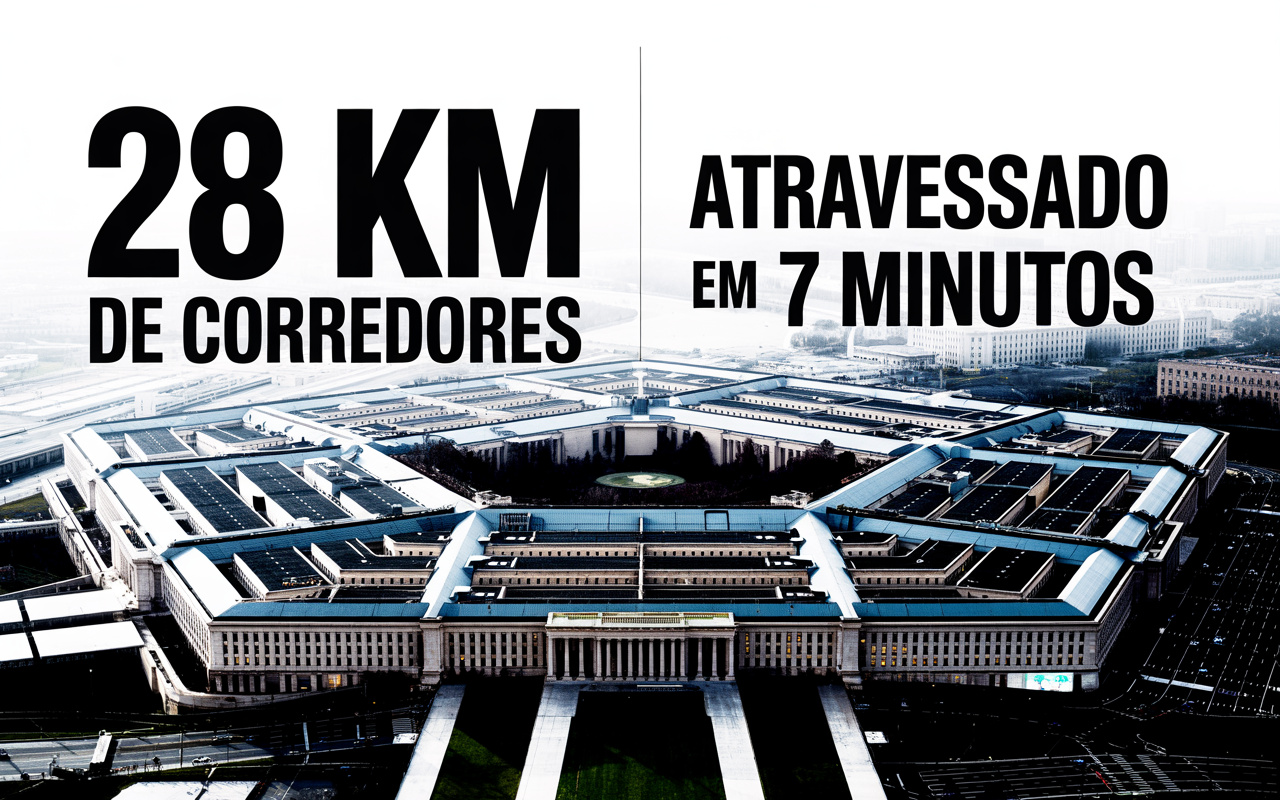
The Pentagon, Headquarters of the U.S. Department of Defense, Covers 600 Thousand m², 28 km of Corridors, and Can Be Crossed in 7 Minutes — the Largest Military Headquarters on the Planet.
Located in Arlington, Virginia, just a few minutes from the capital Washington, the Pentagon is much more than the headquarters of the United States Department of Defense. It is one of the most iconic buildings in the world, a symbol of American military strength, and a key element in global geopolitics. With its unique five-sided geometric shape and colossal dimensions, the building impresses with numbers that seem to come straight out of fiction: it has 600 thousand m² of built area, 28 km of internal corridors, and enough space to accommodate about 26 thousand military and civilian employees, in addition to 3 thousand support staff.
Yet its architecture is so efficient that a person can cross the entire building, from end to end, in just 7 minutes on foot.
The Urgency That Accelerated the Construction of the Pentagon
The Pentagon was built in record time during World War II. At the time, the American Army was spread across 17 different buildings in Washington, causing slow communication and coordination problems. The solution was to erect a single monumental structure to centralize command.
-
Reports about the possible arrest of Diogo Defante in the USA during the 2026 World Cup are making waves on social media and raising questions about what really happened.

-
The 71-year-old Korean pastor who built a box in the wall to save abandoned babies and has already taken in more than 2,000 children without asking for the name of any mother.
-
Mother of four faces financial difficulties in São Paulo, swaps jobs outside the home for sweet and savory pies, and turns the kitchen into a source of income to support the family while studying nursing to change her children’s future.

-
Afghanistan has one of the largest untapped copper reserves in the world, and China wants to control all of it with a billion-dollar deal that could change the fate of Asia’s poorest country.




Construction began on September 11, 1941 — a date that ironically would be marked decades later by the terrorist attacks of 2001.
In just 16 months, a workforce of 15 thousand workers erected the colossal complex. On January 15, 1943, the Pentagon was inaugurated, representing a victory in engineering and a strategic milestone in the war effort.
Dimensions That Seem Impossible
The Pentagon is not only the largest office building in the world — it is also one of the best planned. To understand its scale:
- Total Area: 600 thousand m².
- Internal Corridors: 28 km spread across five floors above ground.
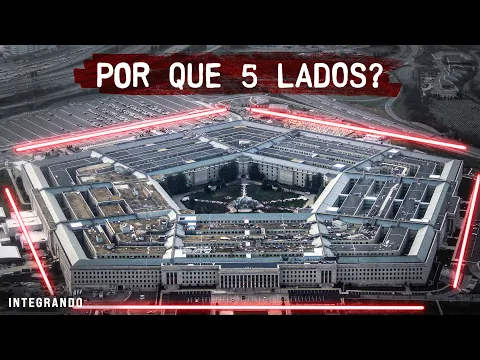
- Shape: regular pentagon with 281 meters on each side.
- Central Courtyard: an open space of 5 acres (20 thousand m²), nicknamed Ground Zero Café.
- Capacity: about 26 thousand employees, both military and civilian.
- Parking: 8,770 vehicle spaces, organized as if they were neighborhoods of a small city.
And despite its vastness, its radial and symmetrical shape ensures efficiency: from the farthest point to the opposite end, anyone can cross the building in less than 10 minutes of walking.
A City Within a City
Visitors entering the Pentagon have the sensation of being in a real walled city. There are restaurants, cafés, barbershops, post offices, shops, pharmacies, and even medical clinics. It is estimated that around 30 thousand people circulate through the building daily.
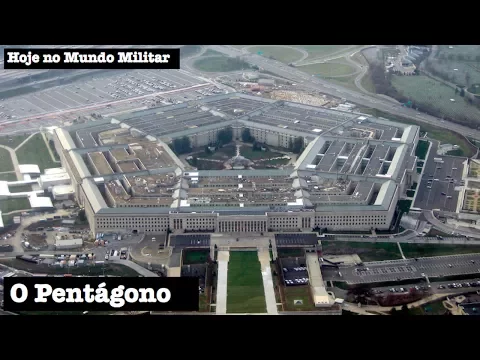
The central courtyard is one of the most curious places. Popularly referred to as “Ground Zero”, the nickname arose during the Cold War when it was said that the space would be the primary target of a Soviet nuclear attack. Today, the site hosts a café surrounded by trees and gardens, serving as a meeting point for employees.
Strategy Behind the Shape
The pentagonal shape of the building was not just an aesthetic choice. Initially, the idea was to adapt the building to an irregular plot of land in Arlington, which resulted in the design of five sides. Later, even when the project changed locations, the design was maintained because it proved to be extremely functional.
The radial arrangement of corridors and offices allows for quick access to any point in the building. It is precisely this planning that enables the feat of crossing the 28 km of internal corridors in just 7 minutes.
The Pentagon as a Target and Symbol
The Pentagon, as a military icon, has also become a target for attacks. The most notable occurred on September 11, 2001, when one of the planes hijacked by Al-Qaeda terrorists struck the west side of the building, killing 125 people working there, in addition to the passengers on the plane.
Despite the tragedy, the building withstood the impact thanks to the robustness of its construction and a recent structural reinforcement renovation. In less than a year, the damaged section was already rebuilt, symbolizing the resilience of American military power.
Global Comparisons
To dimension the grandeur of the Pentagon, it is worth comparing it to other iconic constructions:
- It is larger than the Empire State Building in usable office area.
- It houses more people than many small Brazilian towns, given that 26 thousand employees are equivalent to the population of municipalities like Campos do Jordão (SP) or Itatiaia (RJ).
- Exceeds in area large shopping malls in Brazil, such as Shopping Aricanduva in São Paulo, which is considered the largest in Latin America.
In other words: the Pentagon is not just a building; it is an entire city dedicated exclusively to war and defense.
Despite its grandeur and symbolism of power, the Pentagon is also made of human stories. Every day, thousands of employees take the Washington Metro to reach the building, work in offices, meet in the corridors, and live a routine that blends bureaucracy and military strategy.
Interestingly, many who work there say that, after the initial impact of the size, the building begins to feel “normal” inside. After all, with shops, restaurants, and even communal spaces, the Pentagon becomes part of daily life, as if it were a city within a city.
The Future of the Pentagon
Even with 80 years of existence, the Pentagon continues to be the nerve center of American defense. Continuous renovations keep its infrastructure modern, with advanced communication systems, fiber optic networks, and reinforced security areas.
The building is also undergoing adaptations to be more sustainable, with improvements in energy efficiency and resource utilization. However, its central function remains the same: to be the brain of the U.S. Armed Forces.
More than concrete and corridors, the Pentagon is a geopolitical symbol. It represents strength, but also the vulnerability of the United States — both as a command center for wars and military operations and as a target for attacks.
Its simple yet monumental geometry has transformed it into a recognizable icon around the world. And its numbers continue to impress: 28 km of internal corridors, 600 thousand m² of area, 26 thousand employees, and the feat of crossing it in 7 minutes on foot.





-

-

5 people reacted to this.