






 Portuguese
  Spanish
  4 min of reading
  0 comments


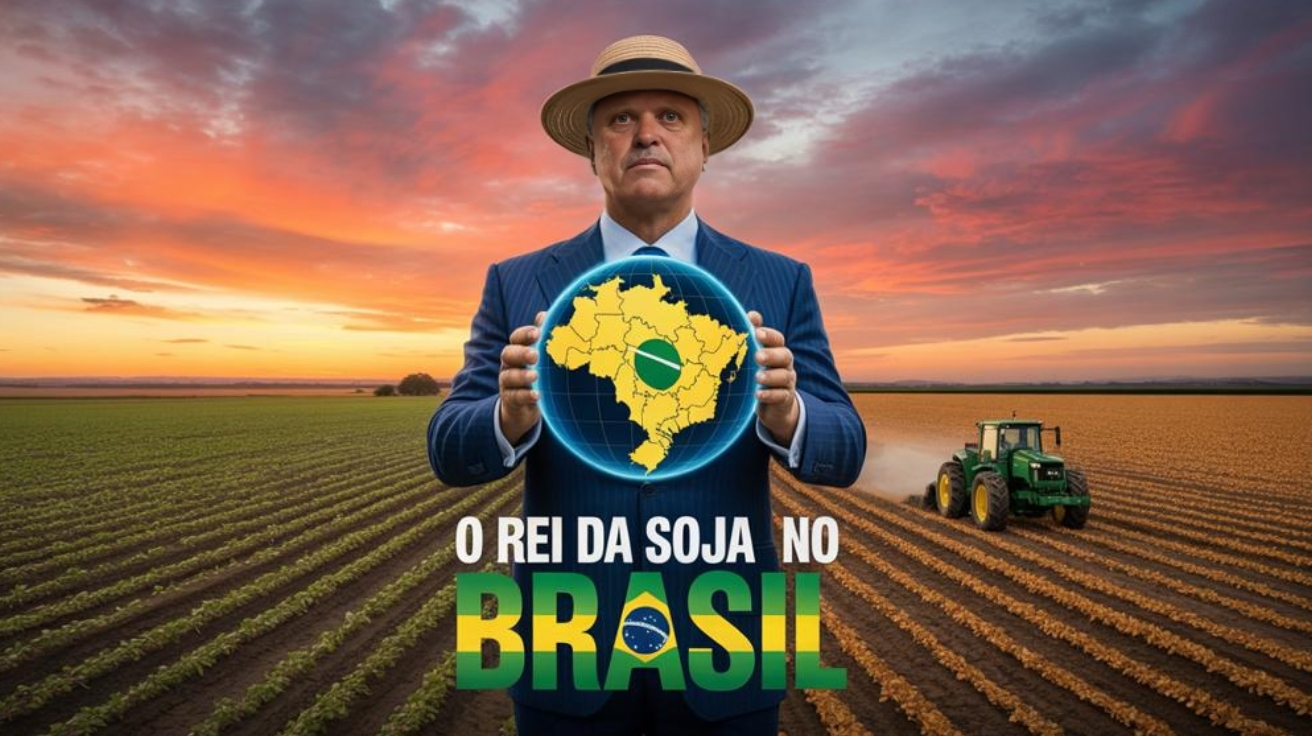
Historical Figure of Brazilian Agribusiness Repositions Itself After Decades of Controversies, Adopting an Environmental Discourse Amid International Pressure and Climate Change, Revealing Little-Known Details About Its Impact on the Amazon and the Cerrado.
Blairo Maggi, born on May 29, 1956, is an agronomist and the leading name in Brazilian agribusiness.
Founder of the Amaggi Group, he was the largest individual soybean producer in the world, accounting for up to 22% of production in Mato Grosso at one time.
His trajectory is emblematic: from “king of soy” controversial figure to central actor of the green turn of agribusiness, a defender of sustainable agriculture.
-
A 10-year-old girl in Manaus created a styrofoam buoy with a sensor to detect trash in streams, became the sole representative from Latin America in an international challenge in London, and turned the pollution she saw near her home into a sustainable invention.

-
It was neither a crash nor abandonment; this retired plane left the airport in parts, crossed Costa Rica on trucks, and ended up becoming a suite in the heights with daily rates exceeding R$ 2,000.

-
She panicked when she saw her daughter fall from the crib; years later, she turned the experience into a factory generating R$ 9 million per year.

-
At 75 years old, João José de Carvalho, known as Mr. Janjão, was accepted for the second time by Sisu after overcoming distance, physical limitations, and years away from school, to fulfill his dream of studying Biological Sciences at UFPI.


From the Era of Deforestation to the Golden Chainsaw
At the turn of the 2000s, Blairo Maggi gained global notoriety.
In 2005, Greenpeace awarded him the “Golden Chainsaw” trophy for leading deforestation actions in the Amazon.
During that period, deforestation in Mato Grosso reached 26 thousand km² between 2003 and 2004.
Although controversial, the episode marked the beginning of his trajectory towards the green turn of agribusiness.

MT Legal: The Green Turn of Agribusiness in Practice
In 2008, as governor of Mato Grosso (2003–2010), Maggi launched the MT Legal program, with satellite monitoring aligned with the Forest Code.
Between 2009 and 2010, evident results: the deforestation rate dropped by approximately 87%.
This number confirms one of the milestones of sustainable agriculture in the country.
In recognition, Greenpeace symbolically replaced the chainsaw with a box of chocolates — a gesture that represented Blairo Maggi’s transition.
Infrastructure, Economy, and Cultural Identity
During his state administration, he paved over 1,000 km of highways and invested in waterways and railways to transport the harvest.
These advances strengthened the regional economy, especially in Sapezal – a municipality created by his father, where Maggi reinforced political and social presence.
Of Italian and German descent, he kept alive the traditions of Rio Grande do Sul, such as drinking chimarrão and wearing bombachas, combining cultural identity with innovation in the Cerrado — a hallmark of his sustainable agriculture.
Senate, Ministry, and Controversies

In 2011, he was elected senator with over 1 million votes and, in 2013, chaired the Environment Committee.
At the Ministry of Agriculture (2016–2019), he launched the Agro+ Plan, streamlining the sector.
However, he faced criticism for his actions prior to the “Operation Weak Flesh” and for suggestions to relax sanitary inspections.
In 2017, he was the target of Operation Malebolge for suspected fraudulent loans at BicBanco and appears in the Paradise Papers for financial arrangements abroad.
Environmental Legacy of Blairo Maggi: Amazon and Cerrado in Evidence
Blairo Maggi was a key figure of the ruralist lobby, influencing policies on environmental licensing in sensitive areas.
However, in 2024 he stated: “Agriculture needs to be well balanced with the environment.”
He reinforced the discourse of the green turn of agribusiness by inviting climatologist Carlos Nobre, to discuss global warming with partners at an Amaggi event.
Amaggi entered the global Timber/Forest 500 ranking in 2022 – a tool that classifies companies committed to forest management transparency.
Since then, it has expanded its goals for sustainable agriculture, focusing on the Cerrado, where it invests in integrated AR systems – agriculture, sustainable forestry, and conservation.
Blairo Maggi and Global Reaction and Modern Politics
Blairo Maggi participated in COPs (including Bali 2007 and Marrakech 2016), using his experience as a producer to argue that agricultural production and conservation are compatible.
At the Amazon Legal Governors’ Forum, he pressed for tax incentives for those who reduced deforestation — reinforcing his image as a promoter of sustainable agriculture and the green turn of agribusiness.
Highlights of Blairo Maggi in Numbers and Symbols
- 87% Reduction in Deforestation (2009–2010)
- 22% of Soybeans from Mato Grosso Produced Under Direct Management
- Golden Chainsaw (2005) That Became a Symbol of the Turnaround
- Presence in the Timber/Forest 500 (2022)
Blairo Maggi has accumulated experiences that intertwine agricultural expansion, public policy formulation, and initiatives aimed at environmental preservation.
His trajectory includes episodes that marked deforestation in the Amazon and subsequent actions that sought to reconcile production with conservation.
Today, he presents himself as a defender of practices associated with the green turn of agribusiness, articulating measures and discourses aligned with sustainable agriculture.
But to what extent do these changes reflect a structural transformation in the Brazilian agro-environmental model — or are they merely pinpoint adjustments in response to market and climate pressures?







Be the first to react!