






 Portuguese
  Spanish
  4 min of reading
  0 comments


With Support From the “Cattle King,” Pará Invests in Traceability to Reforest Degraded Areas and Change the Image of Amazon Cattle Ranching
Roque Quagliato, known as the “Cattle King,” is back in the spotlight. At 85 years old, the largest individual cattle rancher in Brazil has decided to support one of the biggest transformations ever attempted in the history of Amazon cattle ranching.
After decades marked by controversies involving deforestation and analogous slavery, Quagliato now advocates for the traceability of cattle in the state of Pará.
This change comes amid an ambitious state plan. By 2027, all cattle raised in Pará will need to receive electronic chips that verify their origin.
-
Low-Demand Brazilian Beef Offal Gains Popularity Abroad: Indonesia Purchases $19.5 Million, Boosting Revenue and Reducing Waste

-
Soy Expansion in Former Brazilian Savanna Sparks Water and Land Conflicts in Major Agricultural Frontier
-
Mexican Pest Threatens U.S. Cattle Herds at Historic Lows, Potentially Boosting Brazilian Beef Exports as Burger Prices Soar

-
Avocado Boom for European and U.S. Markets Fuels Water Crisis in Drought-Stricken Chilean Region


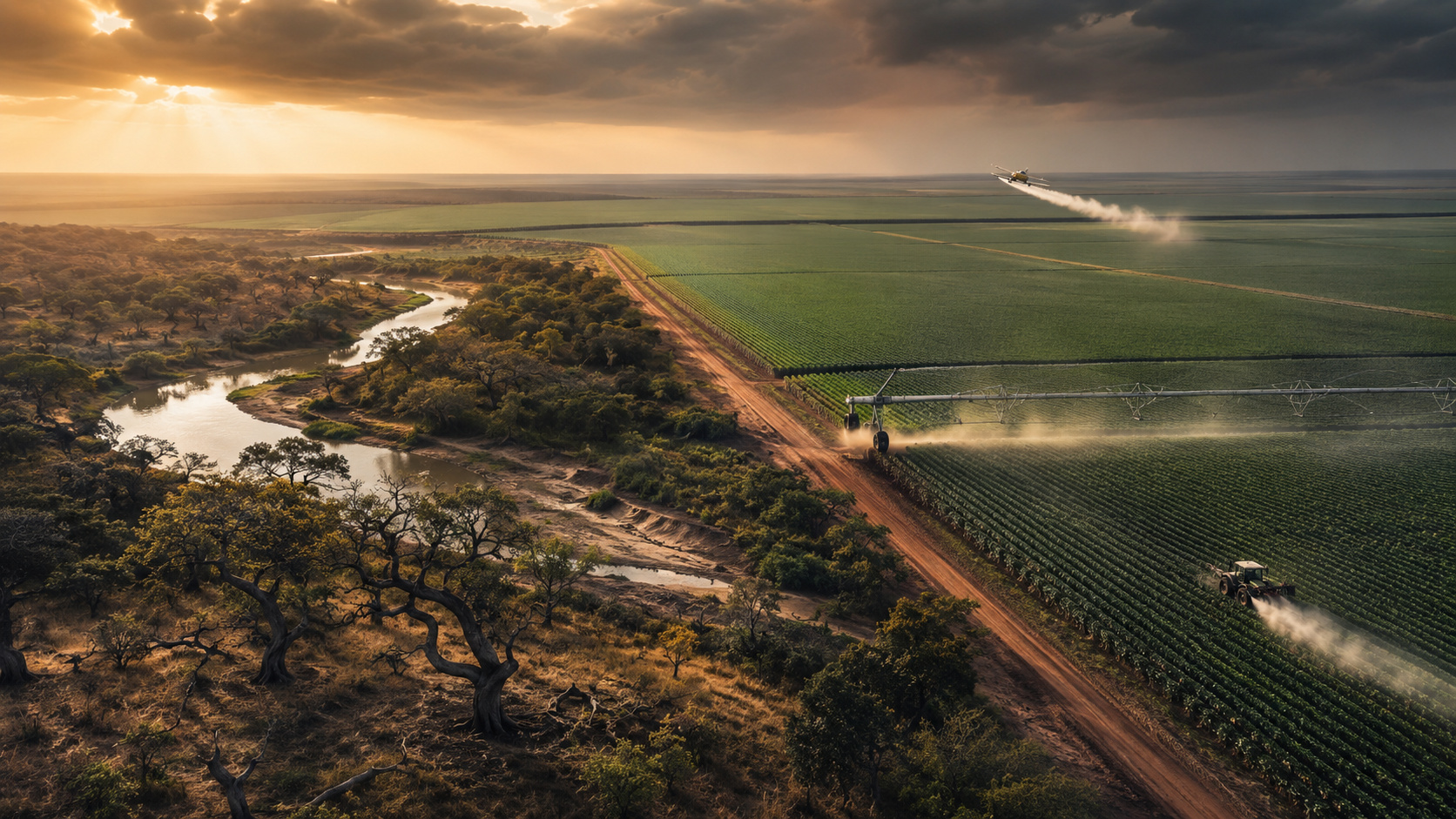


The goal is to ensure that no animal is linked to illegally deforested areas. The objective is clear: to improve the image of the beef produced in the state and meet the criteria required by international markets.
Cattle King: From Problematic Past to New Phase
During the 1990s and 2000s, farms linked to Quagliato’s name faced sanctions for practices considered abusive.
He was accused of employing slave labor and promoting large-scale deforestation. He paid the fines, except for one, resolved through a commitment to forest regeneration. Today, the Cattle King is trying to reshape his legacy.
With the new environmental policy underway in Pará, Quagliato presents himself as an advocate for regularization. He openly supports the proposal to chip all cattle by 2027.
His endorsement carries symbolic and practical weight, as he leads the Grupo Rio Vermelho, which holds about 240,000 head of cattle and approximately 112,000 hectares in Pará.
The Largest Cattle Rancher in the Country Steps Into the Spotlight
Based in Sapucaia and Xinguara, Grupo Rio Vermelho is a reference in Brazilian cattle ranching. Fazenda Rio Vermelho, its main unit, is among the largest in the country.
The group was a pioneer in implementing practices such as rotational grazing, integrated crop-livestock systems, and pasture intensification.
For all these reasons, Quagliato’s support for traceability represents more than just a personal choice. It serves as a signal to the sector that profound changes are underway.
“In the end, what we hope is that the international market offers a better price to Brazil,” he stated during an auction in Pará. He went further: “Now it’s a matter for imprisonment,” he said, commenting on producers who continue to deforest illegally.
Challenges of the New Policy
Pará has one of the largest cattle herds in Brazil, with 26 million head— a number comparable to that of Australia. Nevertheless, it suffers from trade barriers due to its association with deforestation. Countries like Japan, the United States, and members of the European Union avoid buying beef from the state.
To change this scenario, the state law approved in 2023 requires all cattle ranchers in Pará to adopt electronic chips by the end of 2026. However, the pace of implementation has been slow. By May 2025, only 12,000 animals had been tagged.
The entry of large cattle producers like Quagliato has helped alleviate fears of a boycott against the measure. The project has the backing of organizations such as the Bezos Earth Fund, which donated US$ 16.3 million, and companies like JBS, which provided 300,000 chips.
“The success of this initiative depends on the ranchers themselves,” said Andy Jarvis, director of the Future of Food program at the Bezos Earth Fund. According to him, without this participation, the policy runs the risk of not being sustainable.
Expected Impacts and Resistances
Environmentalists see the traceability policy as a real chance to prevent fraud and stop the circulation of beef linked to illegal areas.
The chips will allow tracking of the animals and accurately identifying their origin. This creates a barrier to illegal practices, making it difficult to market irregular production.
Still, there is resistance in the field. Many producers fear the costs of implementation and potential penalties if ties to illegal suppliers come to light. “There is a cost,” Quagliato acknowledged. “But when we talk among producers, we come to a conclusion: we have to do this.”
Small Cattle Ranchers and the Fear of Exclusion
If large cattle ranchers are leading the change, small ranchers face obstacles. One example is Alaion Lacerda, who raises 50 head of cattle in southern Pará. Part of the area he uses was illegally deforested in the past. Now, he fears being unable to sell his animals.
“This scares us,” he said. “Almost all producers here have some pending issue.” Lacerda’s situation is common among small ranchers who fear being excluded from the formal market.
To address the issue, the state government allows producers with embargoed areas to regularize through commitments to reforestation. However, this requires sacrifices: isolating areas, reducing herds, and consequently losing part of their income.
The Opportunity to Become an International Reference in Cattle Raising
Despite the obstacles, Pará’s cattle traceability policy could mark a historic turning point. With support from large producers, companies, and environmental organizations, the state positions itself as a pioneer in sustainable beef.
If successful, the project will help preserve the Amazon and open doors in international markets.
As summed up by an analyst from Imaflora, one of the entities monitoring the plan: “At this moment, we have political will—and that is already more than half the battle.”
With information from Compre Rural.





Be the first to react!