





 Portuguese
  English
  Spanish
 4 min of reading
  0 comments


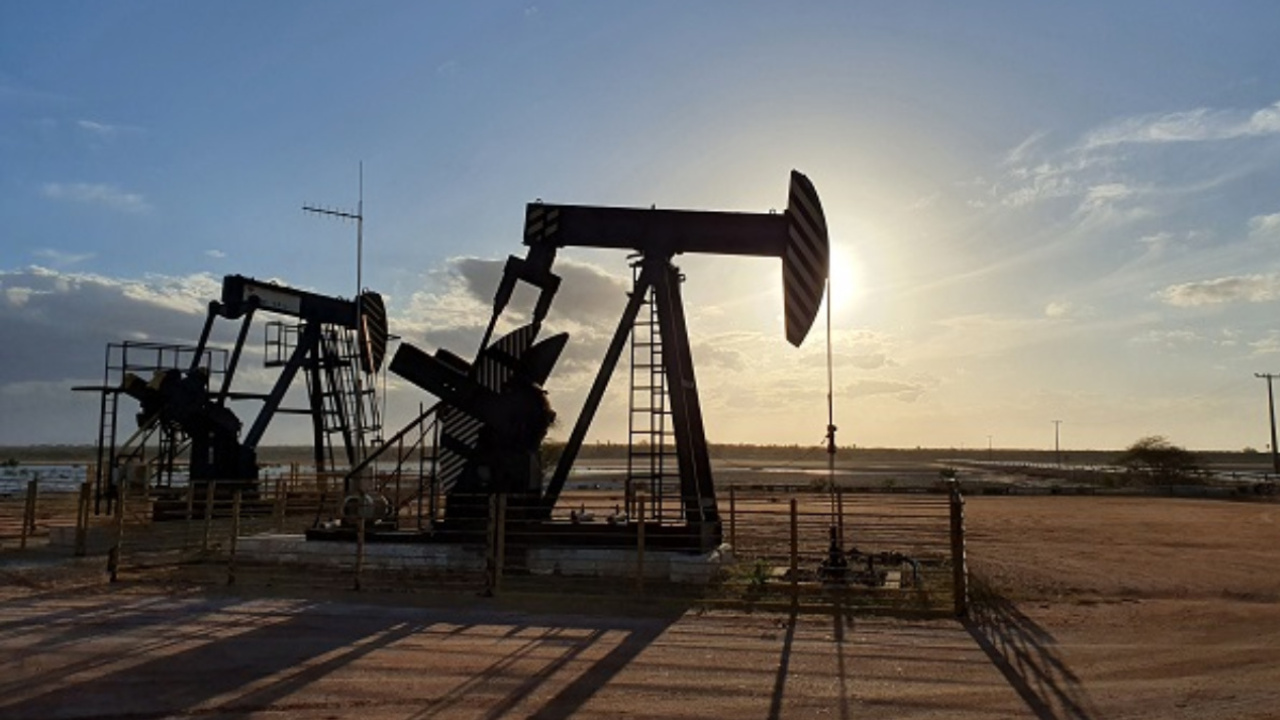
Oil Production in Rio Grande do Norte Falls to 33 Thousand Barrels Per Day, the Lowest Volume in Four Decades, and Pressures the Economy, Jobs, and Public Revenues in the State.
Oil production in Rio Grande do Norte ended December 2025 at its lowest level in 40 years. According to data from the National Agency of Petroleum, Natural Gas, and Biofuels (ANP), the state recorded a daily average of only 33 thousand barrels. The number is lower than the 36 thousand barrels per day observed in October and represents nearly half of the volume produced a decade ago.
The decline reinforces a trend that has already been observed in recent years. Historically a reference in onshore oil production in Brazil, Rio Grande do Norte lost prominence after strategic changes in the sector.
Ten years ago, the scenario was different. Production in Rio Grande do Norte was nearly double the current volume. Now, the state faces the combined effects of the natural depletion of mature fields and the reconfiguration of the operator market.
-
Seismic surveys conducted by Russian ships in Antarctica have indicated estimates of up to 511 billion barrels of oil in the Weddell Sea, almost double the reserves of Saudi Arabia, in a scenario that raises alarms in the United Kingdom about the risk to the treaty that has prohibited mining on the continent since 1959.

-
While Brazil sits on the pre-salt and still imports diesel, Turkey, which produces almost no oil, crossed half the world to drill 7,500 meters below the sea in Somalia in search of its own fuel.

-
Why didn’t oil reach $150 even after three months of the Strait of Hormuz being closed?

-
Farmer drills well in Ceará in search of water, accidentally finds crude oil and sees million-dollar discovery hindered by a rule that completely changes the future of the site.


Petrobras Exit Changed the Map of Oil in the State
One of the main factors cited for the drop in oil production is the change in Petrobras’ portfolio. In recent years, the state-owned company prioritized investments in the pre-salt and reduced its presence in onshore and shallow water fields in the Northeast.
As a result, assets in Rio Grande do Norte were sold. Smaller independent companies began to operate areas previously controlled by the state-owned company. The transition changed the pace of investments and the capacity for expansion.
According to the Union of Oil Workers of Rio Grande do Norte (Sindipetro-RN), the reduction in production is directly linked to the strategy of the new operators.
“This production was so low because the three major oil producers in Rio Grande do Norte are not making the necessary investments to increase production in our state,” says Marcos Brasil, president of the union.
He states that the exploration of the 33 blocks currently offered by the ANP could raise production to somewhere between 70 thousand and 80 thousand barrels per day, in addition to generating 15 thousand to 20 thousand direct and indirect jobs.
Mature Fields Require Technology and Increase Operation Costs
Rio Grande do Norte predominantly houses mature fields. These are areas that have been active for decades. Over time, the amount of oil decreases and the production of water increases.
In some cases, certain wells can produce up to 98% water and only 2% oil. This scenario requires more complex techniques to maintain activity. Among them are advanced recovery methods such as fluid injection and chemical processes.
One of the main producers operating in the state reported that it produced about 19 thousand barrels per day in January and has been investing precisely in these technologies to try to contain the natural decline and improve efficiency.
Still, experts highlight that costs are rising. And, when the international oil price falls, the situation becomes even tighter.
Direct Impact on the Economy and on Producing Cities
The weight of oil in the economy of Rio Grande do Norte is significant. According to the Federation of Industries of the State (Fiern), the oil and gas sector accounts for more than 40% of the industrial GDP of Rio Grande do Norte.
For Jean-Paul Prates, chairman of the Center for Strategies in Natural Resources and Energy (Cerne), the decline in production coincided with the devaluation of oil in the international market at the end of 2025, which intensified the impacts.
“Production fell, and the international oil price also fell at the end of 2025. This directly impacts the state government’s budget and the budgets of producing and neighboring municipalities, such as Mossoró, Macau, and Guamaré,” he says.

Municipalities such as Mossoró and Guamaré, heavily dependent on the oil industry, feel the effects on job generation, commercial activity, and royalty collection.
Furthermore, the accumulated losses of the potiguar industry, estimated at 11.5% in 2025, are directly related to the performance of the oil chain.
Given this scenario of historical retraction, fewer barrels produced, and direct impact on the state’s and municipalities’ finances, a question arises that divides opinions: can Rio Grande do Norte still recover its strength in oil production, or is the decline an irreversible path?







-

1 person reacted to this.