






 Portuguese
  Spanish


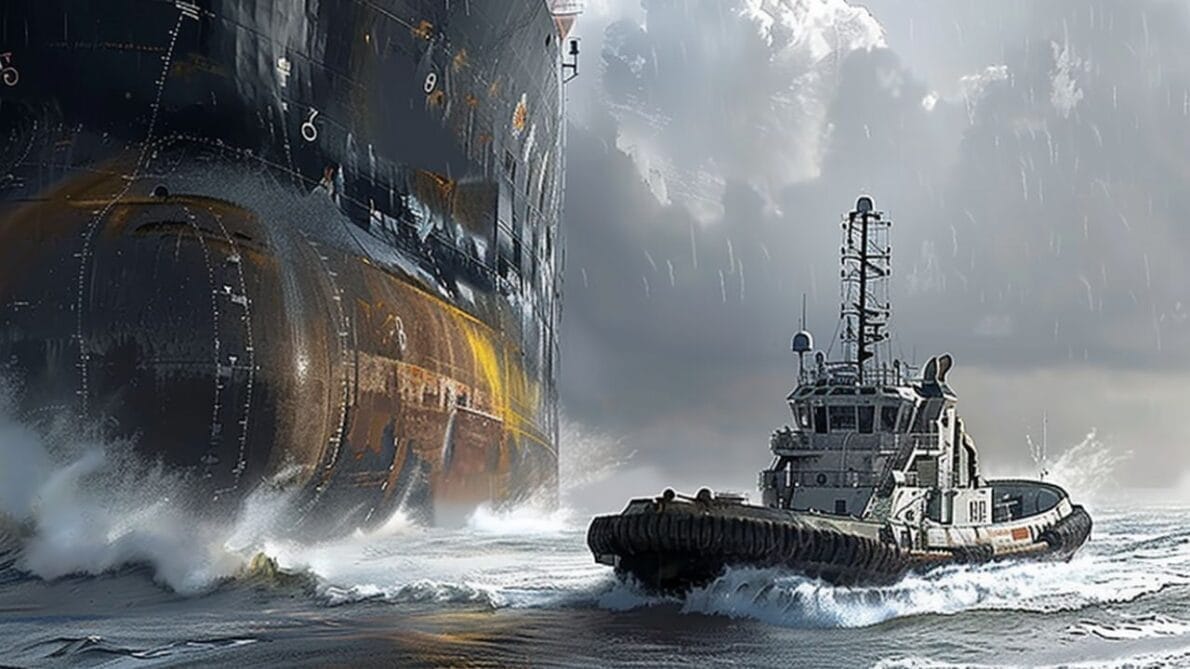

Tugboats, Essential in Port Logistics, Use Advanced Technology and Amazing Power to Maneuver Giant Ships, Ensuring Safety and Efficiency in Global Maritime Transport.
Ports around the world rely on tugboats, essential in navigation and maritime transport. These vessels, despite being small, are true giants in terms of power, capable of moving enormous ships like the HMM Algeciras, one of the largest container ships in the world, which can carry up to 24,000 containers and weighs more than 232,000 tons.
The process of maneuvering a giant ship begins with the tugboat securing tow lines to the larger vessel. Equipped with engines that reach 12,336 horsepower and 13-foot diameter propellers, tugboats can pull or push the giants of the seas, guiding them precisely through crowded ports and narrow channels.
In Addition to Diesel Models, There Are Electric and Hybrid Tugboats


Technological advancements play a crucial role in this industry. Today, in addition to diesel models, there are electric and hybrid tugboats that increase energy efficiency and reduce environmental impacts. Technologies such as the use of drones for securing cables, developed by the Dutch company Kotug, are also incorporated, enhancing safety and precision of operations.
-
They exchanged the idea of a large house for a 35 m² warehouse, spent US$ 12,000 on the structure, and created a tiny house in Colorado with space to live and work.

-
While modern cities rely on pumps and electricity, in Iran, ancient tunnels carried water through the desert using only slope and gravity.
-
Instead of sending families far from the city, a project in Chile intentionally created incomplete houses on expensive urban land and left technical space for each to grow.
-
General Motors Replaces Over a Thousand Workers with 50 Cobots at Electric Vehicle Plant, UAW Union Criticizes Move Amid Industry’s Automation Push


Offshore Tugboats Are Another Important Facet of This Industry
Offshore tugboats are another important facet of this industry. Used in rescue missions and maintenance of maritime structures at sea, these tugboats are equipped with high-powered cranes and winches, essential for tasks ranging from moving oil platforms to rescuing vessels in distress.
They Ensure That Giant Ships Can Operate in Restricted Spaces
The role of tugboats in maritime transport is invaluable. They not only facilitate the transport of bulky cargo around the globe, but also ensure that giant ships can operate in restricted spaces safely and efficiently. Thus, these “guard dogs” of the oceans continue to be a vital part of global logistics and maritime trade.









excelente matéria
“Trabalho incansável dos rebocadores”?
Cadê o “TRABALHO INCANSAVEL DOS MARINHEIROS”? Que ficam horas e horas sem dormir. Que acumulam funções até na cozinha dessas embarcações. Isso os sindicatos e Ministério do trabalho não veem.
apesar da excelente matéria sobre a máquina, concoedo com anderson, isso ocorre também no setro portuário.
fazem o contrasto de trabalho sempre visando o benefício da empresa, alterando o nome dddo cargo mas mantenddo as funçõe , para pagar menos o salãrio.