






 Portuguese
  Spanish


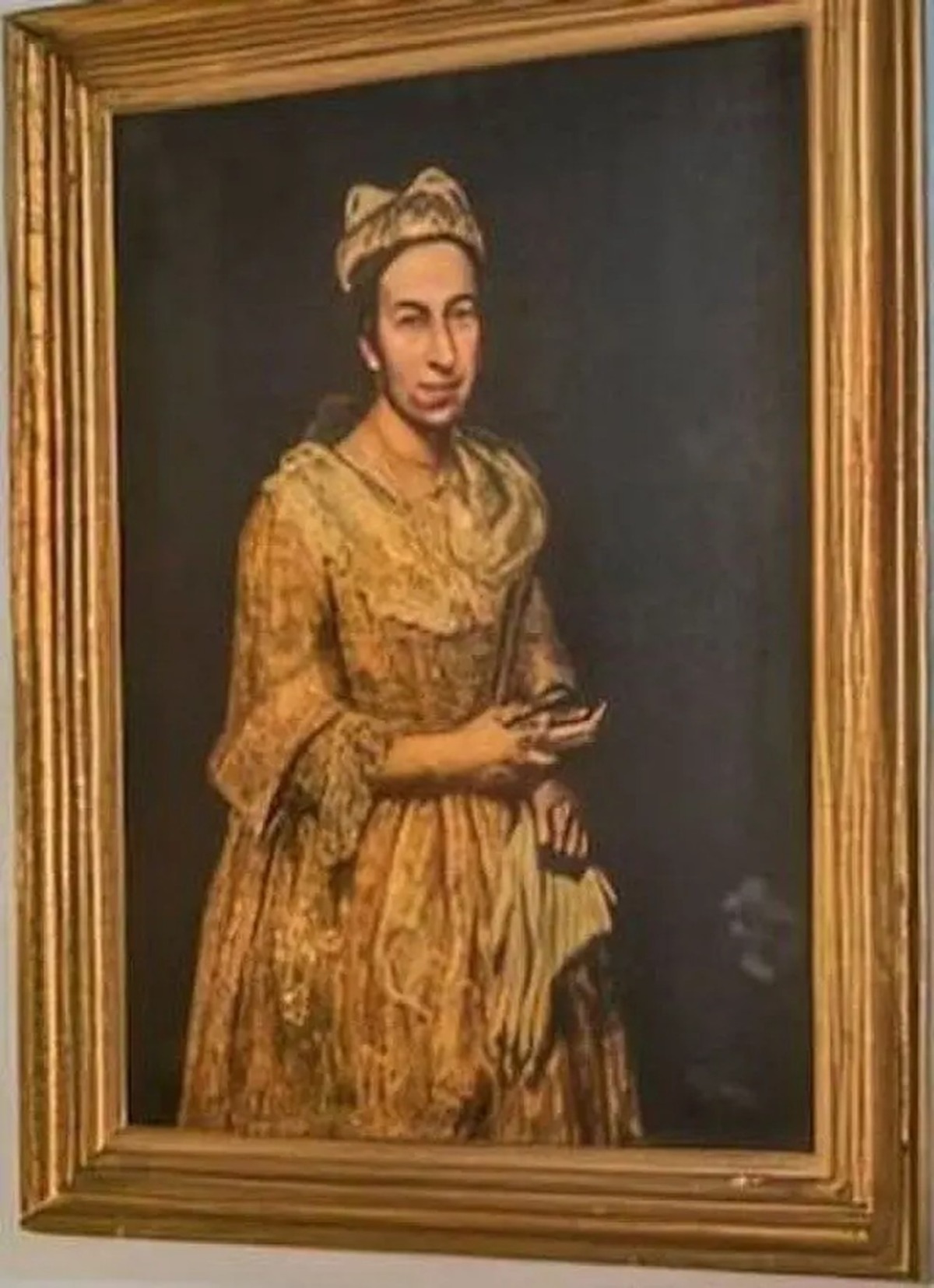


Italian Painting Stolen By Nazis In World War II Reappears In Argentine Real Estate Ad And Mysteriously Disappears After International Denunciation
An Italian painting stolen over 80 years ago by the Nazis unexpectedly resurfaced in Argentina. The painting Portrait of a Lady, by painter Giuseppe Ghislandi (1655-1743), appeared in photos from a listing to sell a house near Buenos Aires.
The discovery occurred when the daughter of the former owner of the property decided to sell it through a high-end real estate agent.
The Dutch newspaper Algemeen Dagblad (AD) identified the piece, which was listed in an international database of looted artworks during World War II.
-
Running 5 km Backwards in 30 Minutes: The Unusual Routine of Moisés, the “King of Reverse” from Brazil, Started as a Bet with a Friend

-
Woman Finds $1,200 Diamond Bracelet Hidden in $8 Goodwill Thrift Store Bag
-
Construction Workers in Germany Uncover Nearly Intact 29-Ton StuG III Tank Buried for 80 Years
-
Ohio Restaurant Owners Close for a Week to Take All 60 Employees on a Bahamas Cruise with Full Pay


The painting was clearly visible in a photograph, hanging above a sofa in the main room of the residence.
The property once belonged to a high-ranking Nazi officer who fled Germany for South America after the defeat in 1945.
Police Operation Fails
After the revelation, Argentine authorities conducted a raid at the location. However, the painting was no longer there.
According to the newspaper Clarín, the furniture had been rearranged and in the space previously occupied by the painting, there was only a tapestry featuring horses.
Two weapons were seized during the operation, according to federal prosecutor Carlos Martínez. He told the Argentine press that the case is being investigated as possible concealment of smuggling.
Additionally, another stolen artwork was found in social media posts from one of the daughters of the family. It is a floral still life by the Dutch painter Abraham Mignon (1640-1679).
Origin Of The Stolen Collection
The Portrait of a Lady was part of the vast collection of Jewish art dealer Jacques Goudstikker (1897-1940). Owner of one of the largest galleries in the Netherlands, he helped other Jews escape during the Nazi advance.
In 1940, Goudstikker died in a maritime accident while trying to flee the country. More than 1,100 works from his collection were then acquired in a forced sale by high-ranking officials of Hitler’s regime. Among them was Marshal Hermann Göring (1893-1946).
Consequently, hundreds of paintings disappeared amidst the chaos of the war. After 1945, some pieces were recovered in Germany and ended up on display at the Rijksmuseum in Amsterdam as part of the national collection.
The Heiress And The Fight For Restoration
The only living heir is Marei von Saher, Goudstikker’s daughter-in-law. In 2006, she managed to recover 202 works, according to the newspaper AD. However, several pieces remain disputed, including a portrait of Countess Colleoni, also by Ghislandi.
“My family wishes to bring back all the stolen artworks from Jacques’ collection and restore his legacy“, von Saher stated.
The estate’s lawyers claim they will concentrate all efforts to recover the Portrait of a Lady and any other painting still in possession of descendants of Nazis.
The SS Officer And His Fortune
The investigation by the newspaper AD revealed that the painting was in the possession of Friedrich Kadgien (1907-1979), an SS officer and financial advisor to Göring.
War documents indicate that he fled in 1945 to Switzerland and later moved to Brazil and Argentina, where he prospered as a dealer.
American interrogators described Kadgien as “the worst kind of snake”. A U.S. file included the notation: “He seems to possess substantial assets, he may still have value for us”.
Kadgien’s two daughters live in Buenos Aires. The newspaper claims it attempted to contact them for years, without success. One of them simply replied: “I don’t know what information you want from me and I don’t know what painting you are talking about“.
Experts Confirm Authenticity Of The Work
After the identification of the photo on the real estate website, experts from the Cultural Heritage Agency of the Netherlands (RCE) analyzed the image.
“There’s no reason to believe this could be a copy“, Annelies Kool and Perry Schrier told AD.
However, the public disclosure seems to have accelerated the disappearance. According to Peter Schouten, a reporter for the newspaper, there is evidence that “the painting was removed shortly after reports informing about its reappearance“.
Open Mystery
The investigation is ongoing, but so far authorities have not been able to locate the current whereabouts of the artwork. In the place where it once appeared, there is only a tapestry.
The case has reignited the debate over the fate of hundreds of artworks looted during the war that still circulate in private hands.
Von Saher reiterated that she will continue to fight for her family’s artistic legacy to be preserved.
Meanwhile, the Portrait of a Lady, which surfaced by chance in a simple real estate ad, once again dives into mystery, repeating the trajectory of so many artworks stolen in World War II.
With information from G1.


