Portuguese
  Spanish


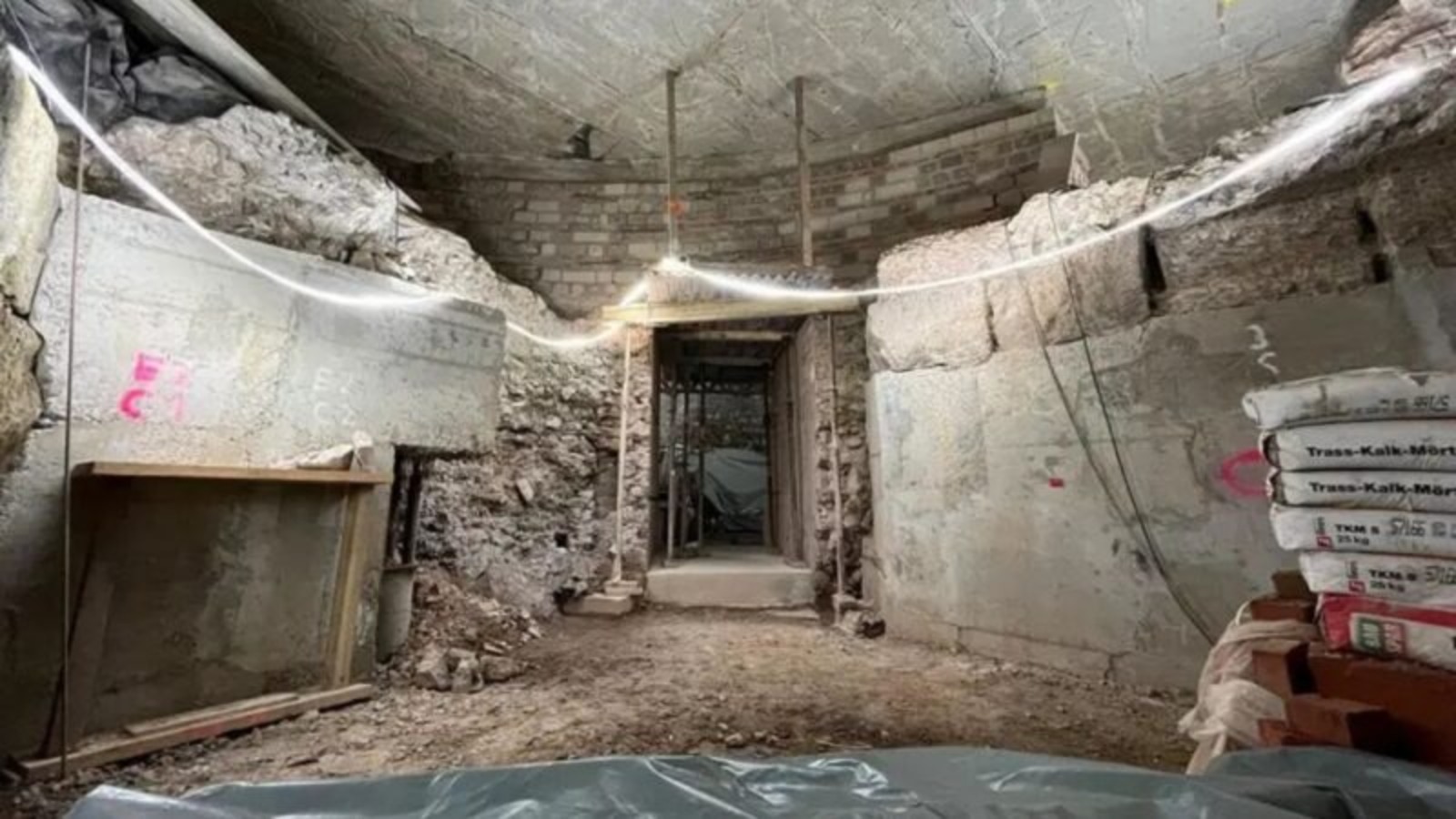

During Museum Expansion, Archaeologists Found Monumental Foundations, A Staircase From The 1st Century And A Lararium From The 2nd Century, Findings That Illuminate Roman Construction Techniques And Local History
During the works to create an underground route at the MiQua Museum, a Jewish museum located in Cologne, Germany, archaeologists came across a set of Roman structures preserved in excellent condition. The find altered the pace of the work and brought to light layers of history that had remained hidden for centuries.
The base of a large basilica built in the 4th century was reexamined by the team from the Roman-Germanic Museum.
After excavation, a cross-section revealed the dimension of the foundation of the apse, which reached four meters in thickness. The discovery allowed for a better understanding of the monumental scale of the building.
-
Spain Launches World’s Largest Floating Dry Dock: 56-Meter Giant Produces Massive Concrete Structures in A Coruña Using Technology Proven in Brazil

-
AI-powered toys that talk, recognize faces, and collect data face scrutiny from Brazilian government over children’s privacy concerns

-
4,000-Year-Old Child’s Skull Unveils Ancient Burial in 7,500-Year-Old Norwegian Rock Shelter, Impressing Archaeologists

-
Norway Defeats Brazil in World Cup but Invests Billions to Preserve the Amazon, Strengthens Amazon Fund, and Joins Brazil in Leading Global Effort Against Tropical Deforestation


Layers Sealed By Time
Deep trenches crossed archaeological deposits that normally disappear with later interventions.
In this case, the Roman remains remained sealed under ancient fills, which helped keep walls, stairs, and architectural details in remarkable condition.
Among the revealed elements is a staircase from the late 1st century. The structure connected an upper area of the complex to a lower level, near the river.
Although the exact starting and ending points are still unknown, the found section shows how internal circulation was adapted to the terrain.
Rare Discovery North Of The Alps
In a 2nd-century room of the praetorium, archaeologists identified a lararium, a small domestic altar dedicated to the Lares, protective spirits of the home.
The find is considered unusual, as similar specimens are common in Pompeii and other Vesuvian cities, but almost unknown north of the Alps.
The lararium from Cologne consists of a niche embedded in the wall. It is still possible to see traces of painted plaster, as well as nail holes above and beside, indicating where garlands and ribbons were hung during rituals.
A line below the niche revealed the original position of an altar plate, which was recovered and can be reused in the restoration.
Materials And Construction Techniques
Analyses of the masonry indicated that the Roman builders employed a method distinct from their more common standards.
Layers of tuff, basalt, and limestone were organized in regular courses and joined with dense mortar, rich in crushed brick and gravel.
The mixture formed a mass that remained practically intact.
According to Archaeology News, the preservation was also favored by large deposits of soil added at the end of the Roman period.
These fills raised the ground level and sealed the lower parts of the constructions, protecting them from demolitions and wear.
Today, the objects and structures found will be part of the future exhibition, allowing visitors to walk through corridors where the past has come back to breathe, almost intact and silent.
With information from Aventuras na História.