Portuguese
  Spanish




The Noble Opal of Piauí Gains Prominence for Its Worldwide Rarity, Scientific Certification, Structured Production Chain, and Strong Impact on Tourism and Regional Economy
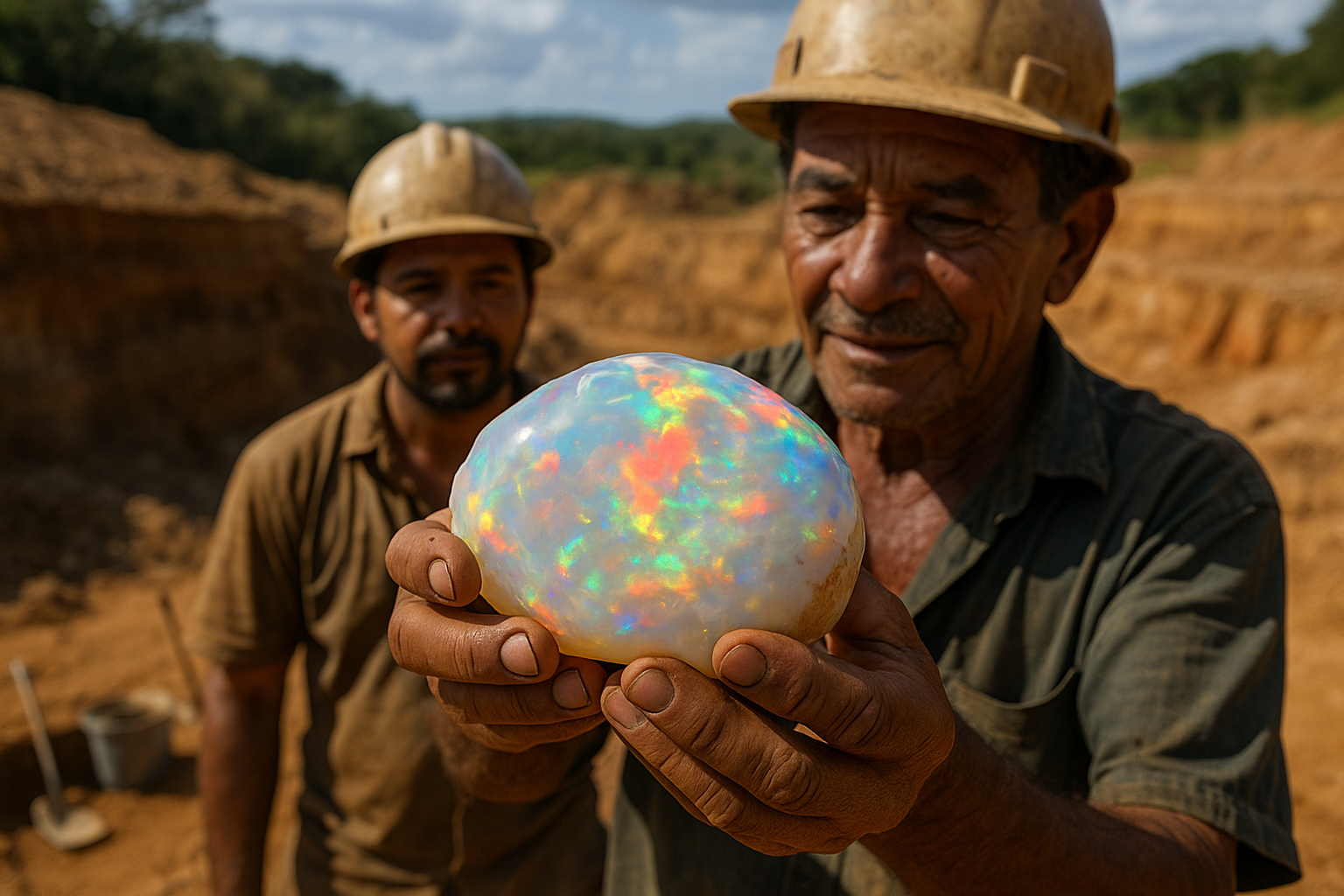
The city of Pedro II, in northern Piauí, has housed since 1940 the only active deposit of Brazilian noble opal, considered one of the rarest gemstones on the planet. The stone, formed about 200 million years ago, has become a scientific, cultural, and economic reference, with research led by geologist Érico Gomes from the Federal Institute of Piauí, and professor Lilane Araújo Mendes Brandão, highlighting the high gemological value of the mineral.
Global Rarity and Mineralogical Uniqueness
The opal from Piauí is recognized as one of the few in the world with high hardness and crack resistance, features that set it apart from opals extracted in Australia and Ethiopia. Experts explain that the local geological formation represents a unique phenomenon, resulting from specific environmental conditions that shaped the gem over millions of years. The initial discovery occurred in 1940, when a farmer found the first stone while clearing a field in the region of Serra do Boi Morto, revealing the mineral potential of the valley of the Rio dos Matos.
History of Exploration and Cultural Impact
Since then, the opal has become a symbol of the city, boosting artisans, jewelers, designers, and merchants. From the 1980s, with the work of jeweler Juscelino Araújo, local gem-cutting gained prominence, strengthening the production chain and expanding the national reach of the gem. Designer Áurea Amélia Brandão emphasizes that the opals from Pedro II feature unique combinations of colors red, green, blue, and lilac that ensure exclusivity in each piece.
-
U.S. Invests $75 Million in Projects to Extract Rare Earths, Gallium, Germanium, and Aluminum from Coal Waste

-
Eni Acquires 25% Stake in Chilean Lithium Project, Plans to Invest Up to $225 Million in Eco-Friendly Extraction Method
-
Mexico’s Giant Crystal Cave: A Deadly 58°C Underground Palace with 11-Meter Crystals Formed Over Nearly a Million Years

-
China Dominates Over 90% of Rare Earth Refining, Prompting Global Concerns: Canada and Japan Launch Billion-Dollar Plan to Reduce Dependency and Safeguard Batteries, Semiconductors, and Defense


Scientific Research, Certification, and Sustainable Use
With the advancement of studies, researchers initiated a mapping process of old mining sites and inactive areas, seeking to expand knowledge about mineral potential. Chemical, mineralogical, and gemological tests are being applied to create a certification of origin, allowing each stone to be traced from the mine to the jewelry store. Additionally, projects developed by state institutions use mining waste to manufacture blocks, mortars, and agricultural inputs, ensuring sustainable use and reducing environmental impacts.
Geological Tourism and Regional Development
The opal has solidified as one of the municipality’s main attractions, according to Tourism Secretary Valdeci Teixeira de Castro. For him, the gem has become a postcard, driving hotels, restaurants, and specialized stores. Trails, viewpoints, waterfalls, and mines can be visited, strengthening ecotourism and diversifying the local economy.
Public Policies, Qualification, and Origin Seal
The Government of Piauí has been investing in the mineral chain since 2023. To this end, it promotes courses for gem cutters and goldsmiths. Additionally, it coordinates the creation of an official seal, which internationally certifies the Piauí opal. The public policy also combats informality and strengthens traceability of production. The actions involve Setur and Investe Piauí, which coordinate regional development initiatives.
Market, Design, and International Projection
Only 10% of the known reserves have been explored so far. Thus, the potential for expansion remains high. The opal from Pedro II is gaining international space due to its exclusive colors and unique shine. Artisans claim that the world needs to recognize this Brazilian rarity. They highlight that scientific and tourist promotion strengthens the gem’s presence in the global market.