






 Portuguese
  Spanish


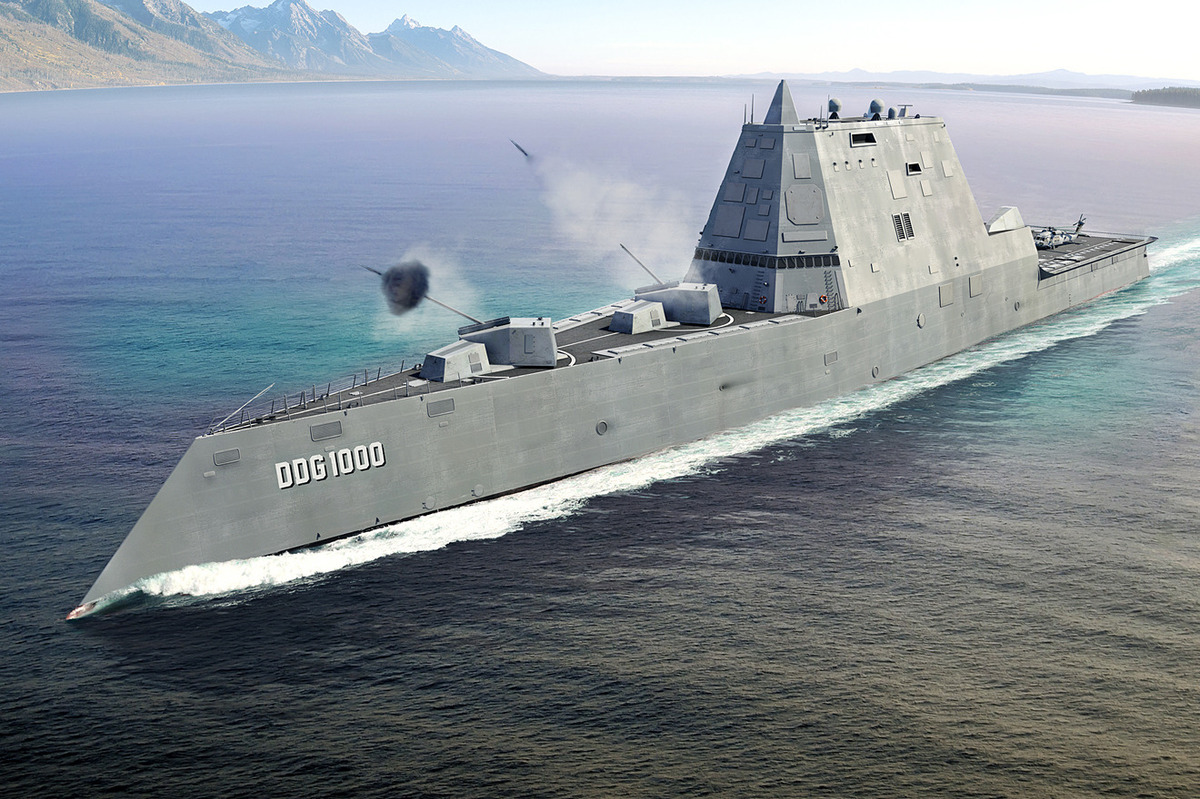


With 190 Meters, 16,000 Tons and Up to 78 MW of Electric Power, the Zumwalt Destroyers Introduce the Concept of Electrified Stealth Ships Prepared for Future Weapons.
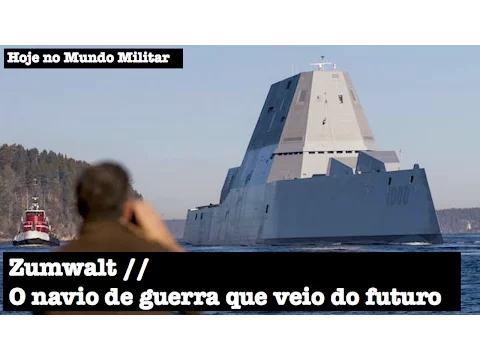
When the United States Navy launched the Zumwalt-class destroyer, the goal was not just to replace old destroyers. The project aimed to create a conceptual leap in surface naval warfare, combining extreme stealth, advanced automation, and, above all, an electric architecture capable of supporting weapons that did not even fully exist when the ship was designed.
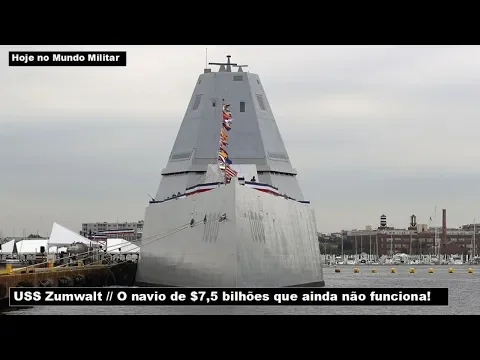
Despite its official designation, the Zumwalt completely diverges from the historical standard of destroyers. At approximately 190 meters long and displacing around 15,900 to 16,000 tons, it is closer in size to heavy cruisers than to conventional escort ships.
This size is not excessive. It allows for the accommodation of gigantic electrical systems, integrated sensors, a large internal volume for future upgrades, and a crew significantly smaller than that of equivalent ships, thanks to the high level of automation.
-
U.S. Air Force Launches Air-to-Air Missile Project with Range of Up to 1,850 km for Indo-Pacific Operations

-
Australia to Deploy Up to 8 Nuclear-Powered Submarines in Indo-Pacific, Establishes Billion-Dollar Naval Chain Through AUKUS, Joining Elite Group Capable of Extended Underwater Missions

-
Indonesia Begins Construction of 2,000-Ton Scorpène Stealth Submarines with Advanced Weaponry and French Steel

-
Brazil’s Largest Navy Ship, NAM Atlântico, Transforms into Field Hospital During National Crises



Integrated Electrical Architecture: The True Heart of the Zumwalt
The most revolutionary aspect of the Zumwalt class is the Integrated Power System (IPS). Unlike traditional ships, where engines, sensors, and weapons have separate power sources, the Zumwalt operates as a fully electrified platform.

The system generates up to 78 megawatts of power, dynamically distributed among propulsion, sensors, computers, and armaments. This volume is several times greater than what was available in previous destroyers and was designed from the outset to power directed energy weapons, such as high-power lasers and electromagnetic guns.
Even though railguns have not been operationally adopted, the ship remains prepared for systems that require huge energy spikes, something essential for future naval warfare.
Stealth Taken to the Extreme
The hull design and superstructure of the Zumwalt follow the “tumblehome” concept, with sloped surfaces and composite materials that drastically reduce radar signature. Practically speaking, the ship appears to enemy sensors as a much smaller vessel than it actually is.
This stealth is not only meant to avoid detection, but also to approach hostile areas, gather intelligence, launch long-range attacks, and survive in environments saturated with modern sensors and missiles.
Sensors and Situational Awareness
The Zumwalt is equipped with the multifunctional AN/SPY-3 radar, operating in the X band, integrated into a highly automated combat system. The proposal is to detect, track, and engage multiple aerial and surface targets quickly, reducing the reliance on human operators for repetitive tasks.
This approach reflects a clear trend in modern warfare: fewer crew members, more processing, and decision-making assisted by digital systems.
From Cannon to Hypersonic Missile
Originally, the Zumwalt was designed for coastal fire support with two advanced 155 mm (Advanced Gun System) cannons. The concept faced the prohibitive cost of guided ammunition, leading to a reevaluation of the ship’s role.
In recent years, the U.S. Navy decided to turn this limitation into an advantage. The Zumwalts are being converted to operate hypersonic Conventional Prompt Strike (CPS) missiles, capable of striking targets thousands of kilometers away at speeds exceeding Mach 5.
This completely changes the ship’s profile, transitioning it from an experimental platform to a strategic long-range strike vector.
VLS, Missiles and Combat Flexibility
The Zumwalt class employs the Mk 57 Vertical Launch System, with 80 cells distributed along the hull. This arrangement enhances the ship’s survivability, as it disperses armament and reduces the risk of catastrophic loss in the event of an impact.
These cells can accommodate cruise missiles, air defense, anti-submarine warfare, and, with ongoing adaptations, hypersonic armaments, increasing the ship’s operational flexibility.
Even with its colossal size, the Zumwalt operates with a crew much smaller than that of cruisers or classic destroyers. The automation of systems, damage control, and sensors allows for reduced operational costs and increased efficiency, although it also requires highly specialized maintenance.
A Ship Ahead of Its Time
With only three units built, the Zumwalt class was never intended as a mass solution. Its true role is to function as a floating laboratory, testing concepts that later spread to other classes of ships.
Integrated electric propulsion, surface stealth, extreme automation, and preparedness for directed energy weapons are now pillars of modern naval thinking — and all of them first appeared on the Zumwalt.
More than an “expensive destroyer,” the Zumwalt represents a profound change in how navies project power in the 21st century. It anticipates a scenario where energy, data, and system integration are more important than caliber or sheer number of guns.
As it begins to incorporate hypersonic missiles, the Zumwalt transitions from merely a technological experiment to a strategic platform, capable of influencing the global naval balance for decades.





Ficam nessa palhaçada de quem tem isso ou aquilo. Algum país tem interesse em uma terceira guerra mundial?!?! Na primeira e na segunda já houve um enorme estrago. Imaginem se iniciarem uma terceira.
Até o momento somente Rússia, China e Irã mostraram ao mundo mísseis hipersônicos.
Em março de 2024 os EUA deixaram escapar o conhecimento que os dois tipos de mísseis hipersônicos que vinham testando, não conseguiram se tornar operacionais.