






 Portuguese
  Spanish


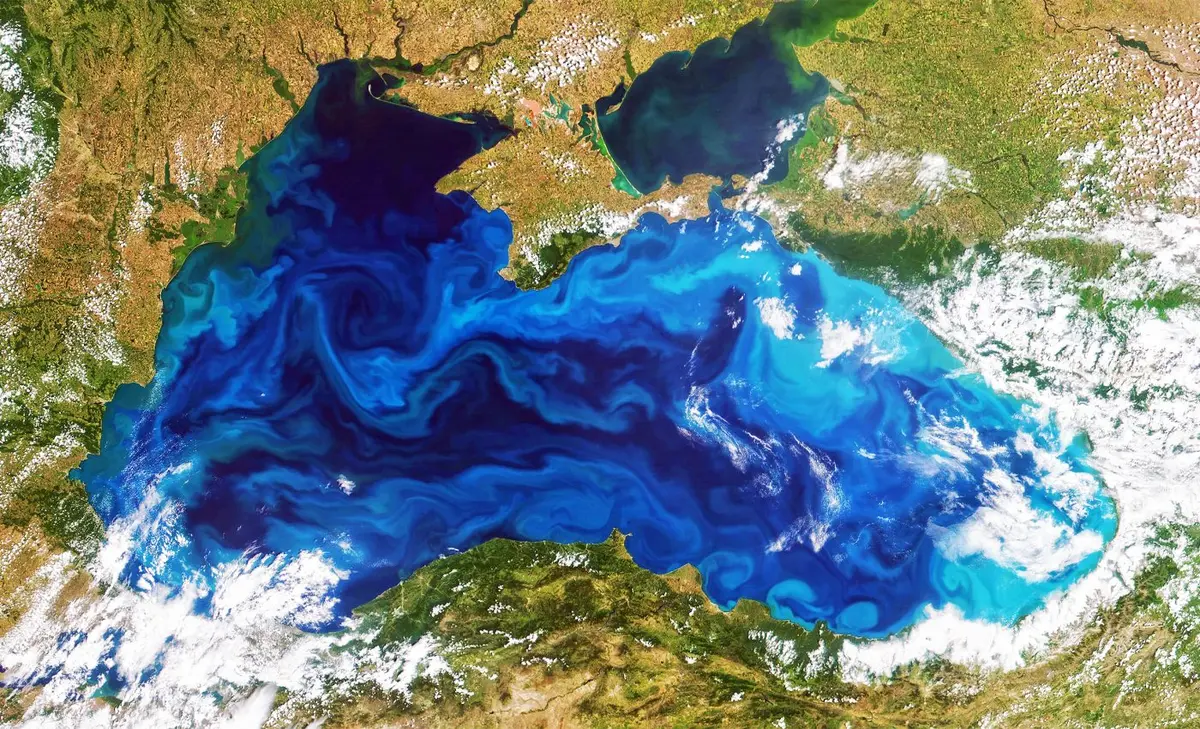


Scientists Warn That Earth’s Oceans Are Changing Color At An Accelerated Rate, A Direct Consequence Of Human Action And The Impact On The Planet’s Climatic Conditions.
In the past 20 years, a subtle yet significant change has been observed in the oceans around the world. Although imperceptible during a typical day at the beach, this transformation is visible from planes and satellites, highlighting profound alterations in marine ecosystems.
This change is occurring on a global scale, reflecting shifts in the balance of life beneath the waves and raising important questions about the impacts of human activities on the environment.
Experts Are On Alert
Stephanie Dutkiewicz, a researcher at the Massachusetts Institute of Technology (MIT), warns that these changes cannot be ignored. “It’s not just the models predicting these transformations; we can now see the evidence, and the ocean is changing,” she states.
-
The 19-Meter Rocket-Helicopter: A Private Industry Prototype That Challenged Space Race Logic

-
Brazilian Students Convert Seized Illegal TV Boxes into Linux-Powered Mini Computers for Schools and Social Projects Across São Paulo

-
Brazilian Engineer Develops Affordable Custom 3D-Printed Prosthetics for Children and Teens, Operated by Elbow or Wrist Movement Without Batteries

-
China Left 51 Rocket Bodies in Low Earth Orbit Between 2021 and 2025, Doubling Previous Period, Report Warns of Space Debris Threatening Satellites for Decades




In a study published in the journal Nature, researchers from the National Oceanography Centre in the UK and other institutions confirmed that more than half of the world’s oceans have undergone color changes.
This influence cannot be attributed solely to natural variations but is directly linked to climate changes caused by humans.
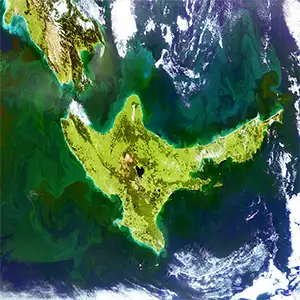
A More Intense Green Near The Equator
Tropical regions near the equator are exhibiting a greener hue. This is not just an aesthetic change; it reflects profound changes in the ecosystems that inhabit the ocean’s upper layers.
The color of the ocean is mostly determined by phytoplankton, microscopic organisms similar to plants that contain chlorophyll, giving them a green tint. These organisms play a crucial role in capturing carbon dioxide from the atmosphere and sustaining the entire marine food chain.
Changes in phytoplankton populations can create a dominant effect, altering entire ecosystems and impacting the global carbon cycle. This change, therefore, is a vital indicator of the planet’s environmental conditions.
Humans At The Center Of The Change
BB Cael, the lead author of the study, emphasizes that the observed changes are caused by human activities. He highlights that “this evidence shows how humans are affecting the biosphere on a vast scale, including Earth’s most extensive environments.”
Traditionally, scientists monitor phytoplankton populations through chlorophyll ratios. However, natural fluctuations can make it difficult to identify trends in the short term.
Recent studies suggest that observing the full spectrum of ocean cores is a more effective approach to detecting climate-related changes.
Satellites Confirm Change
Data from the Moderate Resolution Imaging Spectroradiometer (MODIS), onboard NASA’s Aqua satellite, have been developed to understand these transformations. Since 2002, this instrument has recorded ocean color in seven visible wavelengths.
The results revealed a consistent trend over two decades, aligned with climate models predicting changes driven by human activities.
Stephanie Dutkiewicz explains that changes in ocean color indicate significant alterations in phytoplankton communities. These organisms play an essential role in regulating carbon and sustaining marine life.
What Does A Color Change Mean?
A change in ocean color is not merely an aesthetic issue. Different types of phytoplankton have varying capacities to capture carbon and support marine life.
Any change in the composition of these communities can have repercussions throughout the food chain, from small organisms to large marine predators like fish and whales.
Dutkiewicz warns that “different types of phytoplankton directly influence the amount of carbon the ocean can absorb,” highlighting the broader implications for global climate balance.
A Visible Sign Of Invisible Changes
These discoveries underscore the profound effects of climate change on ocean ecosystems. Monitoring ocean color provides a clear and tangible indicator of ongoing changes, allowing for a more comprehensive understanding of the human impact on natural systems.
Cael emphasizes: “The evidence is clear: human activities are even changing the color of our oceans.” These changes are not only a warning about the health of the oceans but also about the complex interdependence of life on Earth.




Deve ser culpa do Bolsonaro
A mudança na cor dos oceanos não é causada pelo presidente Bolsonaro. As alterações observadas são resultado das atividades humanas em larga escala, incluindo mudanças climáticas. O cor do oceano é determinado pelos organismos microscópicos chamados fitoplâncton, que capturam dióxido de carbono e sustentam a vida marinha. As mudanças nas populações de fitoplâncton podem afetar a **** alimentar marinha e o equilíbrio climático global.
ESSES ALARMISTAS AMBIETAL PRECISA SER PRESOS, POIS ELE ESTÃO COM CERTEZA ESTÃO A SERVIÇO DE CORPORAÇÕES PRA INVETAR ALGUN PRODUTO PRA LIMPAR OS OCEANOS. **** DE MALADROS CONTUMAS. **** MELES. SOU CLIMATOLOGISTA E TUDO EM NOSSO CLIMA E OCEANOS E NA ATMOSFÉRA E NATURAL. DEUS E FIEL ESSE MALANDROS VÃO SE DAR MAU..
Se você é climatologista deveria saber que os eventos climáticos seca e chuva extremas estão com maior intensidade.Aqui no RGS eventos que deveriam ocorrer a cada 10 ou 20 anos ocorreram em menos de um ano inundações que arrasou cidades .