Portuguese
  Spanish


Behind every rocket engine test, there is an army of water ready to contain the fire. To replace a single part of this system, it was necessary to empty a large part of a reservoir the size of several football fields, exposing a bottom that had not seen the light of day for more than half a century.
NASA had to pump about 151 million liters of water in just three days to lower, to the lowest level since its construction in the 1960s, a giant reservoir at the Stennis Space Center in the U.S. state of Mississippi. The purpose of the operation, carried out in May 2026, was to allow the replacement of an essential pump in the system that supplies water to protect the stands where the space agency tests rocket engines, equipment that had reached the end of its useful life.
The work was carried out between May 7 and 11, 2026, at the so-called High-Pressure Industrial Water Station of the space center, located near Bay St. Louis. Although it seems like an impressive number, here’s the context: it is a planned maintenance operation of an old infrastructure, not an accident or emergency. Below, we explain why NASA maintains such a large reservoir, how this system works, and why it was necessary to empty it for a single pump replacement.
Why NASA maintains a giant reservoir
When NASA fires engines like the RS-25 on its test stands, the burning of liquid oxygen and liquid hydrogen generates temperatures close to 3,300 degrees Celsius, and it is the water, released in very high volume, that protects the structures from the extreme heat and muffles the deafening noise produced during the trials.
-
Brazilian Students Repurpose Clay Tea Cups to Create Cooler That Lowers Room Temperature by Up to 10°C Without Air Conditioning or Fans

-
353-Year-Old Mystery Deepens as Archaeologist Arrested with Teeth and Bone Fragment Possibly Linked to d’Artagnan, the Real Musketeer Behind Alexandre Dumas’ Inspiration

-
16-Year-Old Invents CoolTowel, a Fitness Towel That Stays Cold for Up to 2 Hours, Wins Global Alibaba Competition with Over 15,000 Participants, Earning $1 Million

-
Brazil to Install First Operational Quantum Computers in the Northeast and Establish New Center to Boost Technological Sovereignty



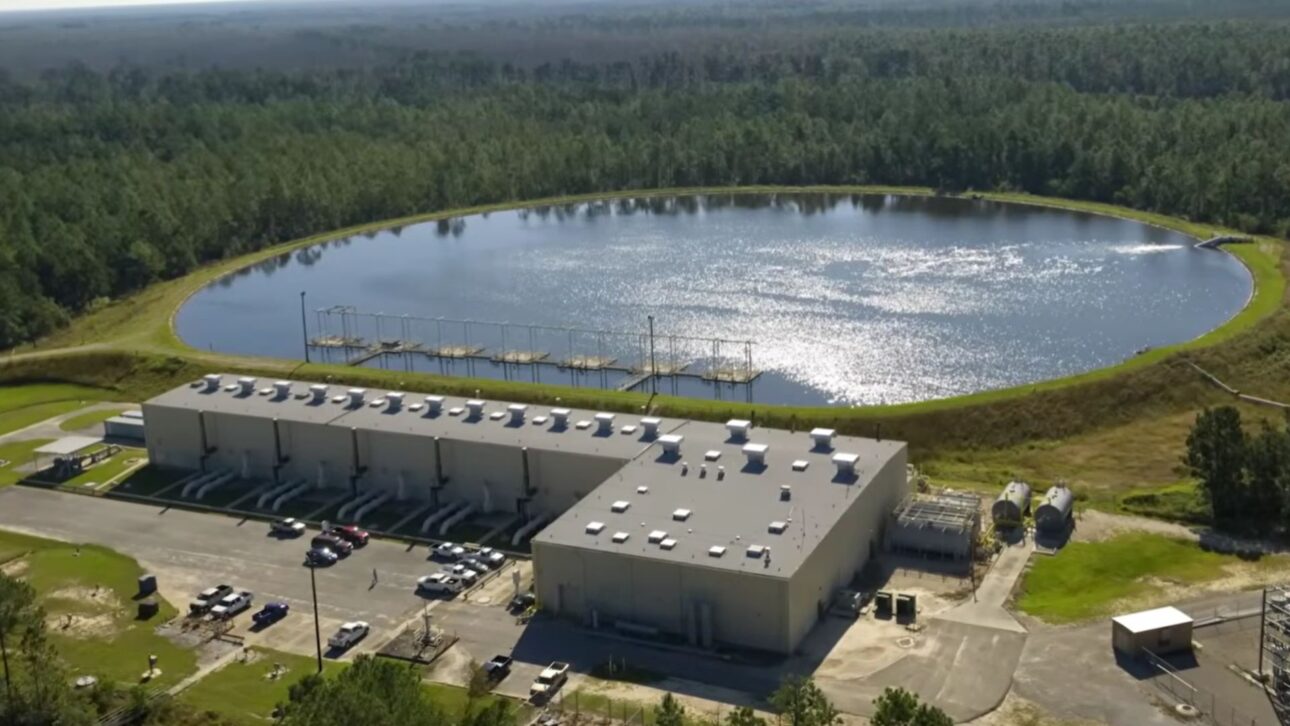
This reservoir is about 244 meters in diameter and approximately 7.6 meters deep, with a capacity for about 250 million liters of water, equivalent to 66 million gallons.
When water hits the flames, it turns into steam, creating small localized rain clouds over the test area.
Then, the liquid returns to the channel system, in a process that works like a large recycling of the same water.
A system capable of pumping millions of liters per minute
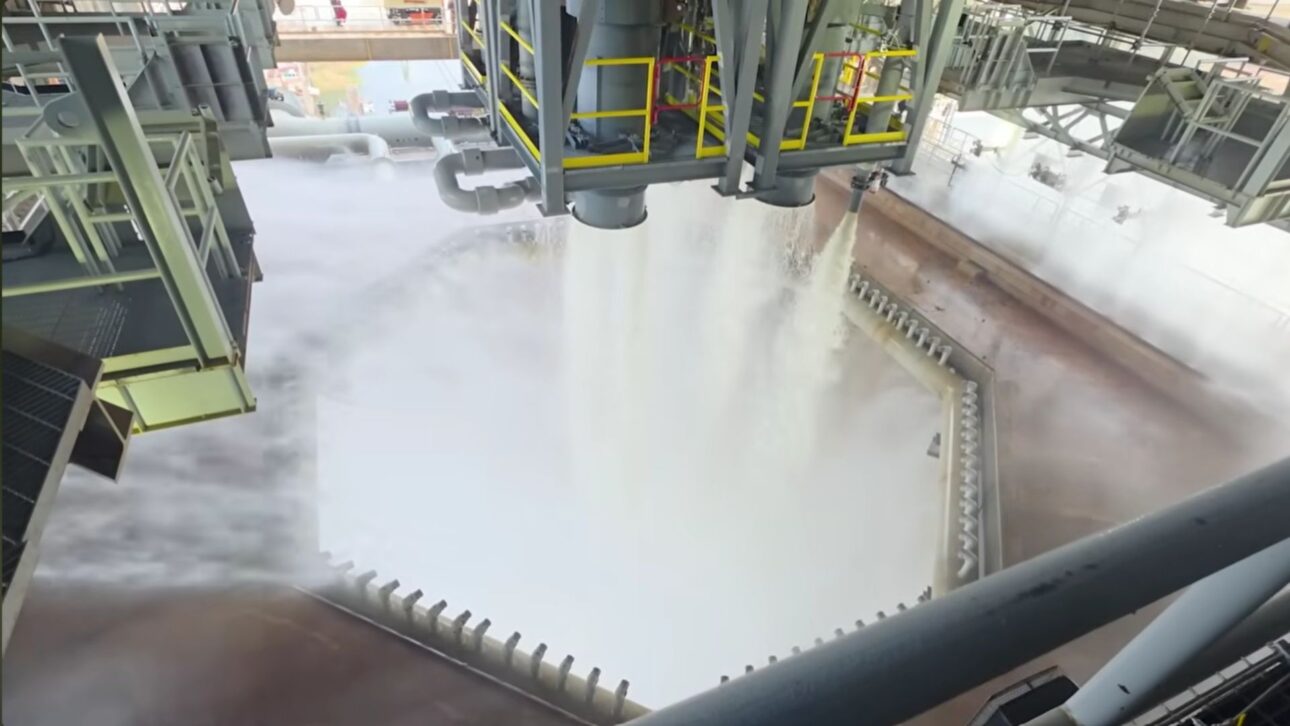
The facility has ten 5,000 horsepower diesel engines and ten pumps, capable of moving, together, more than 300,000 gallons per minute, equivalent to more than 1.1 million liters of water every sixty seconds, according to information from NASA itself released in a video about the site’s operation.
All this power is used for fire and sound suppression during rocket tests, ensuring that the stands are not damaged by heat and that the sound impact is reduced.
It’s no wonder that the center’s engineers claim that systems like this do not exist anywhere else in the United States, making Stennis a must for anyone needing to test large-scale rocket engines in the country.
Why it was necessary to empty the reservoir
The explanation is practical engineering, and quite logical.
The project consisted of replacing a 3,000-gallon-per-minute pump that had already reached the end of its useful life, but, as there was no isolation valve to contain the water pressure, the technicians needed to lower the reservoir level below the suction line of the piping to be able to cut the pipe and make the replacement safely.
For this, the teams rented six additional pumps and installed protections at the bottom, near the base of the reservoir, to prevent erosion caused by the removal of so much water.
In addition to replacing the pump, the project planned to increase the diameter of the piping and install a new isolation valve, precisely to facilitate future maintenance.
It was this combination of factors that brought the reservoir to the lowest level seen since the 1960s.
Maintenance of an Apollo-era infrastructure


The episode is part of a larger, ongoing effort.
A good part of the infrastructure of the Stennis Space Center was built in the 1960s, during the Apollo program era, and keeping these old systems running is a constant challenge, which led NASA to launch, in the past decade, a program to repair and replace components such as pipes and valves that supply the large test stands.
Replacing a pump may seem like a detail in the face of the grandeur of a rocket, but it is this type of silent maintenance that keeps the space agency in a position to continue testing engines safely.
Investing in the reliability of the fire-fighting system, as highlighted by the project leaders, is what provides peace of mind to conduct high-risk tests, where any failure can have serious consequences for people and equipment.
NASA’s operation to partially empty a giant reservoir and replace a single pump shows the complexity that lies behind rocket engine tests.
More than just a curious number, the approximately 151 million liters pumped in three days reveal the scale of engineering required to keep an infrastructure built over half a century ago functioning.
It’s a reminder that the space race doesn’t depend only on spacecraft and rockets, but also on robust systems, constant maintenance, and the work of teams often invisible to the general public.
And you, had you ever imagined the amount of water and the structure necessary to safely test a rocket engine? What did you think of this NASA operation? Leave your comment, share your opinion, and help spread the article to those interested in engineering, space exploration, and the behind-the-scenes of technology.