Portuguese
  Spanish


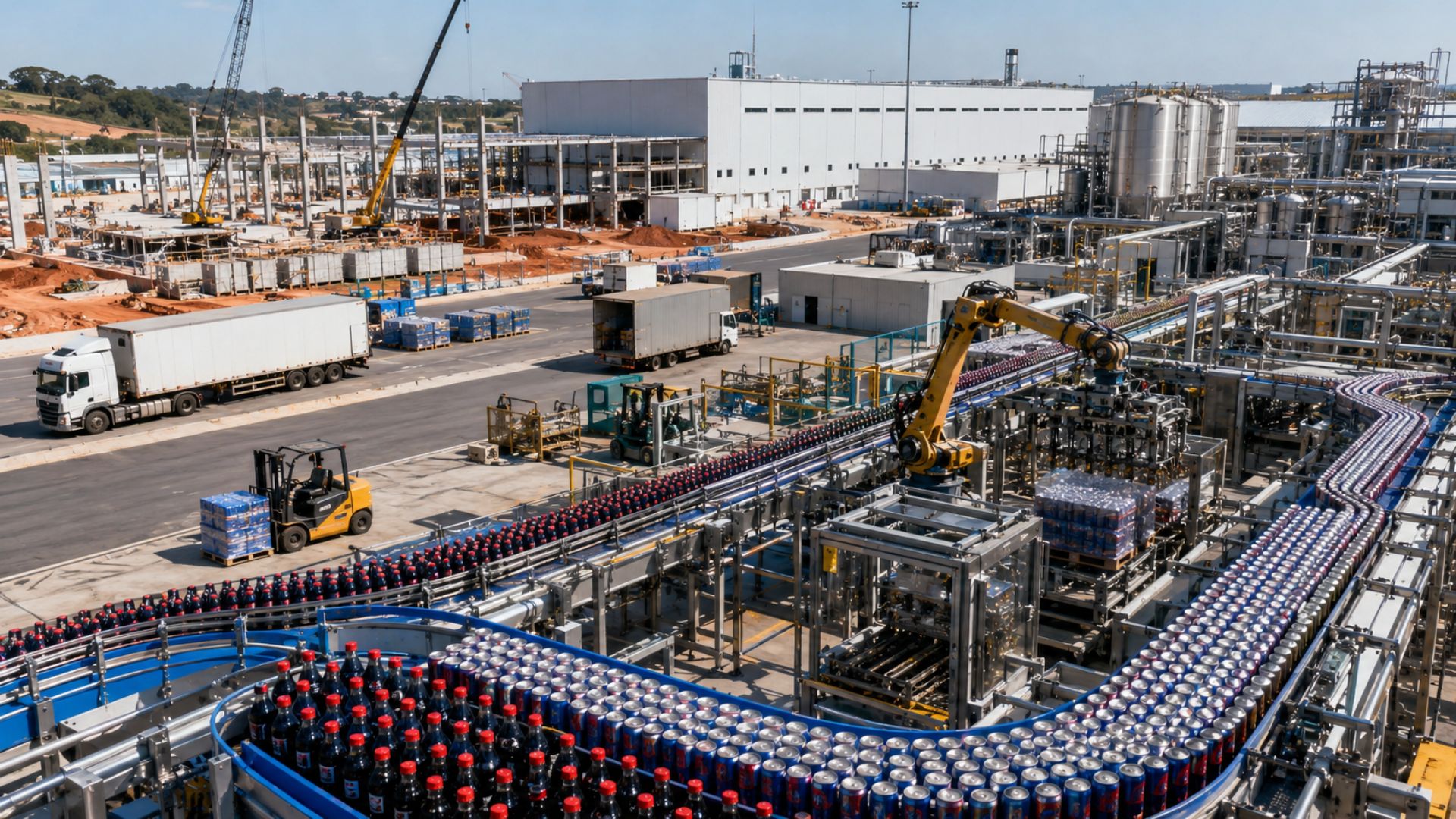

The plant is born in partnership with the German giant Krones, will be practically fully automated and will use artificial intelligence in production. Built next to the Audi and Electrolux factories, it promises to capture the CO2 generated in the fermentation of beverages and reuse energy, in a project that doubles the group’s can capacity.
Owner of brands like the soft drink Refriko and the energy drink Furioso, the Paraná-based RFK will invest R$ 300 million in a new automated factory in São José dos Pinhais, in the Metropolitan Region of Curitiba. The plant was designed to produce up to 1.2 billion liters of beverages per year and is part of the company’s strategy to reach a revenue of R$ 2 billion by 2030.
The investment was officially announced in September 2024, in a ceremony attended by the governor of Paraná, Ratinho Junior, and has been detailed by the company as the work progresses. The new unit occupies a 300,000 square meter plot, close to the Audi and Electrolux factories, and was conceived in partnership with the German multinational Krones, one of the world’s leading references in bottling technology and beverage production lines.
A factory almost fully automated
The great differential announced by RFK is the level of automation of the new plant. According to the company, the unit will be practically fully automated, with the use of artificial intelligence applied to production management and technologies aimed at operational and energy efficiency. The disclosed goal is to achieve productivity rates of up to 90% in the new operation.
-
Many Unaware: Seniors Entitled to Monthly Income, Free Transport, Medication, and Property Tax Exemption in Brazil

-
Brazil’s BNDES Funded Metro and Steel Plant Projects in Venezuela with Brazilian Support

-
Abandoned Building in Brazil to Become Biotechnology Unit with $10 Million Investment, Bridging Science, Industry, and Public Health
-
Company Offering “Stones to Diamonds” Scheme Sells Ruined Italian Homes to Brazilians for 1 Euro, Disappears with Promised Renovations, Leaving Buyers in Debt to Italian Tax Authorities Until 2028 Without Property




According to the company, the structure was designed to operate with up to double the current capacity in the can lines and with an average growth of up to 70% in the PET packaging lines. These numbers, disclosed by RFK itself, will still need to be confirmed in practice when the factory is fully operational, but they give the dimension of the project’s ambition, which aims for significant gains in scale and logistics.
RFK’s multi-beverage portfolio
Founded in 2010 in Cambé, in northern Paraná, the RFK Group has built a varied beverage portfolio. In addition to the soft drink Refriko and the energy drink Furioso, the company owns the beers Bamboa and Moema, the wine draft Bella Roma, and the mineral water Hidratar, in a strategy that the company calls a multi-beverage platform.
According to Márcio José Mendes, CEO and co-founder of the group, this model allows serving retail with a complete portfolio, generating more results per linear meter of shelf and strengthening the partnership with clients. The new factory is expected to start operating by producing Bamboa and Moema beers, with the inclusion of a third label, and then expand to other beverages in the catalog, following the growth of energy drink and sugar-free beverage categories, considered priorities by the company.
Sustainability and CO2 Capture
An aspect that draws attention, especially for those who follow energy and the environment, is the environmental part of the project. The new factory was planned to include cogeneration systems, thermal energy reuse, and a technology for capturing CO2 naturally generated during the production and fermentation process of beverages, reducing the carbon footprint of the operation.
CO2 capture and reuse are increasingly relevant topics in the debate on energy transition and industrial decarbonization. In breweries and soft drink factories, carbon dioxide is a natural byproduct of fermentation and carbonation, and reusing it, instead of simply releasing it into the atmosphere, is a trend that combines environmental gain and cost reduction with inputs, something that directly relates to discussions in the oil, gas, and energy sector.
Growth Numbers
The investment is supported by a growth curve that the company has been disclosing. According to RFK, revenue was approximately R$ 558 million in 2025, with a projection to reach around R$ 700 million in 2026, in a movement that the company attributes to the strengthening of the multi-beverage model and the expansion of the portfolio in categories such as soft drinks, energy drinks, beers, waters, and hot beverages.
The target of R$ 2 billion in revenue by 2030 represents, therefore, a quite ambitious leap compared to current numbers, and will depend not only on the new factory but also on market conditions, competition with industry giants, and the ability to execute the plan over the coming years. As with any long-term project, it is worth monitoring whether the projections are confirmed in practice.
Impact in Paraná and Market in Santa Catarina
The new factory has significant regional weight. Located in São José dos Pinhais, one of the main industrial hubs in Paraná, it expands RFK’s presence in a city already known for hosting automakers and large industries. The plant was designed to supply strategic markets such as Paraná, São Paulo, and Santa Catarina, in addition to the Metropolitan Region of Curitiba.
For the Santa Catarina market, in particular, this means another beverage player with nearby production and facilitated logistics, in a state that already has a strong industrial and consumption tradition. The RFK Group, which has about 800 employees and more than 20,000 clients, operates in Paraná, São Paulo, Mato Grosso do Sul, and Pará, as well as having a presence in Latin American countries, and sees the new unit as a springboard to grow even more in the South and Southeast.
Conclusion
The new RFK factory in São José dos Pinhais is a portrait of the moment of expansion of the beverage industry in the South of Brazil, combining automation, artificial intelligence, sustainability, and scale ambition. If the plans materialize, the company from Paraná could establish itself as one of the big national names in the sector, competing for space with established brands. It remains to be seen how the project evolves, if the production and revenue goals are confirmed, and what the real impact of the unit will be on the regional economy and the country’s beverage market.
And you, are you familiar with the RFK Group brands, such as Refriko and the energy drink Furioso? Do you believe the company will indeed reach the goal of R$ 2 billion by 2030? Leave your comment, tell us what you think about the expansion of the beverage industry in the South of the country, and share the article with those interested in economics, industry, and business.