Portuguese
  Spanish


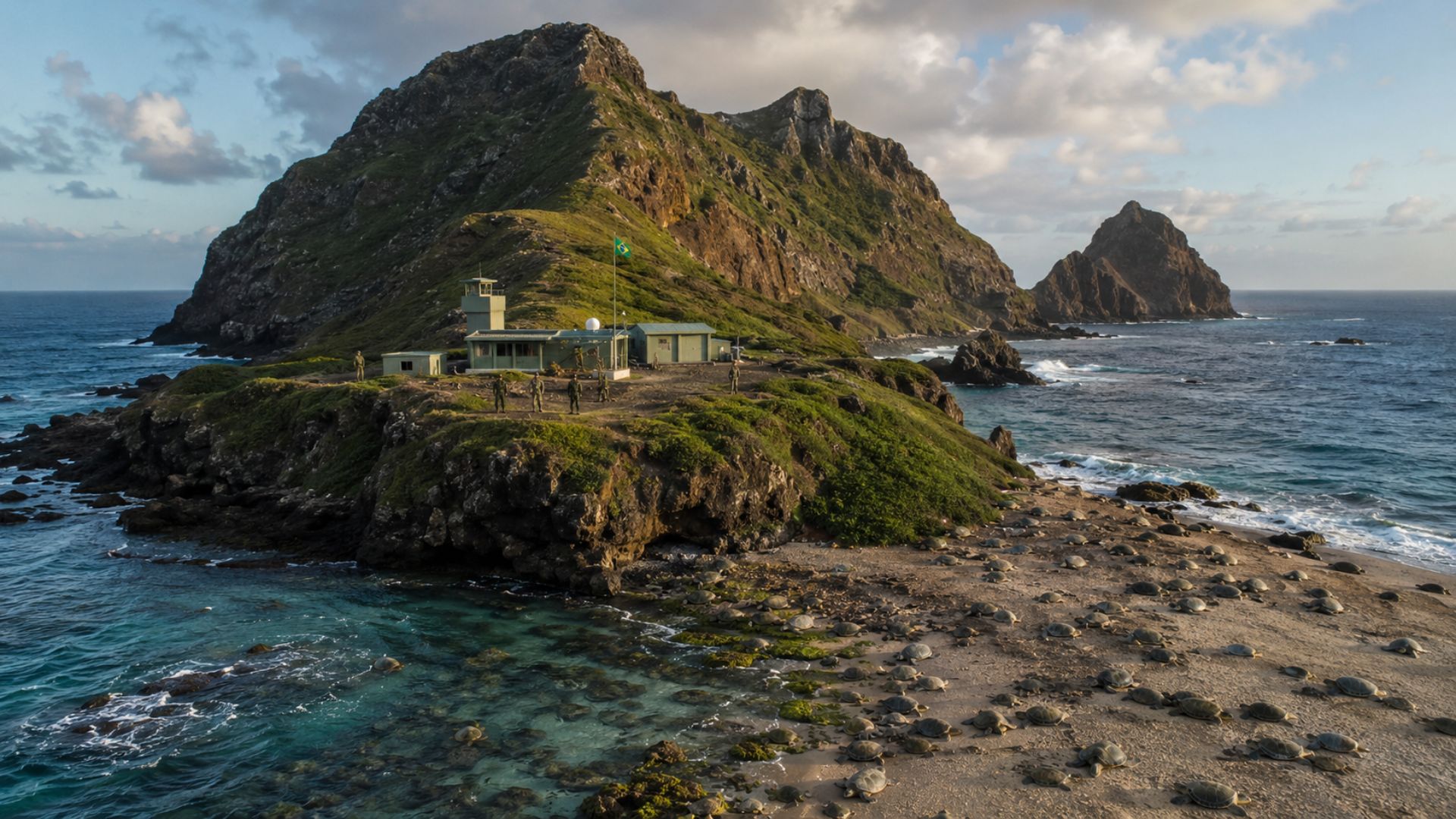


It is the most remote inhabited point of the national territory, so isolated that it can only be reached by Navy ship. There the sun rises before any other place in Brazil, thousands of turtles nest every year and, in 1958, the island became the stage for the most famous UFO case in the country’s history.
More than 1,100 kilometers from the coast of Espírito Santo, there is a Brazilian volcanic island with no civilian residents, inhabited only by about 32 Brazilian Navy soldiers on a rotating basis. Called Trindade Island, it ensures national sovereignty over a vast area of the South Atlantic and houses, at the same time, the largest green turtle nursery in the country, in a rare balance between military strategy and environmental preservation.
Belonging to the municipality of Vitória, in Espírito Santo, the island is at a distance that varies, according to the source, between about 1,140 and 1,200 kilometers from the mainland. It is the most remote inhabited point in Brazil and the national territory located furthest east, where, for this very reason, the sun rises before any other place in the country. Access is extremely restricted and can only be made by Navy ships, which reinforces the isolated and strategic nature of the place.
An island without civilians, only military and scientists

Since 1957, it has housed the Trindade Island Oceanographic Post, the POIT, a Brazilian Navy garrison made up of about 32 military personnel, half of whom are rotated every two months. Besides them, only researchers linked to authorized scientific projects can stay on site, always with naval logistical support.
-
13-Year-Old Raises Funds to Build Well, Transforming Lives in Cambodian Community Lacking Clean Water

-
Man with Metal Detector Finds Medieval Silver Seal in England, Uncovers 2,000-Year-Old Roman Gem with ‘Richard’s Secret’

-
Thailand Converts 8 Tons of PET Bottles into 3,500 School Backpacks, Showcasing Circular Economy with Over 40 Factories Involved

-
Mysterious Bats Spotted in Paris’s Père Lachaise Cemetery, Drawing Tourists to the “Vampire Cemetery”



This continuous presence is no accident. The island is considered an advanced point of defense of the national territory, and the presence of the military serves the dual purpose of affirming Brazilian sovereignty over the region and supporting research teams. Living there, in the middle of the ocean, requires adaptation to a daily life of extreme isolation, with supply and communication dependent on periodic naval operations.
Volcanic Origin and Unique Landscape

It harbors remnants of the last volcanic activity on Brazilian territory, making it a true open-air laboratory for geologists. Its terrain is rugged, marked by steep rock formations, and the highest point is Pico do Desejado, which reaches about 600 meters in altitude.
The landscape combines volcanic rock mountains, isolated beaches, and formations eroded by the sea over millions of years. This setting, along with its isolation, has helped preserve endemic species of fauna and flora, meaning they exist only there. For all these reasons, the Trindade and Martim Vaz archipelago is considered one of the most unique points of geology and biodiversity in the Brazilian South Atlantic.
The Largest Green Turtle Nursery in Brazil
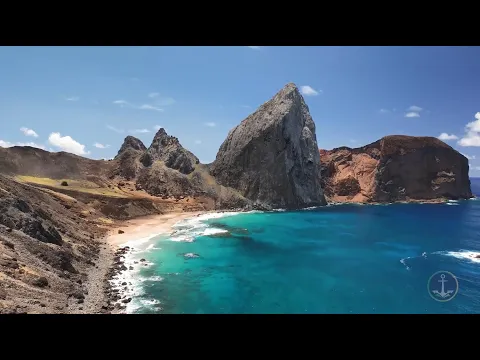

One of the island’s greatest treasures lies in its sands. Trindade is the largest nesting site for green turtles in Brazil, and its beaches receive thousands of nests of the species each season, with estimates reaching about 3,600 nests per year. The nesting cycle is one of the most important in the South Atlantic and attracts the attention of scientists from all over the country.
This monitoring work has been conducted since 1982 by the Tamar Project, in partnership with the Chico Mendes Institute for Biodiversity Conservation, ICMBio, and with the essential support of the Brazilian Navy. The teams tag females, monitor reproductive biology, and protect the nests. It is worth noting that the green turtle was one of the few species to improve its conservation status in Brazil, partly thanks to this kind of continuous effort.
The Link with Oil and the Blue Amazon
For the reader who follows oil, gas, and sovereignty, Trindade Island has a strategic weight that goes far beyond the landscape. The Brazilian Navy itself highlights that the island is close to important oil basins and the region of greatest socioeconomic development in the country, making it a key point for national defense and for monitoring the riches of the Brazilian sea.
More than that, the Brazilian presence in Trindade helps to ensure the country a broad Territorial Sea, Contiguous Zone, Exclusive Economic Zone, and Continental Shelf around the island, according to the United Nations Convention on the Law of the Sea and Brazilian legislation. It is part of what has been conventionally called the Blue Amazon, the vast maritime area under national jurisdiction, rich in fishing, mineral, and energy resources, which Brazil needs to monitor and protect.
The famous case of the flying saucers of 1958
Trindade Island also occupies a curious place in the Brazilian imagination. In 1958, photos taken near the island, aboard the training ship Almirante Saldanha, recorded a supposed unidentified flying object, which became one of the most famous ufological cases in the country’s history. The images, attributed to photographer Almiro Baraúna, generated debate for decades between skeptics and enthusiasts.
Regardless of the explanation, ufological or not, the episode helped surround the island with an aura of mystery that persists to this day. This popular fascination adds to the geographical isolation and dramatic beauty of the place, transforming Trindade into one of those points on the Brazilian map that many people have heard of, but very few know up close or know that it is inhabited by rotating military personnel.
Life and challenges in isolation
Maintaining an inhabited base in the middle of the ocean is no simple task. The logistics of transporting personnel, equipment, food, and water depend on ships and periodic operations, and any unforeseen event can mean weeks of waiting. The modernization of infrastructure over the years has sought to give more autonomy and comfort to the garrison, but isolation remains the greatest challenge of life in Trindade.
Confinement at sea also poses a human challenge. Far from families and the continent, the military and researchers need to deal with a restricted routine, close coexistence, and distance from the world. Cooperation among the few people who share the island becomes essential, creating bonds and a sense of shared mission in the name of Brazilian sovereignty and science.
Trindade Island is one of those places that sums up, in a few square kilometers, much of what Brazil has that is most strategic and fascinating: sovereignty, science, biodiversity, and even mystery. Inhabited only by about 32 military personnel and by rotating researchers, it protects a huge slice of the South Atlantic, guards the largest green turtle nursery in the country, and remains the most remote and enigmatic point of national territory. Knowing and valuing this advanced post is also understanding the dimension of Brazil beyond its most famous beaches.
And you, had you heard of Trindade Island, the Brazilian volcanic island inhabited only by military personnel over 1,100 km from the coast? Did you know about the famous UFO incident of 1958 there? Leave your comment, tell us what impressed you the most about this isolated piece of Brazil, and share the article with those who love geography, nature, and the mysteries of our country.