Portuguese
  Spanish


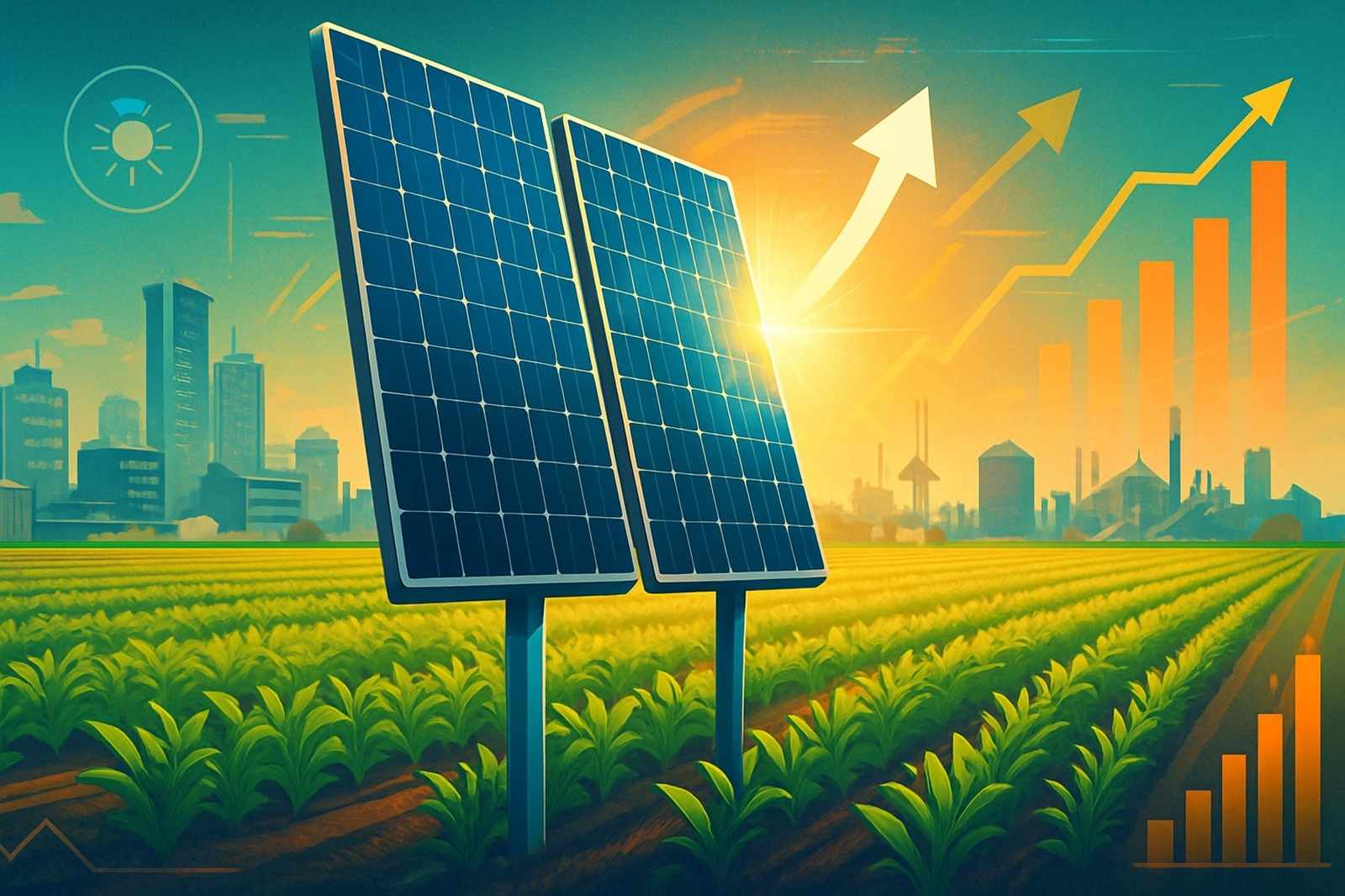


Danish Researchers Show That Vertical Panels Allow Cultivation And Energy Generation In The Same Space, Reducing Land Use And Maintaining Yield
Researchers from Aarhus University have shown that vertical solar panels can work alongside crops. They tested the model in wheat fields and mixtures of clover and grass. The crops grew well even with the panels in the middle.
The idea challenges the common belief that one must choose between planting or generating energy. The project occupies only about 10% of the field area and does not reduce the yield agricola.
This discovery indicates a new way to unite agriculture and energy production. The experiment took place in Foulum, Denmark, and showed consistent results throughout the test.
-
The Trap of Modern Technology: How Screen Overload and Digital Connections Can Impact Your Mental Health and Well-being

-
Wyoming Couple Grows Tropical Fruits Year-Round in -40°C Using Geothermal Greenhouse, Demonstrating Earth’s Heat Can Produce Oranges and Lemons in Snow Without Traditional Heating

-
Ship Returns from Brazilian Coast with Thirty Newly Discovered Life Forms
-
Nigerian Professor Invents Electricity-Free Refrigerator Using Clay Pots and Wet Sand, Extending Shelf Life of Vegetables to 27 Days; 7,000 Units Distributed in Energy-Deprived Villages


What once seemed like a dilemma is becoming a joint solution. It is now possible to harvest grains and electricity in the same space without conflict.
Energy More Valuable During Peak Hours
Another strong point of the system is the electricity generation pattern. The vertical panels, positioned from east to west, produce more energy in the mornings and afternoons. These times coincide with peak consumption, when the electrical grid needs more supply.
Even though the annual production is slightly lower than in traditional south-facing systems, this coincidence with peak demand times increases the value of the generated energy.
Efficient Use Of Land
The model also uses the land very efficiently. Since it occupies only 10% of the field, the remainder remains available for cultivation. This avoids opening new areas and reduces pressure on land use.
According to the team’s calculations, between 18% and 26% more area would be needed if energy and food production occurred in separate places. In regions with land disputes, this difference is decisive.
Adapted Technology With Less Impact
The bifacial panels capture both direct and reflected light, which increases efficiency. Additionally, they use fewer construction materials and emit less CO₂ during manufacturing and installation. They also withstand wind and weather better.
Agricultural machines can pass between the rows of panels without difficulty. This allows traditional cultivation methods to be maintained without costly or complicated changes.
The integration with the landscape is also noteworthy. The panels resemble modern hedges rather than large industrial structures, which reduces the visual impact in the fields.
Good Acceptance In Rural Communities
A virtual reality experiment with more than 100 participants evaluated the appearance of the vertical panels. They were seen as more beautiful, innovative, and eco-friendly than conventional solar parks. This positive image may facilitate the adoption of the technology.
A Possible Path For Europe
The European Union aims to achieve climate neutrality by 2050 and needs to expand renewable energies. However, every hectare occupied by energy takes space away from agriculture. The Aarhus model shows that this can be avoided.
France, Germany, Italy, and Spain are already studying laws that prioritize agrivoltaic projects, as long as they do not harm food production.