






 Portuguese
  Spanish


Rain predicted between Sunday and Tuesday in strategic safrinha corn areas in Paraná and Mato Grosso do Sul may alleviate part of the crop’s water stress, while Goiás remains under pressure and the advance of cold weather demands redoubled attention in the field
Rain is expected to return to important safrinha corn areas in Paraná and Mato Grosso do Sul in the coming days, a change that could improve part of the scenario for the crops. The forecast indicates precipitation over Paraná starting Sunday, with a higher concentration between Sunday and Monday, and also points to more significant volumes in south-central Mato Grosso do Sul between the end of April and the beginning of May.
The moment is decisive because the fields were already under pressure. In Mato Grosso do Sul, the persistent water deficit reduced soil water reserves and increased the risk to productivity in areas like Dourados. In Goiás, the situation remains more critical, with less rain, high temperatures, and moisture loss precisely during sensitive safrinha corn phases, such as flowering and grain filling. At the same time, a new cold air mass enters the radar, increasing producers’ attention.
Rain returns to decisive safrinha corn points in Paraná and Mato Grosso do Sul
The return of rain gains relevance because it affects regions that had been needing moisture replenishment. In Mato Grosso do Sul, the change reaches areas linked to safrinha corn, such as Porto Murtinho, Bela Vista, Ponta Porã, and Dourados. In Paraná, the improvement reaches the north and northwest of the state, where the need for rain had already been highlighted.
-
ChatGPT Alerts FBI to Prevent Planned Murder of 8-Year-Old in Brazil’s Espírito Santo

-
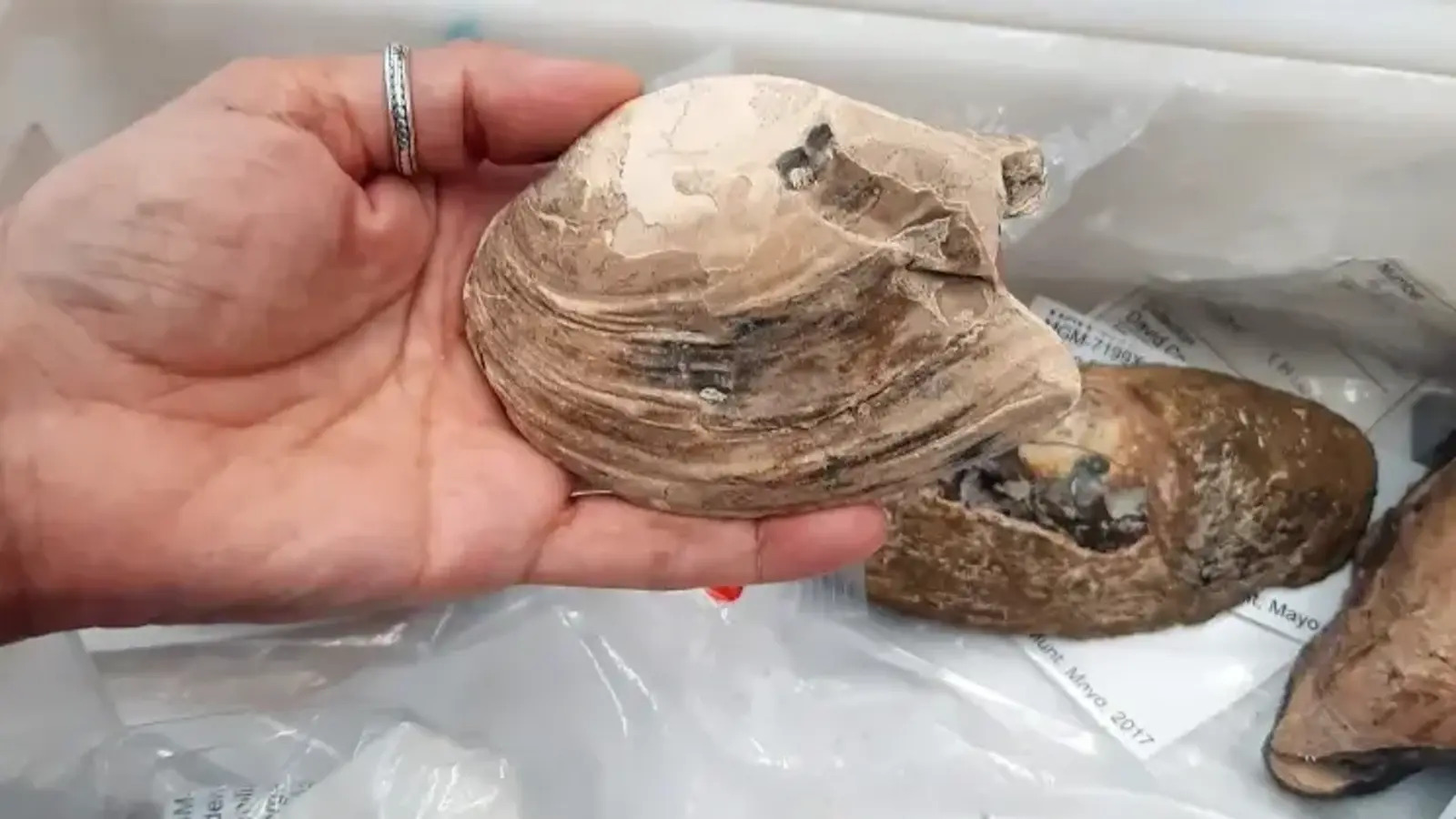
Scientists Discover 125-Million-Year-Old “Pregnant Fossil” with Preserved Embryos and Microscopic Larvae Inside Mollusk in England

-
17-Year-Old Justin Bernstein Develops Bacteria to Produce Glass on Arctic Ice to Reflect Sunlight, Wins $50,000 U.S. Scholarship

-
The 19-Meter Rocket-Helicopter: A Private Industry Prototype That Challenged Space Race Logic




In the short term, this change could reduce some of the pressure on crops that were facing drier soil and a smaller margin of water security. It is not a complete reversal of the situation, but an important relief in regions where moisture was already impacting productive potential.
What this change means in practice for crops
The irregularity of rainfall had been marking the development of the second-crop corn in much of the Central-West. In Mato Grosso do Sul, precipitation was sparse and, at times, even hindered the completion of planting in remaining areas. Nevertheless, the overall development of the crops was maintained at a good level.
The main problem appeared in the southwest and south of the state, where low rainfall volumes and high heat reduced available soil water. In Dourados, SISDAGRO’s estimates pointed to a persistent water deficit throughout the cycle, with repercussions on productive potential. In this context, the return of rain has a direct short-term effect, especially for areas that were already operating under greater water limitation.
Mato Grosso do Sul still faces pressure on soil and management
Even with the forecast for improvement, the situation in Mato Grosso do Sul continues to demand attention. The state is not only facing the problem of irregular moisture. The data also indicates an increase in the incidence of Spodoptera genus caterpillars and fall armyworm, which increases the need for crop management.
The forecast for the next fifteen days indicates volumes above 60 mm in the south-central part of the state. This data reinforces the possibility of partial relief but does not eliminate the impacts already accumulated throughout the cycle. The scenario is one of localized improvement, with possible gains in strategic areas, but still far from a homogeneous condition across the entire state.
Goiás remains at the most sensitive point on the agricultural map
While rain improves the situation in parts of Paraná and Mato Grosso do Sul, Goiás remains in a more delicate situation. The reduction in rainfall in recent weeks had already been stressing soil moisture, especially in the South and East regions of the state. At the same time, higher temperatures increase water loss and amplify the risk to crops.
The problem gains even more weight because a large part of the safrinha corn is in critical phases, such as flowering and grain filling. At this stage, the demand for water is higher, and any restriction can compromise grain formation and weight. In Rio Verde, in southern Goiás, SISDAGRO’s estimates indicate an increase in water deficit since March, with an estimated loss of 52.6% in productive potential.

The numbers that explain why the alert continues in the Central-West

The forecast between April 23 and May 9 shows irregular rainfall distribution in the Central-West. The largest accumulations are expected to be concentrated in the northwest and west of Mato Grosso and the south-central part of Mato Grosso do Sul, with volumes above 60 mm. In other areas of the region, totals should remain below 40 mm.

The situation is even more restrictive in parts of southeastern Mato Grosso, Goiás, and the Federal District, where volumes may be below 10 mm or even no rain. Relative humidity is also expected to remain below 40% in areas of eastern and southern Goiás and parts of Mato Grosso do Sul. These data show that the improvement is not general and that productive risk remains present.
Paraná enters a window of improvement for areas that had been asking for rain
In Paraná, the rain expected from Sunday onwards could open a window of improvement for areas of second-crop corn that were already needing water replenishment. Inmet indicates accumulations that could reach 50 mm per day with the advance of frontal systems over the state.
In the regional reading presented in the base, the improvement should gain strength in areas such as Umuarama, Campo Mourão, Telêmaco Borba, and northern Paraná. For the producer, this means an important short-term adjustment, especially in regions that were following the reduction in rainfall with increasing concern.
Cold weather enters the radar and increases caution in agriculture
In addition to rain, producers will have to monitor the arrival of a new cold air mass. Inmet forecasts a drop in temperatures in the South from Monday, with lows around 6 °C in south-central Rio Grande do Sul and favorable conditions for frost early next week.
The base also points to cooling in western and southern Mato Grosso do Sul between Monday and Tuesday. This increases the level of attention because the scenario is no longer just about water. In some areas, the improvement in rain is accompanied by a thermal change that can also interfere with the planning of activities in the field.
What changes for the producer in the coming days
The scenario for the coming days brings a significant, but partial, improvement. Rain returns to strategic second-crop corn areas in Paraná and Mato Grosso do Sul and may reduce some of the water stress in crops that were already suffering from climatic irregularity. Goiás, however, remains in a more fragile condition, with less prospect of rain and greater risk to productivity.
Therefore, monitoring remains essential. Monitoring the forecast, soil moisture, and crop response will be decisive in guiding management and reducing losses. At this moment, the field does not operate with full security, but with short windows of improvement and still high risk in a significant part of the producing areas.
So, in your assessment, does this rain arrive in time to relieve the second-crop corn in your region, or does the risk in the field still remain too high?


