Portuguese
  Spanish


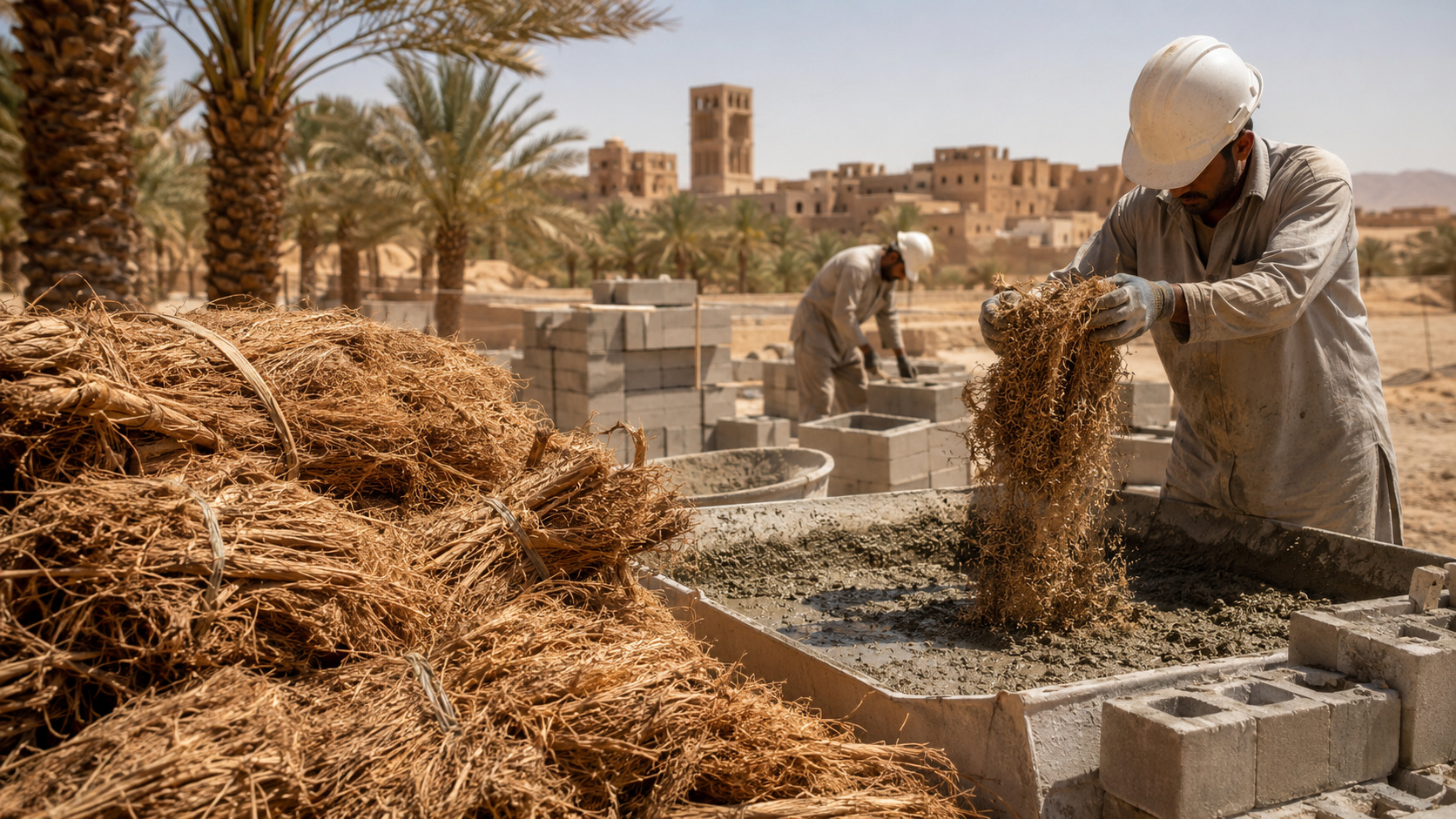

Research shows that date palm fibers can reinforce concrete and mortar, reducing agricultural waste and creating a sustainable alternative for construction in arid regions.
Millions of date palms spread across the Middle East and North Africa generate large volumes of waste after pruning, harvesting, and maintenance. Instead of being discarded or burned, part of this material has begun to find a new role in civil construction. Scientific studies show that date palm fibers can be incorporated into concrete and mortar as a natural reinforcement, paving the way for a more sustainable alternative in arid regions.
The interest in this technology has grown because the date palm is one of the most abundant plants in these areas and produces waste on a large scale.
At the same time, the construction industry is seeking materials with lower environmental impact and better adaptation to hot climates. In this intersection between agriculture and engineering, date palm fiber has transitioned from rural waste to a promising raw material.
-
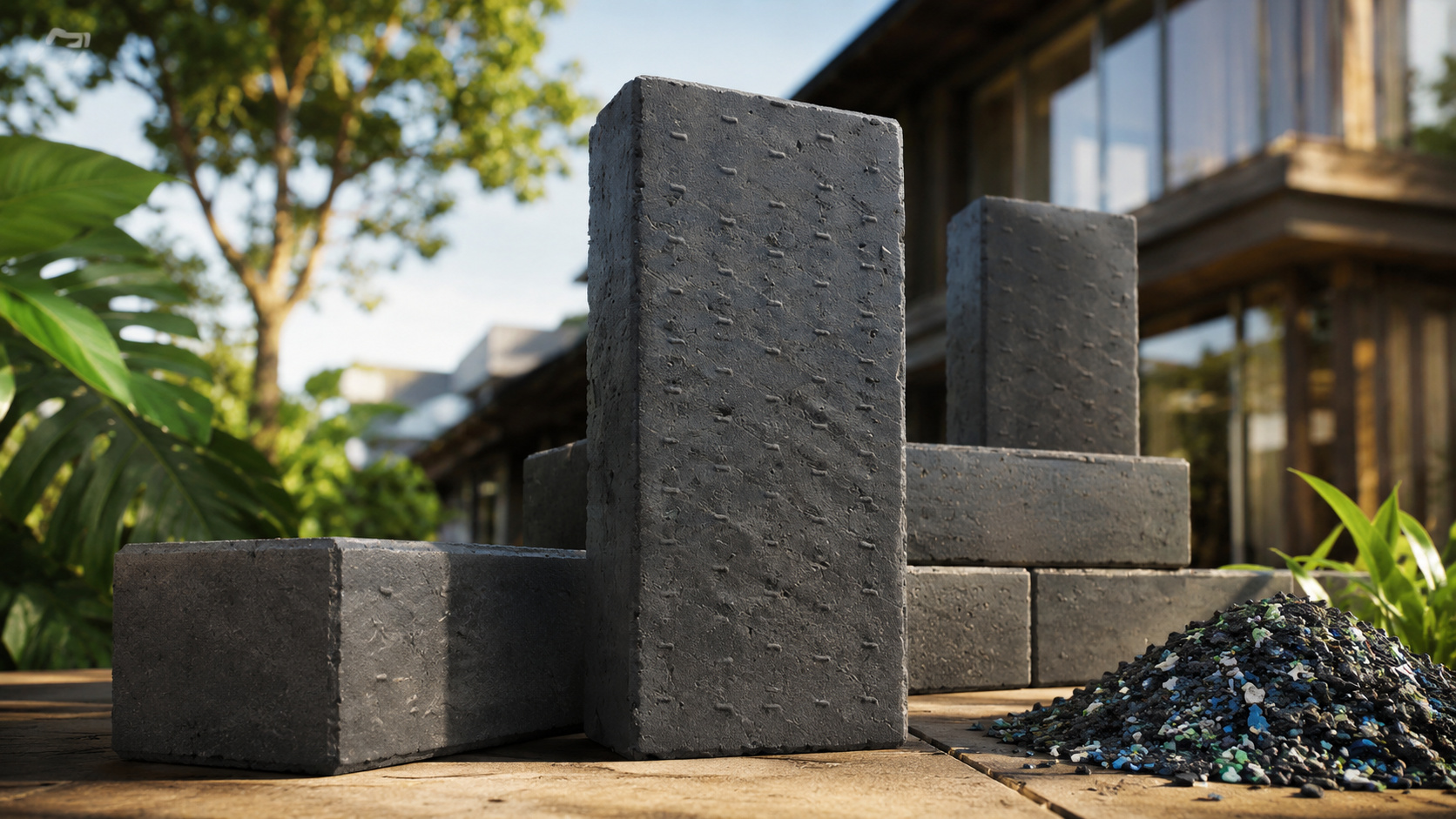
An architect transformed plastic waste into bricks that fit together like Lego, and with just four people, built a 40 m² two-bedroom house in five days for about US$ 6,800, proving that street pollution can become a roof for the poor.

-
Young Moroccan created a system to recycle plastic collected by waste pickers, transformed the waste into construction blocks, surpassed 200 tons reused, started producing more than 15,000 pieces per month, and saw demand exceed the capacity of his own factory.

-
City Hall spends almost R$ 2 million on a wooden bridge only 2.5 meters wide to prevent the isolation of 5,000 people, but information about lifespan, load, and maintenance does not appear in public disclosures.

-
More than 2,100 trucks transported 16,200 cubic meters of concrete without interruption to create the foundation of the tallest skyscraper in the western United States and break a world record.



Date palm fibers can reduce agricultural waste and reinforce concrete
A review published in the journal Fibers showed that date palm fibers are renewable, lightweight, biodegradable, low-cost, and abundant resources in arid countries. The study highlights that incorporating these fibers into cementitious materials helps address two problems at once: the disposal of agricultural waste and the search for more sustainable construction materials.


According to this review, the fibers can be used in concrete and mortar to improve certain physical, mechanical, and thermal properties, although some parameters may worsen depending on the content and form of use. This means that the potential exists, but performance strongly depends on formulation, dosage, and technical control.
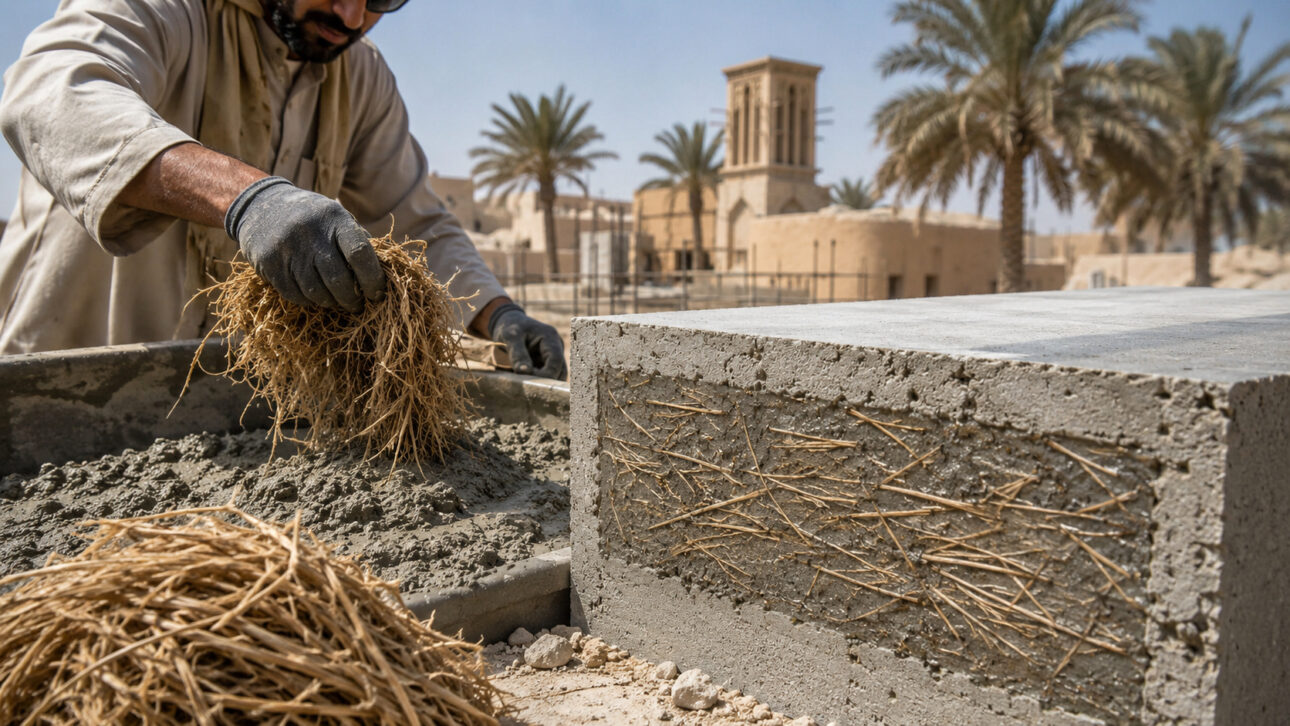
In practice, the principle is similar to other fiber-reinforced concretes. The plant fibers are added to the mix before curing and help control cracks, redistribute stresses, and modify the material’s behavior under certain loads.
Tests showed significant gains in traction and flexion with date palm fibers
An experimental study published in the journal Materials evaluated the behavior of high-strength concretes reinforced with date palm fibers, comparing this performance with steel and polypropylene fibers.
The researchers observed that the addition of 1% date palm fibers increased the indirect tensile strength by about 17% and increased the flexural strength between 60% and 85%, depending on the conditions analyzed.
The same work also identified effects on properties related to the material’s behavior and its permeability, which reinforces the technical interest in applying these fibers in cementitious elements. These results help explain why engineering has started to pay more attention to date palm residues as natural reinforcement.
At the same time, the review from Fibers highlights that performance does not automatically improve in every scenario. Some properties may decline, especially when the use of fibers is not optimized. This reinforces that the material is promising but requires fine technical adjustment for large-scale application.
Civil construction sees natural fibers as a lower environmental impact alternative
The use of natural fibers in cementitious materials has gained momentum because it offers important environmental and logistical advantages.
In the case of date palm fibers, the appeal is even greater in regions where the material already exists in abundance and can be obtained locally, reducing the dependence on industrialized reinforcements transported over long distances.
The review published in Fibers indicates that the use of these fibers can contribute to cleaner construction by reducing the burning or abandonment of agricultural waste. Additionally, the material can help produce lighter composites with interesting thermal properties for hot climate areas, something especially relevant in desert and semi-arid countries.
This point is strategic because arid regions tend to combine two challenges: large generation of date palm waste and strong demand for construction solutions adapted to intense heat. Transforming this agricultural liability into input for concrete and mortar creates a direct bridge between circular economy and local engineering.
Technology still depends on more studies on durability and standardization
Despite the encouraging results, the researchers themselves warn that large-scale application still requires more evidence. The review by Fibers states that existing studies are promising, but still insufficient to widely introduce concrete and mortars with date palm fibers throughout the construction industry.
The main gaps involve durability, standardization, long-term behavior, and performance variability according to fiber type, treatment, incorporated content, and adopted cementitious matrix. In other words, the technology has already shown potential, but it has not yet reached full maturity for widespread adoption without more consolidated technical criteria.
Even so, the advancement of research shows a clear direction. What was once treated only as pruning and harvest waste has begun to be seen as a natural reinforcement with technical and environmental value, capable of reducing waste and opening new solutions for construction in dry regions.