






 Portuguese
  Spanish
  4 min of reading
  0 comments


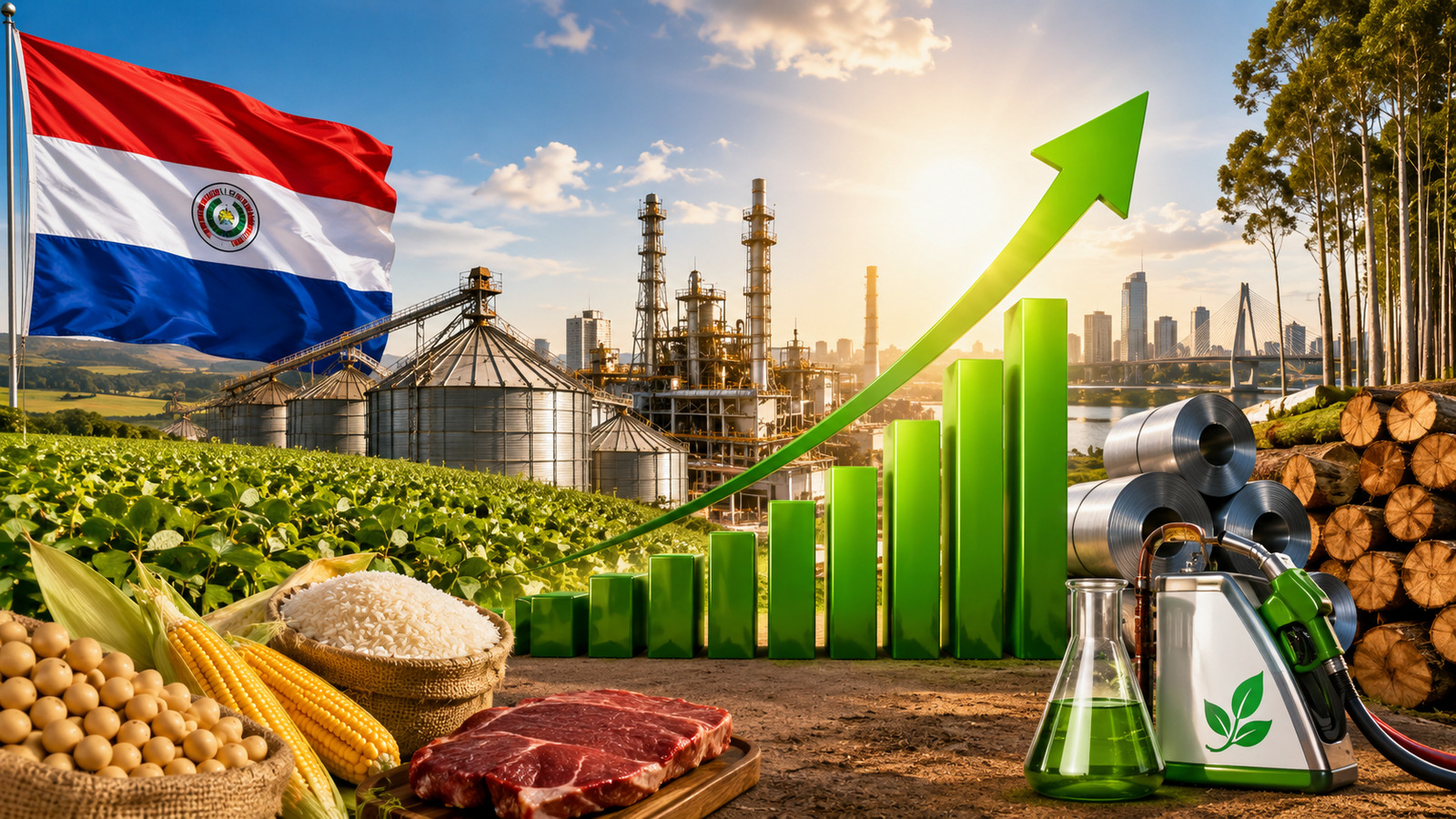
Paraguayan government plan bets on 27 export products, industrial advancement, available energy, and attraction of foreign capital to bring the country into the group of economies above US$ 100 billion
Paraguay 2X is the Paraguayan government’s bet to double the size of the economy in the next decade and bring the country into the group of nations with more than US$ 100 billion, about R$ 511 billion, focusing on exports, industrialization, and attraction of foreign capital. This article relies on data from Forbes.


Paraguay 2X bets on 27 products to expand exports
According to the Presidential Advisor, Rodrigo Maluff, Paraguay “has no restrictions to join the club of economies worth more than US$ 100 billion,” currently composed of 55 countries.
The government’s strategy involves betting on 27 export products in which the country believes it has the potential to increase its participation in the international market.
-
The neighboring country of Brazil that reduced the working hours and increased the minimum wage by 23.7% had to hire 787,000 extra workers to cover the reduced hours, and even so, it records unemployment at a historic low.

-
A resident of Guangzhou infiltrated the village where the 500 factories that make Shein’s clothes are located, disguised, and filmed everything: shifts from 8 am to 10 pm, factories operating at night, and owners who accept any conditions to avoid losing the contract.
-
Traffic jammed between BH and Nova Lima may get significant relief with the Viaduto Ferradura, a R$ 48 million project that promises to connect MG-30 and MGC-356 without passing through the Belvedere junction.

-
After Russia turned off the tap, Europe looks to Africa as a new energy salvation: two giant pipelines of up to 7,000 km may cross the Sahara and the Atlantic, costing $25 billion and transforming Nigerian gas into a geopolitical weapon.




The idea is to reduce dependence on a few items and increase Paraguay’s presence in production chains with higher value.
Maluff pointed out structural advantages that, according to him, support this ambition. Among them are the quality of the soil, the young population benefiting from the demographic bonus, the availability of energy for industry, and a competitive tax system.
For the government, the combination of these factors creates a basis to attract investments, expand production, and develop new economic activities focused on the external market.
Paraguay’s exports are still concentrated in a few products
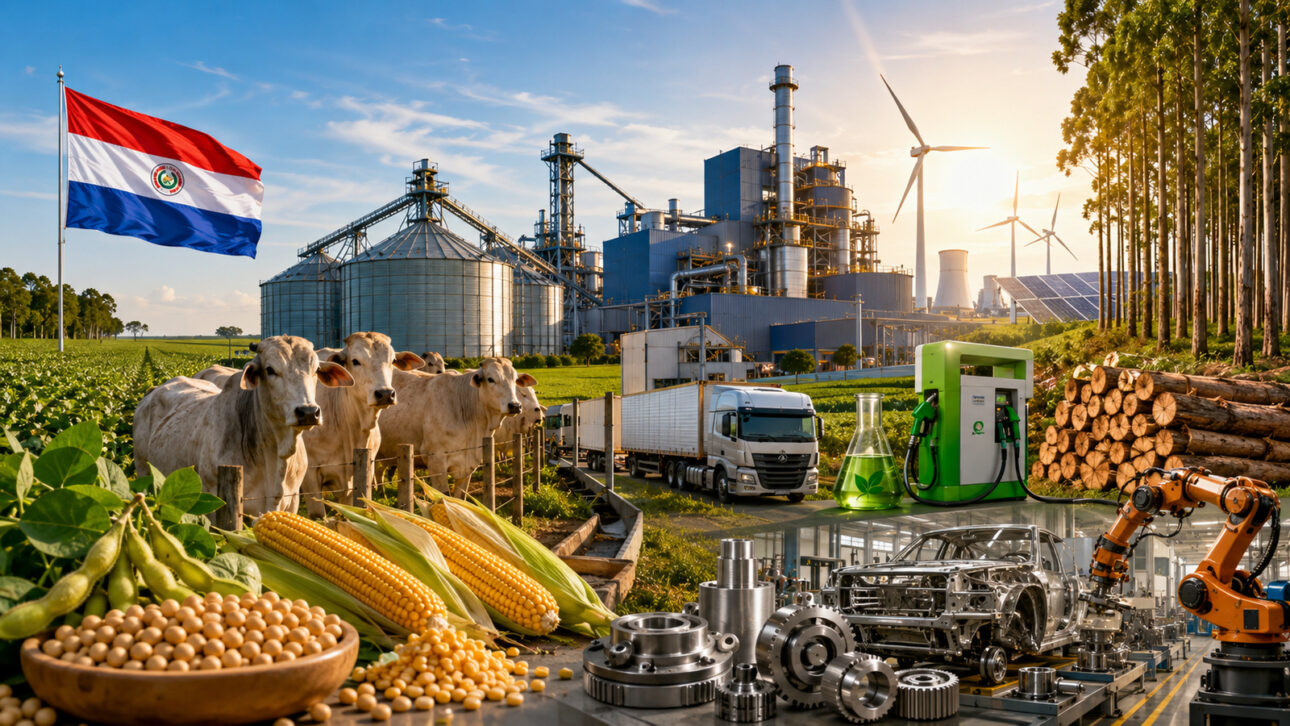
One of the central points of the plan is to tackle the concentration of the export agenda. According to Maluff, only 13 items currently account for about 80% of Paraguayan exports.
Among the traditional products mentioned are beef, soybeans, corn, rice, and the first derivatives of soy. These sectors, according to the minister, still have room to grow through productivity gains.
The projection presented is that this advancement could add approximately US$ 1.5 billion, about R$ 7.67 billion, to Paraguayan exports by 2035.
This is the first axis of Paraguay 2X: to strengthen products that the country already sells abroad. The proposal does not replace the current economic base but tries to expand its revenue-generating capacity.
Plan seeks to add value to raw materials
The second axis of the plan targets industrialization. Maluff stated that the objective is not to create industries of maximum technological complexity, but to gradually advance in the value chain.
The proposal is to process within Paraguay raw materials that currently leave the country with little transformation.
The minister mentioned the use of corn and soybean meal in the production of pork, poultry, processed meats, sausages, pasta, and bakery products.
The same logic also appears in energy-intensive sectors. Maluff mentioned the processing of scrap for iron production, the manufacture of finished aluminum products, auto parts, furniture, and the textile industry.
For the government, these activities can gain greater complexity and open new export opportunities, connecting the available energy in the country to larger-scale industrial projects.

Eucalyptus, biofuels, and new sectors enter the strategy
The third axis of Paraguay 2X addresses new sectors for the national economy. Maluff mentioned the utilization of available energy, the expansion of biomass, forest production, biofuels, hydrocarbons, and mining.
In the forestry sector, the minister stated that Paraguay has one of the highest eucalyptus growth rates in the world. According to him, rates of 47 cubic meters per year have been observed.
Maluff said that the government wants to transform eucalyptus into a Paraguayan brand. The condition, according to him, favors large-scale industrial projects, such as cellulose production and other biomass-related activities.
The plan also includes biofuels. The country has been increasing ethanol production from corn and sorghum. Additionally, a law was enacted to increase the biodiesel blend.
According to Maluff, the measure seeks to strengthen internal consumption, reduce energy dependence, and create industries with sufficient scale to compete internationally.
To make this set of projects feasible, the government considers foreign investment crucial. The minister stated that the pipeline of potential investments exceeds US$ 25 billion, approximately R$ 127.75 billion.
He acknowledged that the scale of the projects surpasses the capacity of internal savings. Therefore, Paraguay 2X will depend on international capital combined with national private investment.
This article was prepared based on the information provided in the source material, with data, numbers, and statements preserved as per the consulted material.








Be the first to react!