






 Portuguese
  Spanish


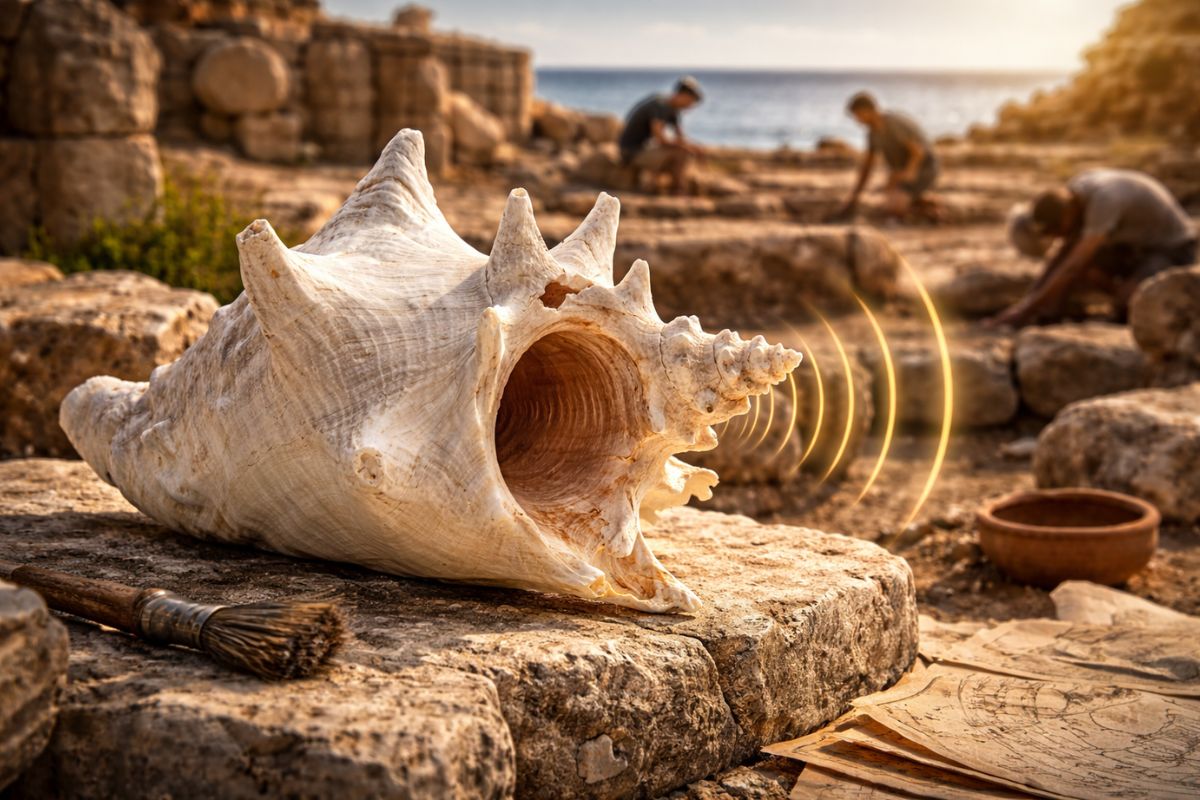


In Catalonia, a seashell crafted to function as sound technology from the Neolithic was analyzed by the University of Barcelona after blowing tests and reed cutting readings. The set of twelve pieces suggests standardization, timbre control, and use of signals in mines and villages for six millennia.
In southern Europe, a seashell that could pass for a decorative object became a technical point of discussion among archaeologists. The proposal is straightforward: the sound technology attributed to the Neolithic did not arise by chance, but through precise interventions on selected pieces modified to produce sound.
The University of Barcelona attributes the discovery to a set of 12 shells identified at sites in Catalonia, dating from the end of the fifth millennium to the beginning of the fourth millennium B.C. By treating the seashell as a functional artifact, the team repositions the debate on how Neolithic communities structured signals and coordination in collective spaces.
What Was Found in Catalonia and Why the Seashell Is Noteworthy

The 12 pieces were attributed to the same type of raw material and are associated with different sites in Catalonia, including mining areas and settlements.
-
Australia deploys poisoned sausages and uses traps, shooting, and fences in a battle against invasive cats that kill over 1.5 billion native animals annually, threatening more than 200 species.

-
NASA Rover Captures “Tired Face” on Mars, Highlighting Human Brain’s Tendency to See Faces in Rock Formations

-
Ancient Stone City in the Desert, Once Home to 30,000, Puzzles Scientists with Nabateans’ Water Mastery 2,000 Years Ago

-
Ancient Creature Thought Extinct Since Dinosaur Era Reappears, Baffling Scientists




What supports the reading of sound technology is the repetition of a technical gesture: controlled removal of the tip to create a mouthpiece compatible with sound emission.
This detail matters because it reduces the margin for casual interpretation.
The seashell was not just collected, it was crafted with an acoustic purpose, and the pattern of modification indicates choices for ergonomics, transport, and stability of the blow, elements that are also criteria in modern instruments.
How the University of Barcelona Tested the Sound Technology Attributed to the Neolithic
To go beyond the form, the University of Barcelona selected eight preserved specimens and conducted sound emission tests, blowing through the mouthpiece created at the cut.
The described result was a powerful and relatively stable sound, comparable to a horn, with the possibility of modulation by varying the position of the hand inside the piece.
The procedure gives materiality to the argument: without relying solely on typology, the team connects physical remnants to acoustic performance.
The sound technology, in this case, is inferred by the combination of deliberate cutting, sound response, and pattern repetition, something difficult to explain as coincidence in a Neolithic collection.
What Changes When the Seashell Enters History as Sound Technology
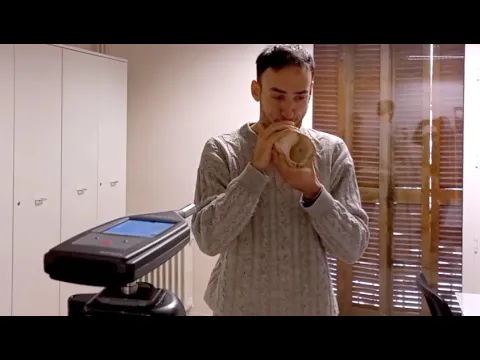

By framing the seashell as sound technology, the focus shifts from merely the rarity of the find to what it suggests about social organization.
In mining contexts in Catalonia, the hypothesis is that sound signals would help synchronize tasks and mark routines in environments where vision is limited.
At the same time, the discussion does not rely on a single function.
The same sound technology may have served for ceremonial uses and long-range messages because the ability to sustain a note and alter the timbre expands the possible repertoire.
The central point is that the Neolithic, here, appears as a phase of technical experimentation with repeatable rules, and the University of Barcelona presents this set as a milestone in this axis.
If a seashell has crossed millennia to be recognized as sound technology, the question remains about how many objects are still being read merely as curiosities. In your opinion, what other silent invention from the Neolithic might be hidden among finds in Catalonia that just needs a simple test to change the interpretation?








Livro dos Vedas