






 Portuguese
  Spanish


A Natural Spectacle And A Story Of Resistance: Discover The Mysteries Of Mauritius And The Illusion Of A Submerged Waterfall.
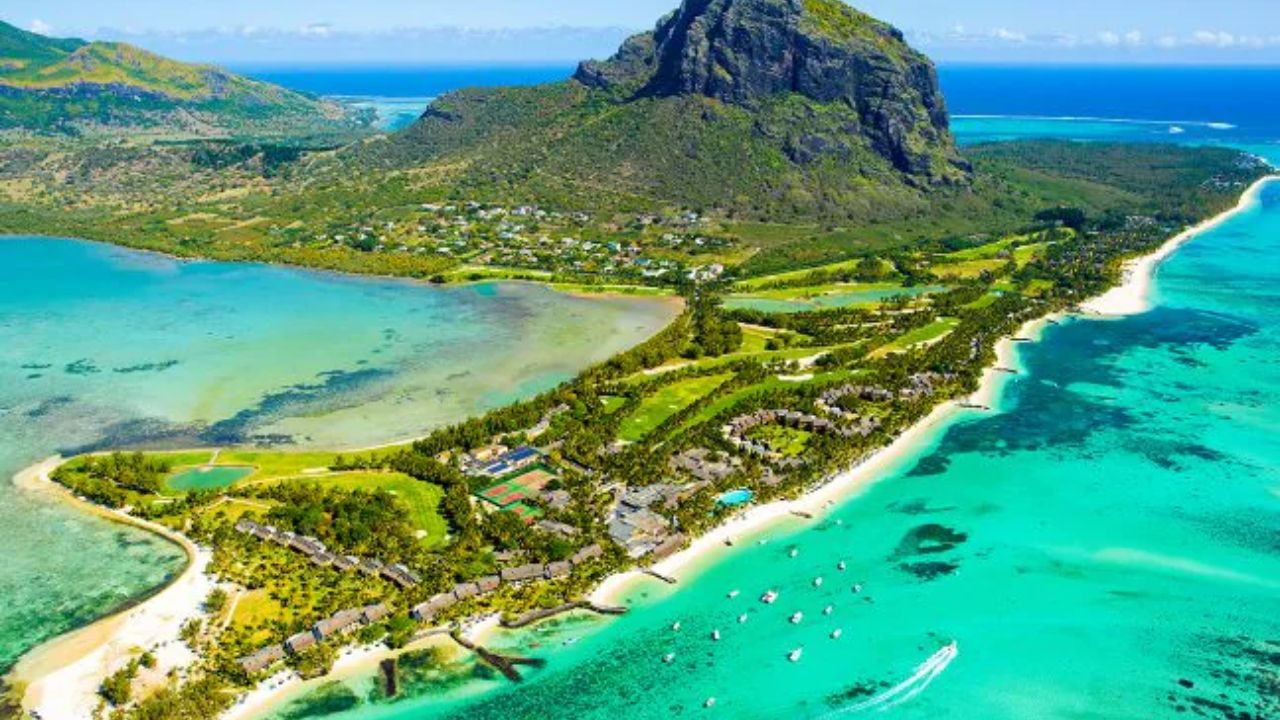
Mauritius, located in the Indian Ocean, has attracted the attention of tourists and researchers due to a rare visual phenomenon: the impressive illusion of a submerged waterfall in Le Morne, which looks more like a waterfall underwater.
This natural spectacle, resulting from sediments pushed by ocean currents, can be seen from the top of the Le Morne Brabant peninsula in the southwest of the island. The cinematic landscape has become one of the main attractions in the region.
The Illusion Of The Submerged Waterfall In Le Morne Delights Tourists
But beyond the beauty, the location also holds a moving story of the struggle for freedom, which justifies its recognition as a UNESCO World Heritage site since 2008.
-
Argentina to Use 2026 World Cup to Pressure Over 13,000 Child Support Debtors, Warns They May Be Banned from Stadiums

-
Man Who Lost Vision Due to Lack of Roads Invests Fortune in Building 59 km Route, Ending 1,300 Years of Isolation in Brazilian Village and Boosting Tourism and Jobs

-
São Paulo Invests Millions in Massive Reservoirs to End Decades of Water Shortages, Providing Relief to Residents

-
Luxury Mansion in Rio with Views of Christ the Redeemer Listed for $25 Million



This union of lush nature and a history of resistance is what makes Mauritius such a unique destination.
The island, which is home to about 1.2 million inhabitants, is also marked by a rich cultural diversity inherited from colonial periods under Arab, Portuguese, French, Dutch, and British rule.
What many believe to be an underwater waterfall is, in fact, a surprising optical phenomenon.
The illusion of the submerged waterfall in Mauritius is created by sand deposits moved by ocean currents that, while sliding over the edge of the continental shelf, create the illusion of a chasm shaped like a waterfall at the bottom of the sea.
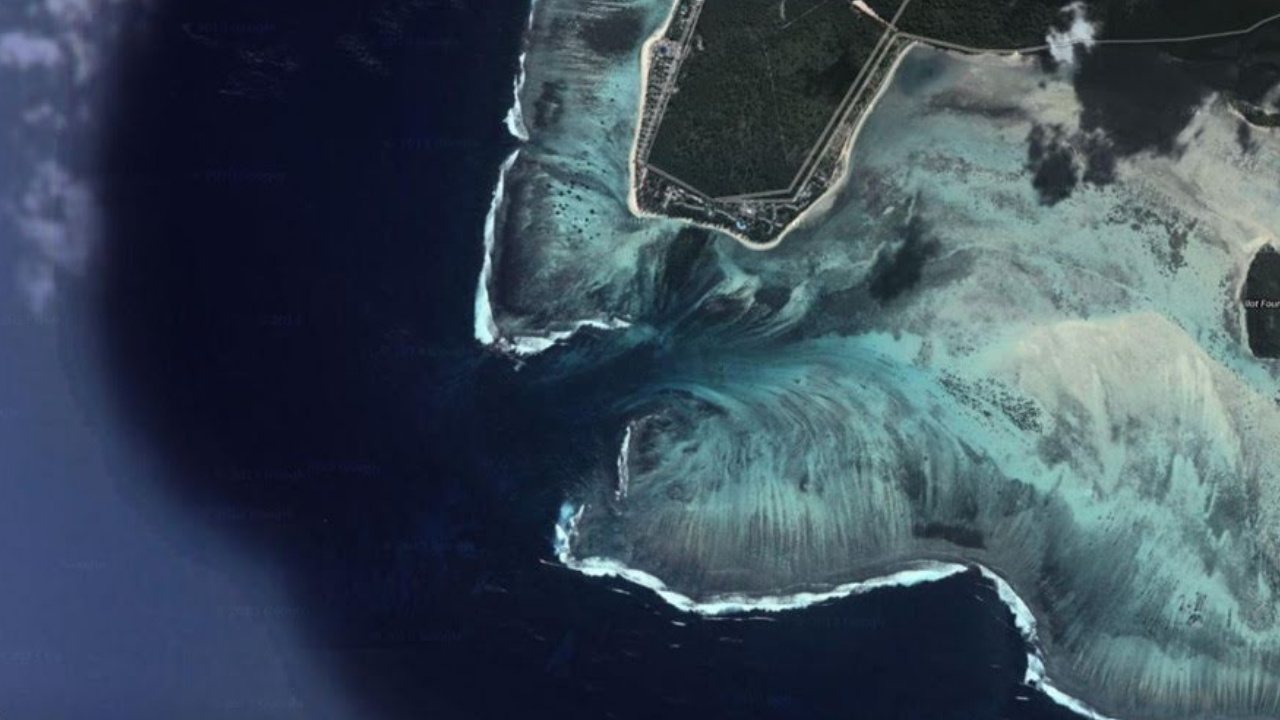
This geological peculiarity occurs over a base that is at most 150 meters deep. Beyond the continental shelf, there is a “drop-off” – a type of abrupt decline – that plunges up to 4,000 meters.
The result is a mesmerizing scene, especially when viewed from above, attracting tourists, photographers, and divers from around the world.
Le Morne: Symbol Of Freedom And Resistance
Much more than natural beauty, Le Morne carries a powerful symbolic weight. During the centuries of slavery, the hill served as a refuge for escaped slaves who found shelter in its caves and summits.
They formed communities of resistance and bravely challenged the slave system with courage and perseverance.
Due to this legacy, Le Morne was recognized as a World Heritage site by UNESCO in 2008. The island has even been nicknamed “Land of the Quilombolas,” in honor of this historic struggle.
Between 1834 and 1920, Mauritius was an important port in the slave trade, and the stories intertwined with the island’s geography transform the destination into an international symbol of freedom.
Mauritius: Volcanic Origin And Impressive Biodiversity
The formation of Mauritius is the result of underwater volcanic activity and is about 8 million years old — young compared to Earth, which is about 4.6 billion years.
Together with the neighboring Reunion Island, it forms part of the so-called Submarine Plateau, or Ocean Shelf, a region of shallow waters that hosts a rich marine life.

Although human actions have caused the extinction of some species — such as the famous Dodo — conservation initiatives have been growing.
Environmental conservation projects aim to protect the endemic species still existing and restore damaged ecosystems.
These efforts have attracted ecotourists, researchers, and nature lovers interested in the island’s unique biodiversity.
Cultural Mix Is A Trademark Of Mauritians
The history of Mauritius is also reflected in its people. Discovered by Arabs in 975 AD and explored by Portuguese in the early 16th century, the island has passed through various colonial hands.
It was under Dutch, then French rule, until it came under British control until 1968, when it gained independence and became a republic.
This timeline of domination resulted in a rich and diverse culture, visible in architecture, cuisine, traditions, and languages spoken. English, French, and Mauritian Creole coexist harmoniously among the residents.
Vibrant Cities Full Of History
In addition to its natural landscapes, Mauritius also stands out for its cities. The capital, Port Louis, is the largest on the island, with about 148,000 inhabitants.
Other important cities include Beau Bassin, Vacoas-Phoenix, Curepipe, and Quatre Bornes — all with populations over 70,000 people.
These urban centers are stages for cultural and economic events, revealing a bit more of the Mauritian essence, which balances tradition and modernity amidst a paradise setting.
Mauritius is much more than an exotic destination. It is a place where nature and history come together in a unique way.


Be the first to react!