Portuguese
  Spanish


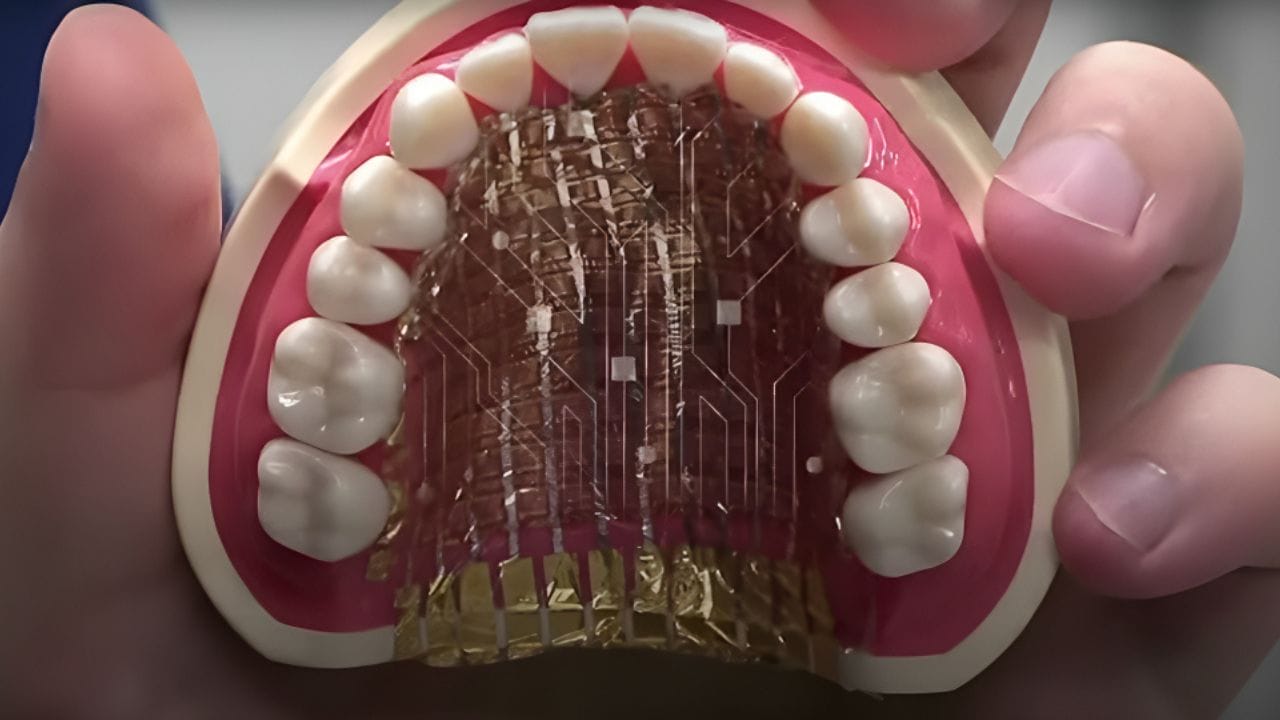

Discover How Innovative Electronic Skin Fueled by Human Sweat Is Redefining the Future of Health and Wellness Monitoring.
Imagine a world where health monitoring devices seamlessly integrate with your body, without interfering with your daily life. It seems like science fiction, but electronic skin technology is making this a reality. This innovation promises not only to transform health tracking but also revolutionize the way we interact with technology.
The electronic skin, developed by research teams at universities such as Northwestern University, led by John Rogers, consists of a flexible material similar to human skin, capable of monitoring vital signs in real-time. The device is placed at the base of the neck and communicates via Bluetooth, monitoring speech, breathing, heart rate, and other vital indicators. It is already being tested on volunteers and clinics around the world, assisting in monitoring vital signs of premature babies and hydration of athletes.
Innovations and Applications of the New Technology
In addition to monitoring health, electronic skin has the potential to detect harmful substances and pathogens, enabling faster diagnoses and early treatments. Researchers like Madhu Bhaskaran from RMIT University are exploring inorganic approaches to develop artificial skins that can sense pain, pressure, and excessive heat, simulating the human skin’s response to these stimuli. A combination of pressure and temperature sensors allows for this advanced functionality.
-
The beer that was hidden for 3,000 years has returned to the world: scientists find yeast preserved in Ancient Egyptian vessels and recreate a pharaoh’s drink to discover the lost taste of an ancient civilization.

-
NASA spotted a giant “surfboard” crossing the Moon’s orbit at 11,500 km/h, and the truth behind the mysterious object required a 0.338 millisecond photo to be revealed.

-
Brazilian project based on nanotechnology transforms the recovery of degraded areas in the Amazon, receives international recognition, and uses research in 9 states to accelerate the growth of native species and increase carbon capture.
-
The battery that promises to change cell phones and electric cars still has a microscopic enemy: researchers discover how lithium dendrites pierce the solid electrolyte and are already testing ways to prevent cracks and short circuits.




Sustainable Energy


One of the most intriguing facets of electronic skin is its ability to be powered by human sweat. This paves the way for self-powered wearable devices, eliminating the need to charge them daily. The technology is based on the hydrovoltaic effect, where the evaporation of sweat generates an electric current, providing continuous power to the device.
Electronic skin technology represents a significant advance in medicine and health monitoring. Its applications go beyond medical care, opening new horizons for human-technology interaction. With the constant evolution of this innovation, electronic skin may not only enhance quality of life but also fundamentally transform our relationship with technology in our daily lives.