Portuguese
  Spanish


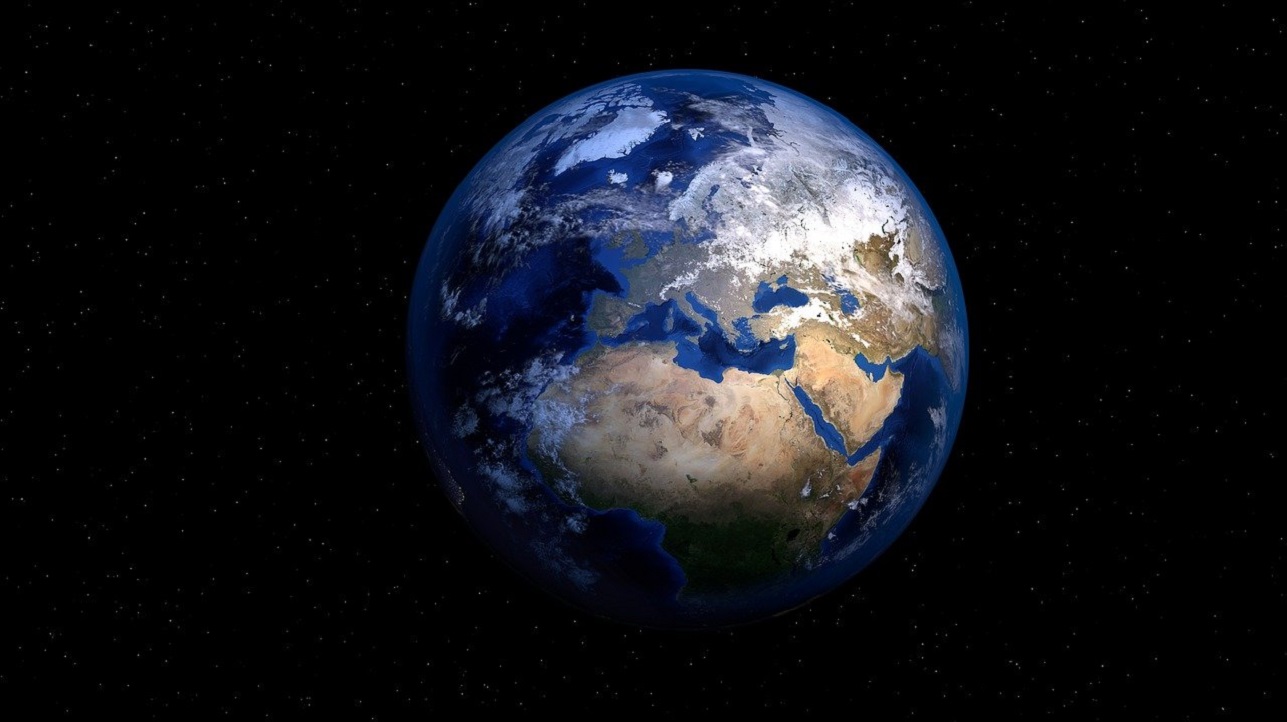

Research Indicates That Diamonds Can Be Formed in the Earth’s Core
Due to the limited knowledge that scientists have regarding the Earth’s core, it still presents many enigmas to be unraveled, which are being gradually discovered by researchers. Information from a new study indicates that the intense heat present at the center of the planet Earth may contribute to the formation of large quantities of carbon diamonds.
There are three main types of diamonds in nature: lithospheric, oceanic, and super-deep continental diamonds. Lithospheric diamonds form in the Earth’s lithosphere and are found at depths of 150 to 250 kilometers, making them the most common diamonds. Oceanic diamonds are much rarer and are found in rocks in the oceans.
Lastly, there are super-deep continental diamonds, which are found between 300 and 1,000 kilometers below the surface. Oceanic diamonds and super-deep continental diamonds are very different from those found in jewelry, as there is a variation in the signature of an isotope called carbon-13, which is used to determine the origin of carbon as being organic or inorganic.
-
What is a red flashlight used for, after all? See why it is so commonly used at night.

-
He has never read a line of code, but he already knows how to work: the French company UMA presented in Paris the Northstar, its first AI-powered humanoid robot designed for factories and warehouses, capable of copying tasks just by observing an employee in action.

-
A young Kenyan engineer collects plastic waste from the streets and transforms it into robots that translate physics lessons into sign language in real-time, a machine made with old bottles that teaches what was missing to deaf children left out of science.
-
What is the dark substance found in the sand of Ipanema Beach? Civil Police conduct an examination, collect samples of the material, and initiate an investigation to identify the composition, clarify the origin, and verify if there was an environmental crime.




The research was conducted at the School of Earth and Space Exploration at Arizona State University, focusing primarily on the relationships between the Earth’s metallic core and the mantle’s magma. Professor and co-author of the article, Dan Shim, from Arizona State University, explains how this relationship allows carbon to remain in diamond form:
“The stable form of carbon under the pressure-temperature conditions at the Earth’s core-mantle boundary is diamond.”
Enormous Quantities of Diamond in the Earth’s Core
In school, it is taught that the planet Earth is composed of three main layers: the Earth’s crust – which represents the surface -, the mantle – the rocky part -, and the core. The Earth’s core is divided into an inner core and an outer core. The inner core primarily consists of solid iron and nickel, and its temperature can be as high as the Sun’s surface, while the outer core contains liquid iron and molten rocks surrounding it.
The researcher explains that the temperature at the boundary between the silicate mantle and the metallic core reaches about 3,800 degrees Celsius, which is high enough for most minerals to lose H2O trapped in their atomic-scale structures.
Furthermore, he also explains that the hydrogen alloy, along with the liquid iron metal, appears to reduce the solubility of lighter elements in the core. This occurs at the pressures expected at the Earth’s core-mantle boundary. Thus, through dehydration, the solubility of carbon, which is likely to exist in the Earth’s core, decreases locally where hydrogen enters the mantle core. In this way, by escaping from the liquid outer core and entering the mantle, carbon would become diamond.
The co-author of the article, Byeongkwan Ko, adds by stating the importance of carbon for life and various geological processes. He also mentions that this discovery of a mechanism for transferring carbon from the core to the mantle will improve the understanding of the carbon cycle in the Earth’s deep interior.
The diamonds consist solely of carbon and are subjected to enormous pressures. Through volcanic eruptions, these diamonds were brought from the Earth’s core to the surface.