






 Portuguese
  Spanish


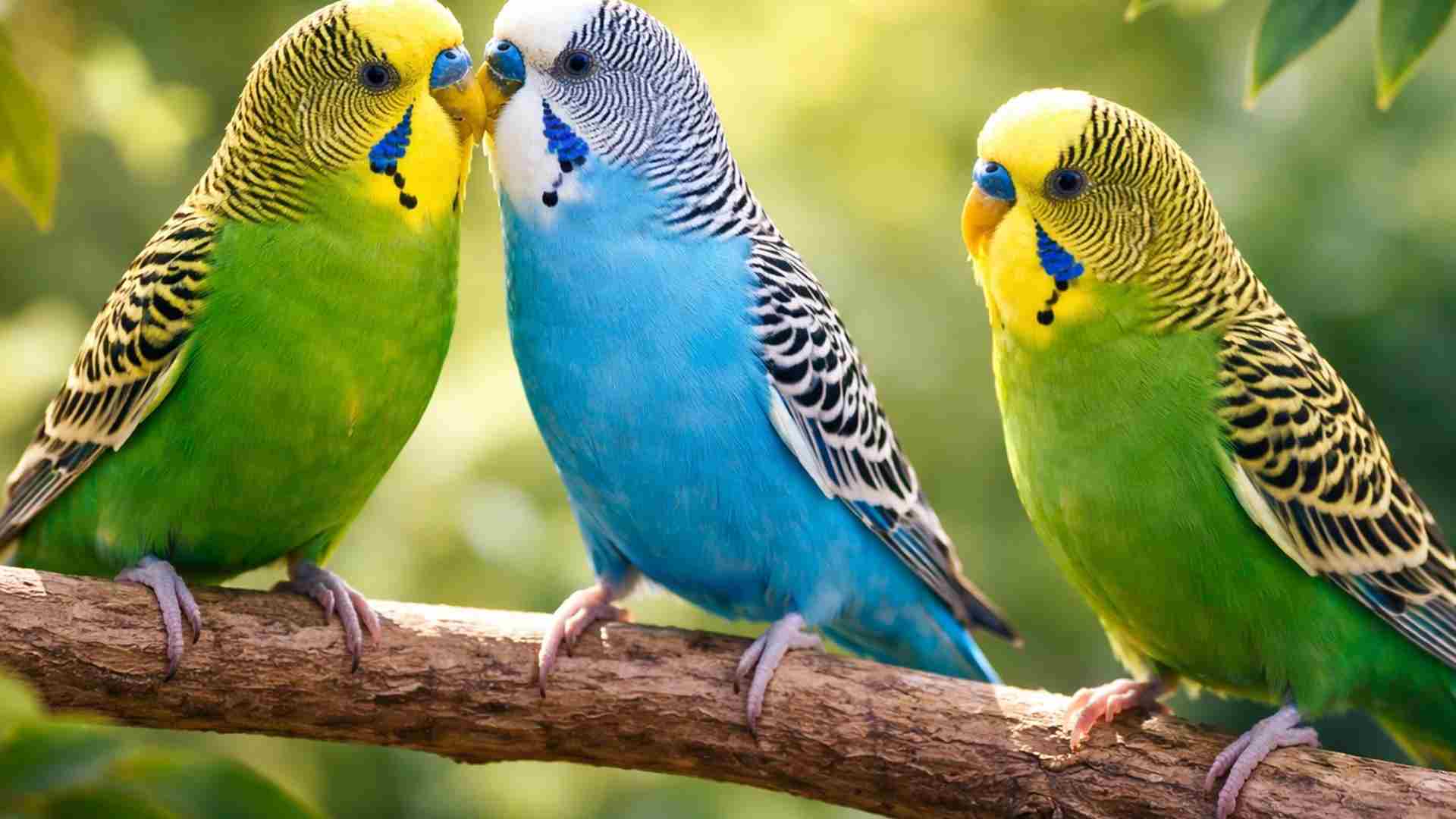


Observation of 179 Relationships in Aviary Shows That Monk Parakeets Adopt Gradual Approaches, with Cautionary Stages, Progressive Space Sharing, and Cooperative Interactions, Reducing Conflicts and Allowing for the Formation of Stable Social Bonds, According to a Study Published in a Scientific Journal in November 2025
Monk parakeets presented with unfamiliar birds adopt gradual approaches before accepting new partners, going through cautious stages that reduce aggression risks and precede cooperative interactions, according to research conducted by scientists at the University of Cincinnati and published on November 12, 2025.
Initial Stages and Cautious Behavior
When encountering strangers, monk parakeets do not approach immediately. The study describes that the birds test the waters gradually, allowing progressive closeness until they feel comfortable for closer interactions.
This initial behavior avoids direct conflicts. According to researchers, approaching quickly could increase the chance of aggression and injury, especially when a bird does not want the attention of a newcomer.
-
3,000-Ton, 81-Meter Attack Submarine Begins Sea Trials, Equipped with Heavy Torpedoes and Anti-Ship Missiles

-
Boat Made from 10 Tons of Plastic and 30,000 Discarded Flip-Flops Sails Along African Coast, Serving as a Floating Classroom on Ocean Pollution
-
Welder Discovers 16th-Century Diamond Ring in England After 7 Hours with Metal Detector; Gold Jewel Linked to Edward I Pattern Auctioned for £17,000
-
Former Merchant Marine Captain Invents Fuel-Free Barrier, Removes 20,000 Tons of Trash from Chennai Rivers




The observed strategy involves gradually sharing space. Only after this adaptation period do individuals advance to behaviors considered riskier, such as prolonged physical contact or mutual feather care.
Benefits of Social Bonds Among Parrots
Researchers highlight that many parrot species develop deep connections with one or two trusted partners. These bonds can include long periods together, mutual hygiene, and stable reproductive partnerships.
According to the study’s lead author, Claire O’Connell, maintaining strong ties is associated with reduced stress and greater reproductive success. However, these friendships need to start at some point.
The study indicates that the gradual process observed in monk parakeets creates conditions for these benefits to be achieved without exposing individuals to unnecessary risks during initial social contacts.
Methodology and Observation in Aviary
To investigate how new relationships form, the team gathered groups of wild monk parakeets in a spacious aviary. Some birds had no prior relationships with one another.
Researchers monitored the proximity allowed between individuals and recorded which pairs began to groom each other or display other friendly behaviors over time.
Ink markers were used to identify each bird, enabling detailed tracking of social interactions. This method allowed observation from initial contacts to the consolidation of stronger bonds.
Analysis of 179 Relationships
The team analyzed over 179 relationships using computational techniques and statistical models. The objective was to verify if the observed pattern corresponded to the idea of “testing the waters” described in previous studies.
The results showed clear differences between birds that already knew each other and those that were strangers. Strangers exhibited significantly more cautious behavior in the early stages.
Over time, many of these pairs began to perch next to each other, touching beaks and preening each other’s feathers. In some cases, the relationship evolved even further.
Gradual Intensification of Interactions
As trust increased, some pairs advanced to behaviors such as sharing food or mating. According to researchers, this advancement occurred only after successful earlier stages.
The pattern reinforces the idea that parakeets continue to assess the acceptance of the other individual. Each new interaction serves as an additional test before deeper involvement.
This process reduces the likelihood of unexpected aggressive reactions. Nonetheless, researchers noted that hostile responses can still occur when a bird rejects the approach.
Comparison with Other Social Species
The findings are consistent with previous research on other social species. The study cites a 2020 work with vampire bats, in which newcomers also gradually intensified cooperative behaviors.
In that case, bats moved from mutual grooming to food sharing as trust was established. The similarity suggests a broader pattern among social animals.
According to O’Connell, the concept of “testing the waters” seems intuitive and recurrent in different biological contexts, reinforcing the relevance of the behavior observed in parakeets.
Direct Observation of Initial Contacts
Capturing the initial moments between strangers is described as a challenge in animal behavior studies. Researchers highlighted that the experiment allowed for close observation of this process.
This proximity revealed nuances that could be overlooked in less controlled observations. The detailed analysis helped identify the typical sequence of social interactions.
Throughout the study, it became evident that not all parakeets advanced at the same pace. Some adapted quickly, while others remained more reserved, illustrating individual variations.
Context and Scientific Publication
The study was published in the journal Biology Letters on November 12, 2025. The authors include Claire L. O’Connell, Gerald G. Carter, Annemarie van der Marel, and Elizabeth A. Hobson.
The research was conducted by scientists at the University of Cincinnati, with collaboration from an associate professor at Princeton University. The article’s DOI is 10.1098/rsbl.2025.0399.
The conclusions reinforce the importance of gradual approaches in forming social bonds, providing a detailed picture of how monk parakeets build trust over time, even in initial scenarios of uncertainty and social caution.
This article was based on the study “Monk Parakeets ‘Test the Waters’ When Forming New Relationships,” by Claire L. O’Connell, Gerald G. Carter, Annemarie van der Marel, and Elizabeth A. Hobson, published on November 12, 2025, in the journal Biology Letters (DOI: 10.1098/rsbl.2025.0399), based on research conducted by scientists at the University of Cincinnati and collaborators from Princeton University.


