






 Portuguese
  Spanish


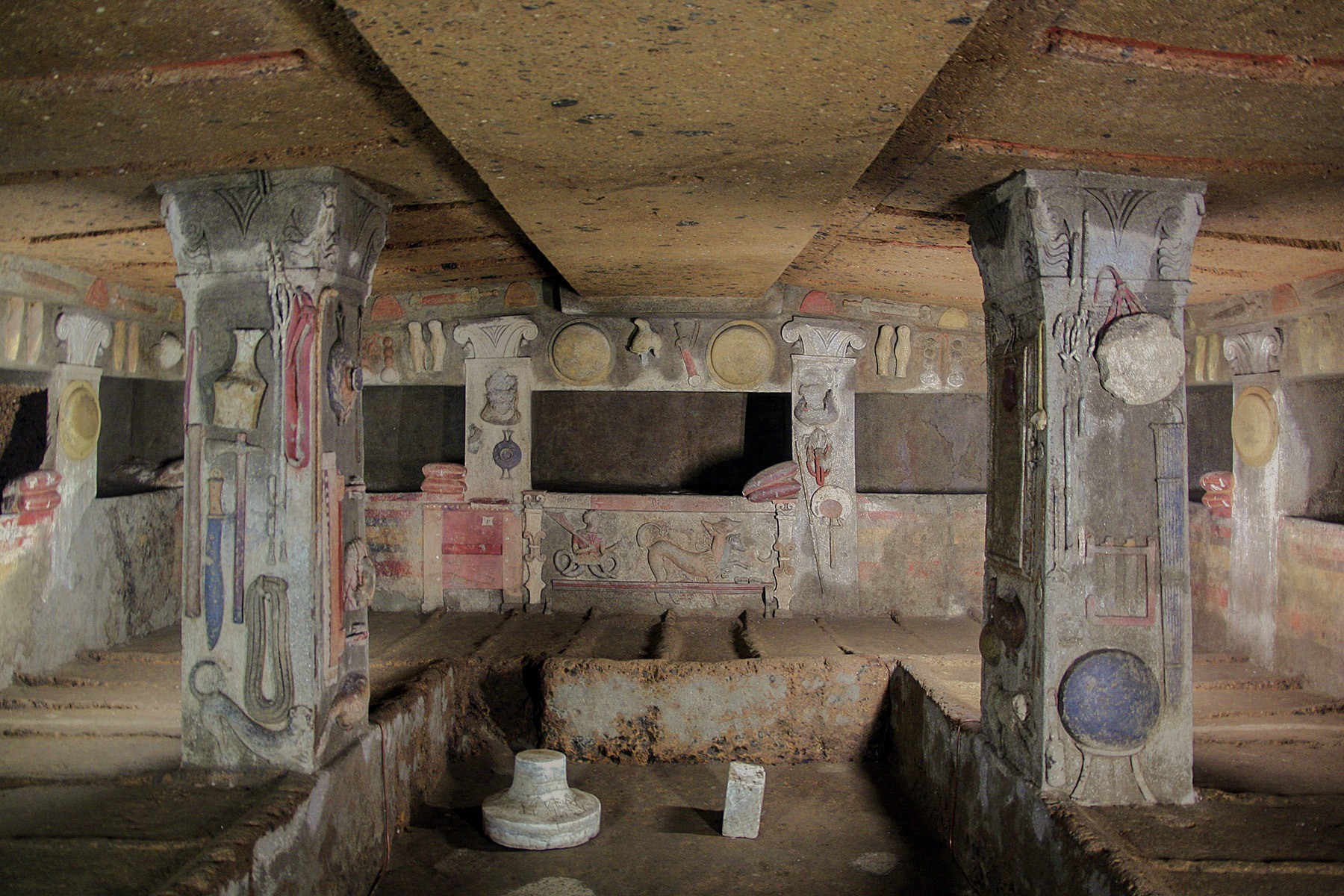
While thieves emptied almost all the surrounding tombs over 2,600 years, an Etruscan burial chamber in central Italy remained sealed and untouched all this time, and the archaeologists who finally opened it found more than a hundred objects exactly where they were left.
The discovery was made in San Giuliano, about 70 kilometers northwest of Rome, by a team led by archaeologist Davide Zori from Baylor University, as part of a research project that has been excavating the region for years. What makes the find rare is not the tomb itself, but the fact that it reached the 21st century sealed. In a necropolis where practically everything was looted, finding a closed chamber is almost like winning the archaeology lottery.
A chamber that escaped 26 centuries of looters
Ancient tombs usually reach us empty or disordered because thieves passed through them centuries ago, taking everything of value. That was the case with the neighboring tombs to this one. The San Giuliano chamber, however, remained closed since it was used around 2,600 years ago, making it, according to the researchers, one of the very rare Etruscan tombs in that region to be opened with modern excavation techniques, instead of having been violated in the past.
San Giuliano is not an isolated tomb, but an entire necropolis carved into the tuff cliffs, the soft volcanic rock of the region, with hundreds of tombs opened over centuries. Walking through there is like passing by facades carved into the stone, doors to chambers that once held entire families. Finding a still-closed Etruscan tomb in the middle of such a visited and overturned cemetery is the kind of thing that makes archaeologists lose sleep with excitement.
-
BYD’s Giant Ship Docks in Southern Brazil with 7,216 Electric and Hybrid Cars, Marking the Largest Automotive Operation at the Port in 2026 and Bringing First-Half Total to Nearly 15,500 Vehicles

-
Russia and India Lift 320-Ton Pressure Vessel into Kudankulam Nuclear Plant Reactor, Advancing Project That Has Already Prevented 112 Million Tons of CO2 Emissions
-
Cuba Implements Sweeping Economic Reforms, Legalizes Holdings and Corporations, Allows Foreign Investment in Private Companies, and Lifts Employee Limits After Over 60 Years
-
8-Year-Old Entrepreneur from Brazil Builds Poultry Business with 80 Birds, Aspires to Study Agronomy at Leading University




Four bodies and a hundred treasures in the exact place
Inside, the archaeologists found four people lying on beds carved directly into the rock, surrounded by a complete funerary trousseau. There are more than a hundred items, including 74 ceramic vessels, almost all intact, as well as bronze ornaments and weapons and delicate silver spirals that held the hair. There was even a detail that usually disappears over time: fabric remnants still attached to a fibula, the bronze brooch that the ancients used to fasten their clothes.

Why an intact tomb is worth gold to science
The value of a sealed chamber is not only in the beauty of the pieces but in the information that looting usually destroys. When everything remains in place, it is possible to know which object belonged to which person, how the bodies were arranged, what they ate, with whom they traded, and even what the kinship ties were among those buried there. With modern bioarchaeology techniques, a skeleton and the objects around it become a file. I confess that this is what fascinates me: not the treasure, but the chance to read an entire family that lived before Rome existed as an empire.
The four buried together were probably relatives, perhaps generations of the same family, and analyzing their bones can reveal what they died of, what they ate, if they had blood ties, and even where they came from. In a looted tomb, this thread is lost forever because no one knows anymore what belonged to whom or how each piece was positioned. Here, for the first time in that necropolis, the thread reached the hands of science intact.
It is not the first time that an ancient tomb becomes a window to a lost world. Recently, archaeologists restored the immense Kasta tomb in Greece, and in Egypt opened a burial in Saqqara with a mummy covered in gold. But there is an important difference: pharaonic tombs have been studied exhaustively, while the Etruscans remain full of gaps.
The Etruscans, the people Rome swallowed
This is precisely where this find matters. The Etruscans were a sophisticated civilization that flourished in central and northern Italy centuries before Rome dominated the world and was eventually absorbed by the very empire they helped shape. They taught the Romans things about engineering, religion, and art but left a language that scholars still struggle to read, with very few surviving long texts. Therefore, we know this people almost only by what they buried, by the tombs and objects from the beyond.
And they were not just any people. Organized in wealthy city-states, the Etruscans traded metals with Greeks and Phoenicians throughout the Mediterranean, and their women had a rare status for the time, participating in banquets and appearing alongside their husbands in funerary art. Much of what would later become the Roman way of building, predicting the future, and celebrating the dead was born or passed through them before Rome took center stage.
Each untouched chamber like that of San Giuliano is, therefore, a rare page of an almost entirely torn book. I imagine the moment when the team moved the stone and illuminated, for the first time in twenty-six centuries, four people still surrounded by everything the living thought they would need to take. It’s the closest thing to a time machine that archaeology can achieve.
How much of a people’s history do we lose when the treasure goes away before the knowledge?






-

-

2 people reacted to this.