





 Portuguese
  English
  Spanish
  3 min of reading


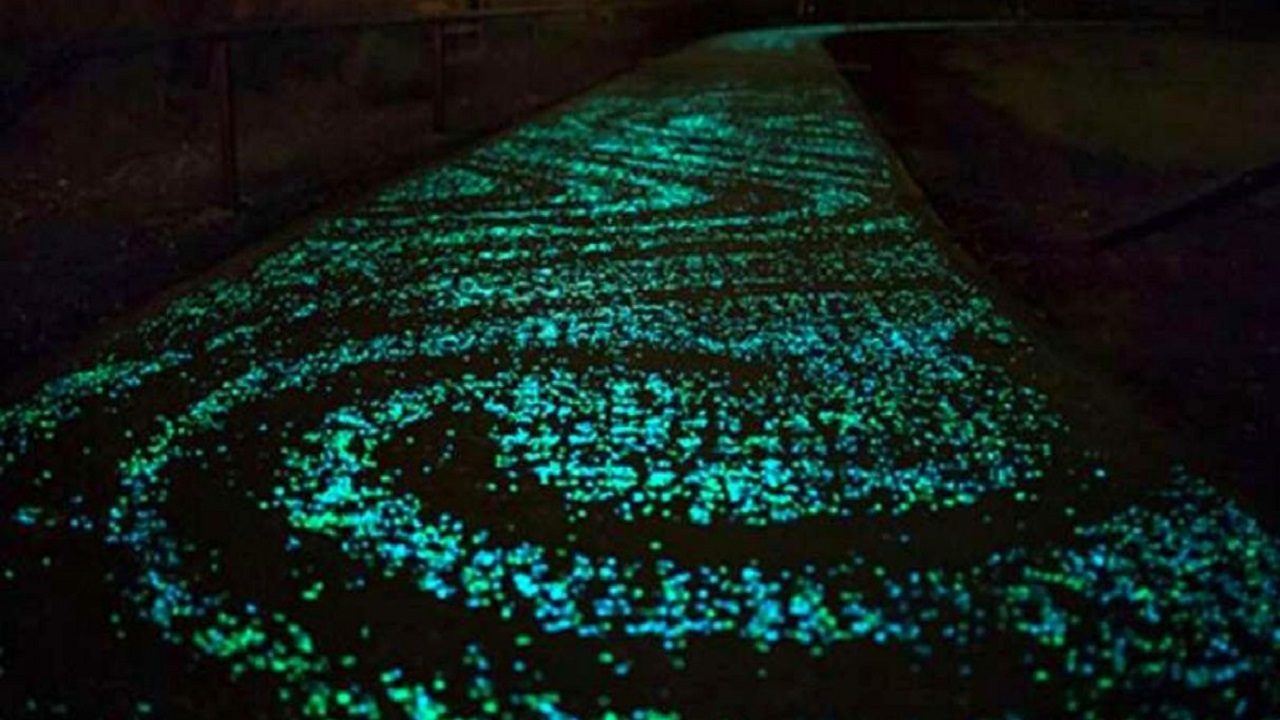
Mexican Researcher Developed A New Type Of Cement That Glows In The Dark And Could Revolutionize The Construction Market. The Material Will Bring More Savings In Electricity Consumption.
A new technology has just arrived in the construction market, generating interest and attention from various companies. Researcher José Rubio has developed a cement that glows in the dark. Rubio is a Mexican scientist from the University of Michoacán and has dedicated nearly 10 years of his life to studying the technology and developing a new material that could be essential to the industry. The result of his efforts is the development of a cement that can emit light without needing electricity.
Cement That Glows In The Dark Has A Crystal Gel Texture
Considering that cement is a solid material, the Mexican researcher sought to explore ways to transform the molecular structure of the cement into something closer to a gel. The mixture of powdered cement with water to create the mass generally forms some crystalline blocks that allow light to pass through. However, the problem with regular cement became one of the solutions for the new product.
The researcher, who resides in the city of San Nicolás Hidalgo, created a method to modify the chemical structure to give all the glowing cement a gel and crystalline texture. The process took nearly 10 years.
-
Tired of people trapped in the cycle of sidewalks and shelters, the city hall created a solidarity rental program that takes homeless people to private properties, pays housing assistance, and offers health visits and assistance in a Brazilian city.

-
NASA completes its first major wind tunnel in over 40 years, a vertical test facility that replaces two historic tunnels from the 1930s and 1940s and will prepare human flights to the Moon and Mars.
-
Pressured by people living in street encampments, the city created modular communities of intermediate housing totaling 243 spots, private rooms, and support services to remove residents from the sidewalk before the arrival of a permanent home in Santa Barbara County, California.
-
Amazon site sells a house for 10,000 euros, around 60,000 reais, with up to 4 bedrooms, fully furnished interior, and assembly in just 10 minutes; steel model with thermal insulation promises to challenge the high costs of traditional construction in Spain.


New Innovative Product May Have A Service Life Of A Century
The gel-like mixture, based on sand, clay, and water vapor applied and hardened in the soil, aims to absorb sunlight throughout the day and reflect it in the environment at night. Moreover, the so-called cement that glows in the dark can keep the area where it is present illuminated for over 12 hours. Additionally, if applied correctly, it has the potential to last nearly a century.
The new technology developed by the Mexican researcher could positively impact the lighting of cities, saving energy and preventing various nighttime accidents with its presence. The inventor assures that it could be adjustable, with the goal of alleviating people’s concerns about excess light.
Scientists are still exploring ways to apply the material to drywall, a material widely used in construction, as a natural alternative to mitigate electricity costs. Therefore, the product is undergoing its final tests and will soon be available for sale.
New Technologies In Construction
Scientists are using a thermally insulating material developed from wood, free of petroleum derivatives. Developed by Swedish researchers, the new thermal insulator surprised with its excellent performance, being as good or even better than common thermal insulators made with petroleum-based materials, such as expanded polystyrene.
The new technology developed by the scientists in Sweden consists of wood integrated with an aerogel. However, researchers have not yet assured that their new method can indeed represent an advancement in the controlled development of thermally insulating nanostructures in the pores of wood, doing so without the need to add other substances.
According to Professor Yuanyuan Li from the Royal Institute of Technology, strong bio-based aerogels could be used to replace current fossil-based ones for super thermal insulation, which could aid in energy efficiency, the bioeconomy, and also in the sustainable development of society in general.




Be the first to react!