





 Portuguese
  English
  Spanish
  4 min of reading
  0 comments


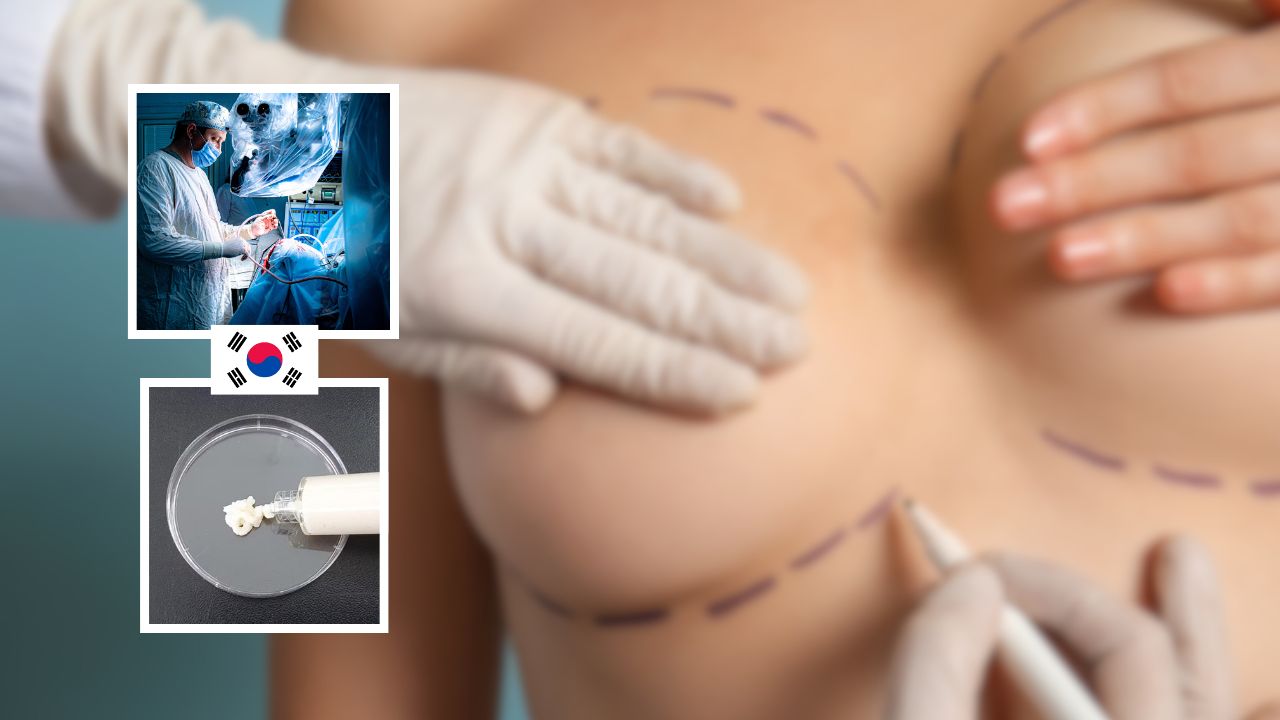
Understand How The New Injectable Implant Can Be An Alternative For Breast Reconstruction, Offering Fewer Scars And Potentially Faster Recovery.
Researchers have announced a new injectable implant that can be an alternative for breast reconstruction, offering a less invasive option for patients who have undergone partial or total mastectomy, especially following cancer treatment.
The study, conducted by scientists in South Korea, proposes a paste-like material derived from modified human cells, capable of filling the gaps left by surgery and restoring volume without the need for traditional implants.
This innovation arrives at a time of growing demand for solutions that reduce scars, recovery time, and postoperative complications.
-
Balloon the size of a stadium spends 25 days alone over Antarctica at nearly 37 km altitude and returns with data on cosmic antimatter that may reveal one of the rarest clues ever sought about the existence of dark matter.

-
The sea has stopped just warming and has started pushing storms towards the continent: marine heatwaves are already entering the path of up to 25% of extreme coastal rains and can increase storms by 30%, worsening floods on the coast.

-
Drone flies over indigenous area in Xingu and creates a point cloud capable of penetrating the tree canopy, revealing the forest floor, and mapping archaeological sites, ancient villages, roads, and ditches used to understand the historical occupation of the Kuikuro territory.
-
New technology may retire the common electric shower: Xiaomi introduces an intelligent model with tempered glass, a giant 305 mm spreader, antibacterial function, four water modes, and controls inspired by piano keys for around R$ 640 in China.




Injectable Implant: How The New Technique Works
The new injectable implant can be an alternative for breast reconstruction because it works differently from conventional implants.
Rather than placing a solid device, surgeons apply a paste that adapts to the cavities left by the removal of tissue.
This substance is made with modified human skin cells to promote integration with the existing tissue and restore volume more smoothly.
Being injectable, the procedure may require smaller incisions and less surgical manipulation, which tends to reduce scars and surgery time compared to the placement of traditional implants. However, broader clinical testing is still needed to confirm its safety and efficacy on a large scale.
Why Is This Alternative Being Studied?
One of the motivations to explore the new injectable implant as an alternative for breast reconstruction is precisely to minimize the challenges associated with current techniques.
Traditional implants — usually made of silicone or saline solution — require a larger surgery and resulting incisions to position the device under the tissue or pectoral muscle, which can leave larger scars and demand longer recovery.
Additionally, classic prosthetics can, in some cases, be associated with complications such as capsular contracture — when there is stiffness and pain due to the hardening of the tissue around the implant — and other body reactions.
Therefore, seeking less traumatic options with better aesthetic results is a priority for surgeons and patients.
Potential Advantages Of The Injectable Implant
The main argument in favor of the new injectable implant as an alternative for breast reconstruction is the possibility of faster and less invasive recovery.
With smaller incisions and less surgical manipulation, the technique can reduce postoperative discomfort, the risk of infections, and the formation of noticeable scars.
Another advantage — still under study — is that the injected substance could integrate better with the body’s natural tissue, promoting more natural aesthetic results that adapt to the individual shapes of each woman.
These characteristics make the method promising, especially for patients who cannot or do not wish to undergo extensive surgical procedures.
Current Scenario Of Breast Reconstruction
Currently, breast reconstruction after surgical removal, such as in the case of mastectomy, is still mainly performed with silicone implants or tissue expanders that prepare the space for the definitive implant.
In addition to traditional implants, combined techniques involving fat grafts from the patient or the use of muscle flaps are also utilized, depending on the case and medical preference.
Despite the variety of methods, many patients report concerns about scars, artificial feeling of the implant, and the need for additional surgeries over time.
Importance Of Innovation For Patients
The introduction of a less invasive method — such as the new injectable implant that can be an alternative for breast reconstruction — also carries emotional and psychological impact.
Reconstruction is an important part of recovery for many women who have undergone surgeries for breast cancer, influencing self-esteem and body perception.
Moreover, approaches that reduce surgery time and visible marks can help make the process less traumatic and more welcoming.
Still, it is essential for each patient to discuss, with their doctor, the risks and benefits of any technique.
What Lies Ahead?
Although the new injectable implant can be an alternative for breast reconstruction, the path until it is clinically available still depends on more in-depth studies, including clinical trials that assess safety, efficacy, and durability of results.
Researchers emphasize that, despite the potential, emerging techniques require rigorous monitoring to ensure that benefits do not come accompanied by unexpected risks over time.
Nevertheless, the innovation signals a new chapter in breast reconstruction, with a growing focus on less invasive and patient-centered solutions — an advancement that could, in the future, redefine treatment standards in the field.
Source: Revista Galileu







-

-

-

6 people reacted to this.