






 Portuguese
  Spanish


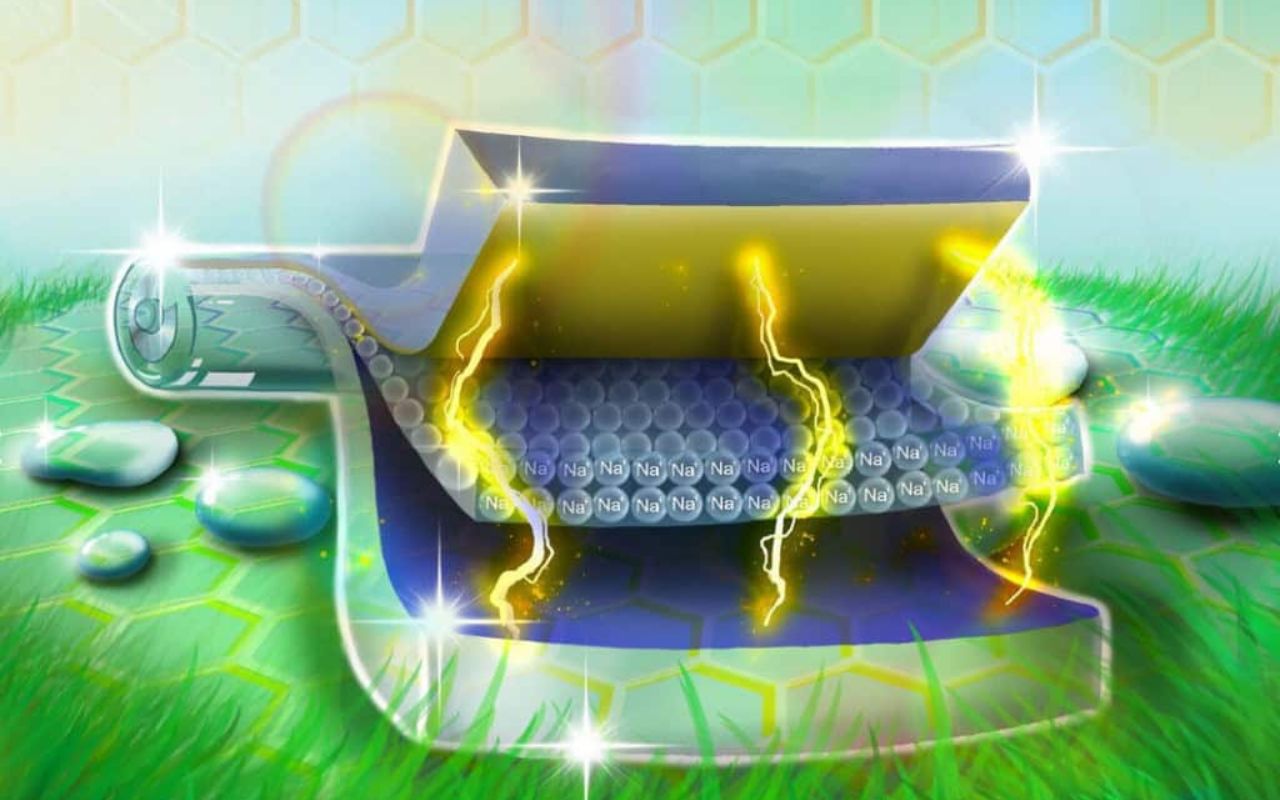


Researchers from UFPR Create Innovative Sodium Battery from Table Salt. Flexible, Transparent, and Safe, the Technology Promises Sustainable Alternatives to Lithium and Applications in Electronics, Smart Windows, and Energy Storage.
In mid-2023, researchers from Federal University of Paraná (UFPR) published a study reporting the development of an innovative battery that uses sodium from table salt as its base.
The prototype combines flexibility, transparency, and operation in an aqueous medium, becoming a safe and sustainable alternative to traditional lithium batteries.
The project, coordinated by Professor Aldo José Gorgatti Zarbin from the Department of Chemistry, who has led energy storage research for 28 years.
-
German Engineer Developed Diesel Engine Running on Vegetable Oil Decades Before Electric Cars Became Popular; Can This Forgotten Idea Work in 2026?

-
James Webb Telescope Uncovers Unexpected Clues on Mysterious Moon, Potentially Redefining Planetary Origins

-
$1.5 Billion Sleipnir Vessel Transforms Ocean into Floating Construction Site with 12 Hybrid Engines and Capacity to Lift 20,000 Tons

-
23 Years After Tragedy, Brazil’s Alcântara Space Center to Launch New Suborbital Rocket in 2026 with South Korean SEBIT Project Targeting Near-Space Tests


Researcher Maria Karolina Ramos contributed at all stages of the study, from her master’s to her postdoctoral work, enabling the creation of a functional battery with unprecedented characteristics for the sector.
Scientists from UFPR Develop Aqueous, Thin, and Transparent Battery That Could Revolutionize Solar Panels and Wearable Electronics
Although lithium batteries are efficient, Maria Ramos warns about their risks:
“These batteries use toxic and flammable organic solvents, can cause short circuits, and even explode. Moreover, they rely on lithium reserves, which is a scarce chemical element… they are very expensive.”
Lithium is concentrated in a few countries, such as Chile, Australia, Argentina, and China, and its mining involves high environmental impact, intense water consumption, and risk of contamination by heavy metals.
In contrast, sodium is abundant, inexpensive, and widely distributed, easily extracted even from table salt.
“For a long time, lithium-ion batteries have dominated portable electronics… But it’s not all sunshine,” adds Maria Ramos.

Flexibility, Transparency, and Safety: The Unique Combination
The prototype developed at UFPR combines three unique characteristics. Zarbin explains:
“You can deposit this material on top of anything, like a solid, a surface, a table, anywhere. And this technology is what sets it apart to achieve the properties we managed to obtain.”
Flexibility allows for foldable batteries that can adapt to different shapes, paving the way for wearable devices, compact portable electronics, and rollable batteries.
Transparency, in turn, allows for integration with smart windows and solar cells, maintaining light passage and device functionality.
Operation in an aqueous medium increases safety by eliminating the risk of explosion common in lithium batteries.
Nanoarchitecture Increases Efficiency
The technological advancement was achieved through nanoarchitecture, which combines three different materials on a nanometric scale to form the electrodes.
This technique allows for efficient storage and release of sodium ions, despite the chemical differences from lithium.
“The foundation of the study is a technology for preparing materials in the form of a thin film… we managed to prepare a material with just a few nanometers in thickness,” details Zarbin.
This approach makes it possible to create thin, lightweight, flexible, and transparent batteries without compromising performance.

Applications and Clean Energy
In addition to portable electronics, the sodium battery from table salt can be used in solar panels, smart windows, and renewable energy storage, ensuring efficient use even at night. Zarbin comments:
“One way to capture energy is solar. But what about at night, when there’s no sun? We need batteries to store that energy, which is why they are extremely important in the decarbonization process and clean energy.”
Maria Ramos highlights:
“In summary, the invention offers a set of technical and economic advantages that significantly differentiate it from existing technologies: it is safe, eco-friendly, low-cost, lightweight, flexible, and transparent, combining sustainability with high performance.”
Scientific Recognition
The study was published in the journal Sustainable Energy & Fuels by the Royal Society of Chemistry and earned Professor Zarbin the Paranaense Prize for Science and Technology in recognition of the research’s impact on the state’s science and technology.
Source: Ciclo Vivo


Mas já existe essa bateria , até mesmo a chinesa CATL , iniciará os testes no byd ainda 2026 , então essa bateria já existe desde 2020, então não foi a gente que inventou , sempre as mesmas mentiras