Portuguese
  Spanish


At a school in Delhi-NCR, India, six students created Project Vaayu: a cooler made from discarded clay cups, wood, and scrap metal. Water flows through the porous ceramic, evaporates, and cools the air, lowering the room temperature by up to 10 °C, without air conditioning.
In one of the hottest regions on the planet, six teenagers solved a classroom problem with waste and basic physics. Instead of requesting an expensive air conditioner, they gathered discarded clay tea cups and assembled a cooler that lowers the ambient temperature with almost no energy consumption. The result is impressive: the drop reaches 10 °C on hot days. The story was reported by The Better India.
The project was named after the wind: Vaayu. Behind it are six students from a school in Delhi-NCR, India, who turned everyday waste into a low-cost solution for public schools. Without relying on air conditioning, they proved that it is possible to face extreme heat with creativity, scrap, and a technique that India has known for centuries.
The cooler made from discarded clay cups
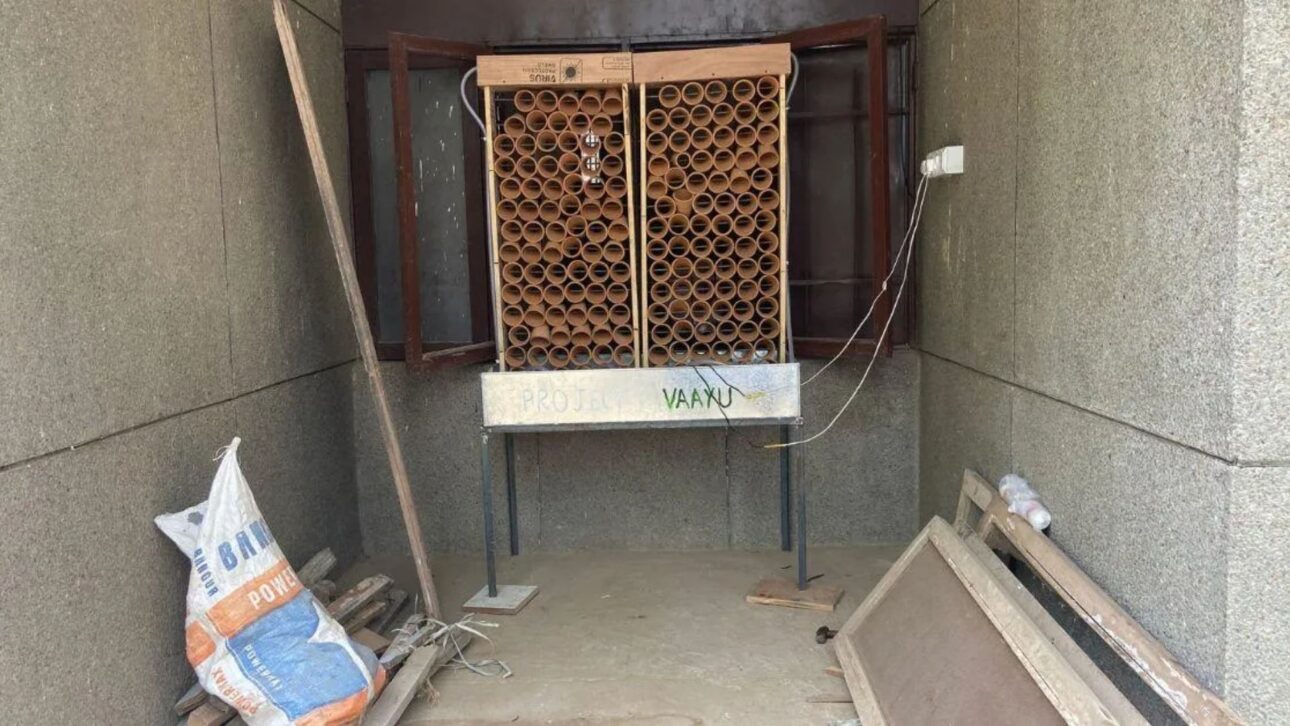
kulhads (clay tea cups) arranged inside a wooden structure reinforced with scrap metal.
The raw material for the invention is what remains from tea. In India, street tea is often served in kulhads, the disposable clay cups that, once used, become waste by the millions.
-
353-Year-Old Mystery Deepens as Archaeologist Arrested with Teeth and Bone Fragment Possibly Linked to d’Artagnan, the Real Musketeer Behind Alexandre Dumas’ Inspiration

-
16-Year-Old Invents CoolTowel, a Fitness Towel That Stays Cold for Up to 2 Hours, Wins Global Alibaba Competition with Over 15,000 Participants, Earning $1 Million

-
Brazil to Install First Operational Quantum Computers in the Northeast and Establish New Center to Boost Technological Sovereignty
-
Potential Starlink Rival: Company Tests 60-Meter Balloon to Deliver 5G Internet Without Satellites, Prepares for Unprecedented Mission in Japan



It was to this waste that the students turned, collecting clay cups from tea vendors to give them a second purpose.
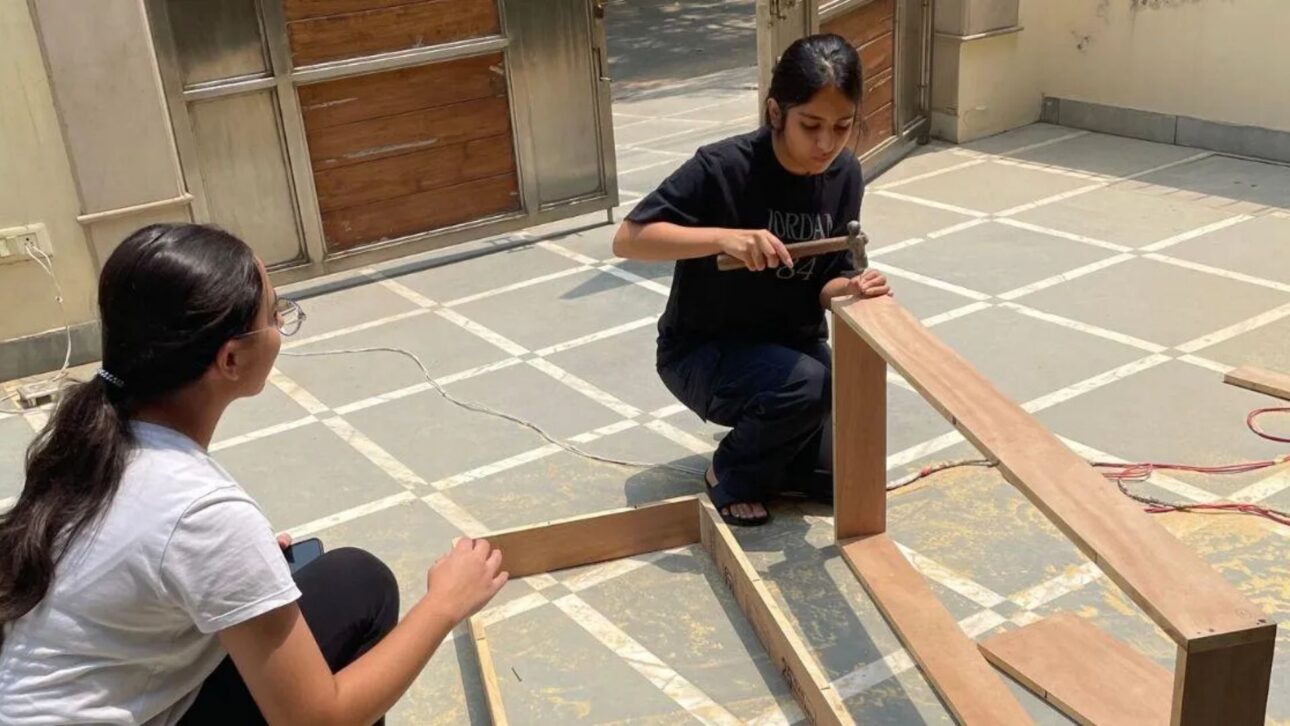
The assembly is a lesson in reuse. The clay cups are fitted into a wooden structure reinforced with metal, all coming from scrap purchased from local collectors and junkyards.
There is no expensive part or new material: the cooler is entirely born from things that would go to waste, which brings the cost down to almost nothing.
This is the trick of the Vaayu Project. Instead of inventing a device from scratch, the students reorganized discarded materials into an arrangement that works.
The clay cup cooler shows that innovation is not always cutting-edge technology; sometimes it’s looking at waste with different eyes.
How clay cools the air
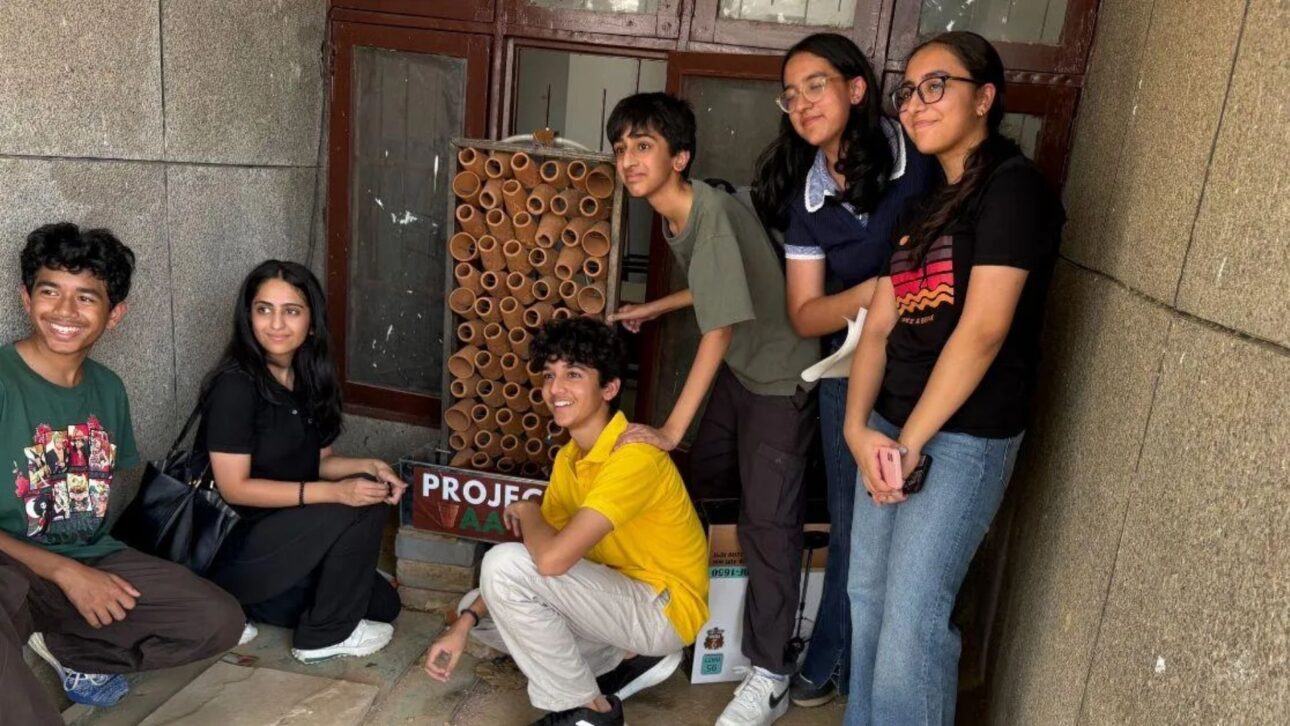
The physics behind it is simple and elegant. The clay of the cups is porous, and when water runs down it, part of it is absorbed and evaporates slowly.
This evaporation absorbs heat from the surrounding air, in a principle called evaporative cooling, the same logic as sweat cooling the skin or a clay pot keeping water fresh.
It’s an ancient technique, revamped. India has used ceramics and water to cool down for centuries, and the students just adapted this ancient knowledge to a classroom cooler format.
To push the cooled air through the environment, the system uses simple, low-power motors, far from the heavy consumption of an air conditioner.
The temperature difference is felt on the skin. According to The Better India, the cooler lowers the environment by 6 to 10 °C, depending on the conditions.
On a muggy day in Delhi, taking up to 10 degrees off a crowded classroom of children completely changes the ability to pay attention in class, and all this without turning on an air conditioner.
Six students and the kabadiwala’s scrap

Behind the invention is a young and dedicated team. Project Vaayu was created by six high school students from a Delhi-NCR school in India: Amaira, Kartikeya Shastri, Zoey Singh, Shayan Sethi, Jovika Nagpal, and Nevan Roy.
Instead of a class project that stays in the drawer, they brought the idea to life.
The construction was hands-on. The coolers were assembled in homes and backyards, using wood, metal, and old electrical components bought from kabadiwalas, the scrap collectors and traders who roam the Indian streets.
Families and volunteers joined the endeavor, turning the school project into a community effort.
This collective effort is part of the charm. It wasn’t a factory that produced the devices; it was students, relatives, and neighbors, gathering clay cups and scrap to solve a real problem.
The ingenuity came to life precisely because many people embraced the idea and got involved.
From one room to four schools
The reach grew quickly for a teenage project. The first cooler was installed in September 2024, in the classroom of a public primary school.
Since then, the initiative has spread, and by May 2025, there were already five devices operating in four different schools.
The impact is evident in the number of children benefited. More than 400 students began studying in cooler classrooms thanks to the clay cup coolers, without the schools having to bear the high cost of purchasing and maintaining air conditioning units.
For the public network, this means money saved and comfort gained.
The choice of audience also matters. By targeting public schools, the students brought the solution precisely where the budget is tight and the heat hinders learning.
The inexpensive cooler thus becomes a tool of equality, ensuring a better environment for those who couldn’t afford cooling.
Energy, extreme heat, and why it matters
The invention addresses an increasingly significant problem. Cities like Delhi face extreme heat, with nights exceeding 35 °C, and when millions of air conditioners turn on simultaneously, the power grid suffers and blackouts occur. Solutions that cool without overloading the energy grid have ceased to be a curiosity and have become a necessity.
This is where the clay cup cooler shines. By using evaporation and simple motors, it consumes a fraction of the energy of an air conditioner and does not rely on gas or expensive equipment.
Multiplying ideas like this eases families’ electricity bills and the pressure on the electrical system during heat peaks.
There is also the environmental gain of reuse. Each cooler removes clay cups and scrap from the trash and transforms them into thermal comfort, combining energy efficiency and circular economy.
In a warming world, this type of low-cost technology can scale to places where air conditioning will never reach.
What Brazil Can Learn
Here, the heat also doesn’t give a break. Much of Brazil deals with high temperatures, heavy electricity bills, and schools without any cooling, a scenario very similar to what students in India faced.
A cheap and low-consumption cooler speaks directly to this reality.
The idea is replicable because it does not depend on high technology. Clay, water, scrap, and the principle of evaporation exist everywhere, and Brazil has a tradition of ceramics and backyard inventors. Adapting a clay cup cooler to a school in the hinterland or a low-income house is a concrete possibility, not fiction.
In the end, the lesson from Delhi-NCR is encouraging. Six students showed that it is possible to tackle extreme heat with waste, ingenuity, and ancient knowledge, without waiting for air conditioning.
When creativity meets a real problem, even a discarded clay cup becomes a solution.
And you, would you trade the air conditioner for clay?
The Vaayu Project proves that six students, discarded clay cups, and an evaporation technique can cool a room by up to 10 °C without air conditioning.
All low-cost, made from scrap, and designed for schools that couldn’t afford cooling.
And you, do you believe that a cooler made from clay cups could work in Brazilian schools and homes? Share in the comments if you would be willing to trade part of the air conditioning for a natural solution like this, and what would still leave you in doubt.