Portuguese
  Spanish


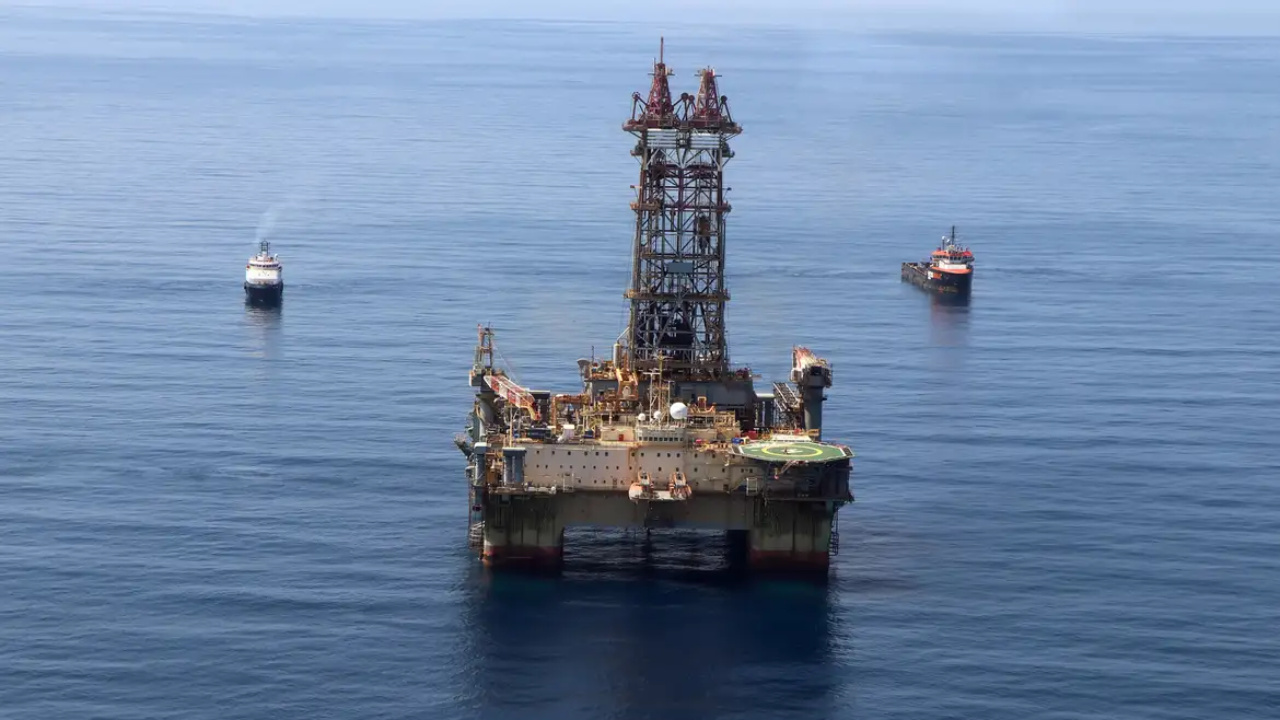


Petrobras Started Drilling in the Mouth of the Amazon on the Same Day It Received the License from Ibama. The State Oil Company Bets on the Equatorial Margin as a Potential New “Pre-Salt,” While Maintaining Environmental Dialogue and Investments in Clean Energy.
Petrobras started drilling the Morpho well, located about 175 km off the coast of Amapá, on the same day it received the environmental license from Ibama, on October 20. The announcement was made this Wednesday (29) during the Offshore Technology Conference (OTC) in Rio de Janeiro — the largest oil and gas event in Latin America.
According to the Director of Exploration of the state company, Sylvia dos Anjos, the company was fully prepared to start operations as soon as the authorization was granted. “The company was ready for drilling on the day the license was approved,” she stated. During the panel, Sylvia displayed images of the drillship NS-42 arriving in the region’s deep waters, simbolizing the start of a new phase in Petrobras’ energy strategy.
Equatorial Margin: The New Frontier for Oil Exploration in Brazil
The Equatorial Margin, a region that extends between Amapá and Rio Grande do Norte, is seen by Petrobras as one of the most promising areas in the country. According to the company, reserves could reach 1.1 million barrels of oil per day, a figure greater than the current production of the Tupi and Búzios fields in the pre-salt region.
-
Oil production grows in Rio, but reserve replacement raises a warning sign

-
Petrobras is expected to complete the drilling of the Morpho well in the Foz do Amazonas in August 2026, the first well in the Equatorial Margin, an oil frontier that the ANP estimates at more than 30 billion barrels and could redraw the map of Brazil.

-
Oil returns to the center of concerns with tension between the US and Iran

-
IEA reduces forecast for global oil demand in 2026 after impacts of the Middle East crisis



The drilling of the Morpho well is considered exploratory, meaning there is no oil production at this stage. The work is expected to last about five months, during which geological data will be collected to assess the economic and environmental viability of the area.
Petrobras had been awaiting the Ibama’s approval for over a decade to begin research in the Mouth of the Amazon Basin, which reinforces the strategic importance of the project within the company’s new expansion cycle.
Continuous Dialogue with Ibama and Compliance with Environmental Requirements
Throughout the licensing process, Petrobras maintained a permanent channel of dialogue with Ibama, fully meeting technical and environmental requests. Following the Pre-Operational Assessment (APO), additional adjustments were made to ensure the safety of marine fauna and coastal ecosystems.
The company also structured Wildlife Response Centers (CeFau) in Belém (PA) and Oiapoque (AP), aimed at environmental monitoring and impact mitigation. The state company assures that the operation follows strict safety standards, with human and logistical resources already mobilized and ready to act if necessary.
Contested License and Criticisms from Environmentalists
The authorization from Ibama generated strong reactions from environmental groups, who question the risk of activity in a region close to the Amazon rainforest. Entities have taken legal action against the decision, but Petrobras had already begun drilling when the lawsuits were filed.
Despite the criticisms, the federal government and the state company argue that the activity is within the current legal and environmental parameters. The company emphasizes that the operation is exploratory and controlled, with no direct impacts on sensitive areas.
In addition to the FZA-M-59 block, where the current drilling is taking place, Petrobras is already conducting new licensing processes to explore other blocks in the region: FZA-M-57, 86, 88, 125, and 127. The goal is to consolidate the Equatorial Margin as a new national exploratory frontier, with the potential to offset the natural decline in production from mature fields.
The coming months will be crucial for analyzing geological data. If the results confirm the expected potential, Petrobras is expected to expand its operations to other areas of the basin, strengthening Brazil’s presence in the deep waters of the North of the country.
Energy Strategy: Petrobras Seeks Balance Between Oil and Low Carbon
In parallel to oil exploration, Petrobras has been strengthening its energy transition strategy. The 2025–2029 Business Plan indicates investments of around R$ 90 billion in sustainable initiatives, a 42% increase compared to the previous cycle.
The resources will be directed to biofuels projects, such as ethanol, biodiesel, and biogas, as well as solar, wind, and low-emission hydrogen energy. According to the state company, the objective is to ensure energy security for the country without compromising the transition to a low-carbon economy.
Petrobras emphasizes that balancing environmental responsibility with oil production expansion is essential to prevent Brazil from becoming an importer starting in the 2030s. Thus, the Equatorial Margin takes on a dual role: preserving national self-sufficiency and preparing the country for the new era of sustainable energy.