






 Portuguese
  Spanish
 3 min of reading
  0 comments


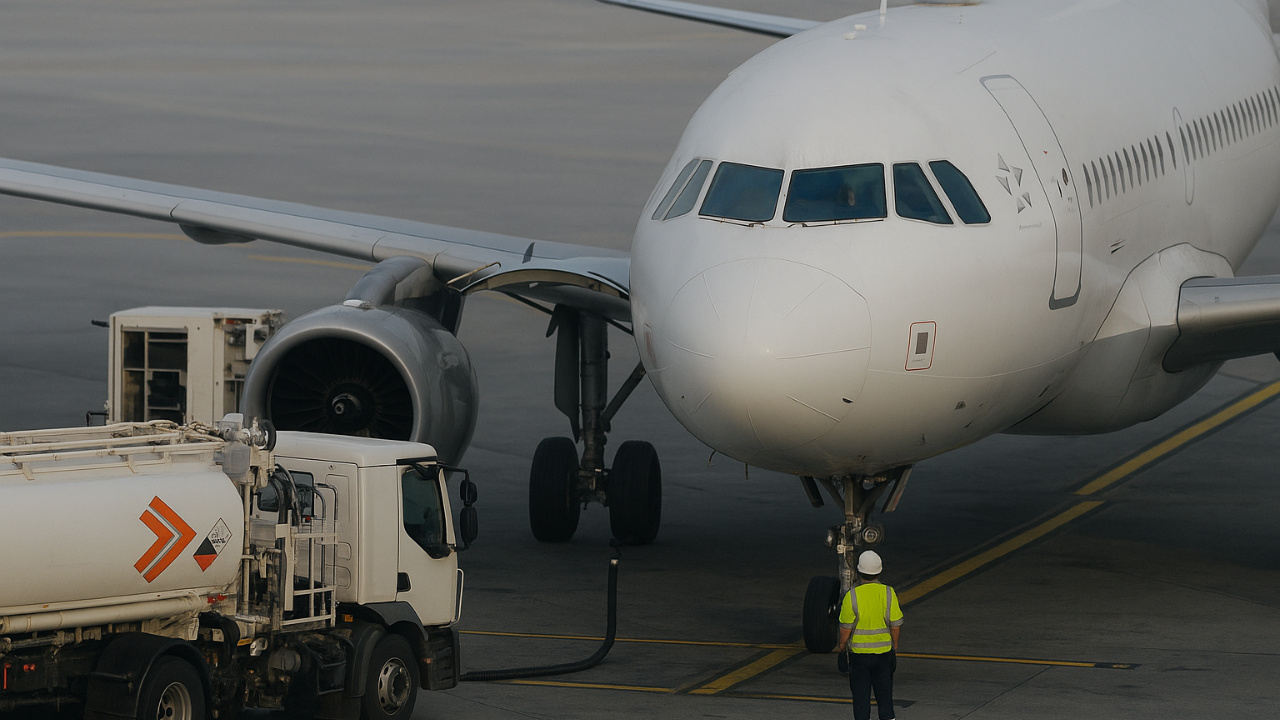
Petrobras Announces Deliveries of the First SAF Produced in Brazil and Initiates New Phase to Reduce Emissions and Make Aviation More Sustainable.
Petrobras announced deliveries of the first SAF produced in Brazil, this Friday (5), in Rio de Janeiro.
The pioneering product in the country is now available for immediate use, as it can replace traditional kerosene without any changes to aircraft or infrastructure.
The state-owned company presented the initiative as essential to accelerate emissions reduction in aviation and meet global environmental goals.
-
Brazilian promises his children to save a river, creates an eco-barrier in his backyard, has already removed more than 40 tons of trash from the water, and even inspires the idea in other states of the country.

-
How a Brazilian company created a system that transforms broken pallets of any brand into new assets, recycles 80 tons of plastic per month, and found a profitable solution to a problem that challenges industries across the country.

-
Invasive bullfrog capable of devouring other amphibians and laying up to 20,000 eggs is found in Florianópolis, raising an alert about the threat to native fauna.
-
It looks like a baby, but it’s an adult: meet the Bornean pygmy elephant, the smallest elephant in the world threatened by habitat loss.



This inaugural volume is equivalent to about one day’s total consumption of the airports in the state, and the delivery represents a strategic milestone to establish the country as a relevant producer of sustainable fuels.
Strategic Advancement to Decarbonize Aviation
Petrobras states that the coprocessing carried out at the company’s refinery resulted in this first shipment of SAF.
According to the president of the company, Magda Chambriard, the product’s arrival on the market marks a decisive step toward the decarbonization of aviation.
“It is a competitive product that meets rigorous international aviation standards. We are offering the national market the opportunity to meet global demands,” said Chambriard.
According to the company, SAF could be one of the quickest paths to reducing pollutant emissions.
Petrobras Announces Deliveries of the First SAF Produced in Brazil with International Certification
The new sustainable fuel has ISCC-Corsia certification, which attests to its sustainability and traceability.
The plants produce SAF by processing feedstock such as technical corn oil (TCO) or soybean oil alongside conventional kerosene.
Due to this hybrid composition, Petrobras claims that the final product is chemically identical to traditional kerosene in terms of operational safety.
The use of renewable materials, however, allows for a reduction of net CO₂ emissions by up to 87%, according to estimates from the state-owned company.
This production model strengthens the energy transition and places Brazil among the countries that already offer SAF on a commercial scale.
First Deliveries Made Directly from Reduc in Rio de Janeiro
Thus, the first batch of fuel departed from the Duque de Caxias Refinery (Reduc) in Baixada Fluminense.
Reduc is the first certified unit in the country to produce and market SAF.
Petrobras Announces Deliveries of the First SAF Produced in Brazil and Expands Expansion Plan
Thus, Petrobras is already conducting tests at other refineries and expects a significant increase in supply.
Revap has conducted experiments with the fuel, while Replan and Regap are expected to begin commercial operations in 2026.
With this, the state-owned company aims to meet the growing demand that will arise from new environmental regulations.
Thus, ICAO established, through the Corsia program, that Brazilian airlines must use SAF on international flights starting in 2027.
For domestic flights, the requirement will gradually increase through the Future Fuel Law.
Energy Transition Advances with Regulatory Support
The introduction of SAF reinforces Brazil’s alignment with international environmental standards and addresses the need to make the aviation sector less polluting.
At the same time, it opens new industrial opportunities for biofuels and enhances the role of Brazilian refineries in global decarbonization.
The government sees this movement as strategic to reinforce the country’s competitiveness in the international market.







-

1 person reacted to this.