






 Portuguese
  Spanish


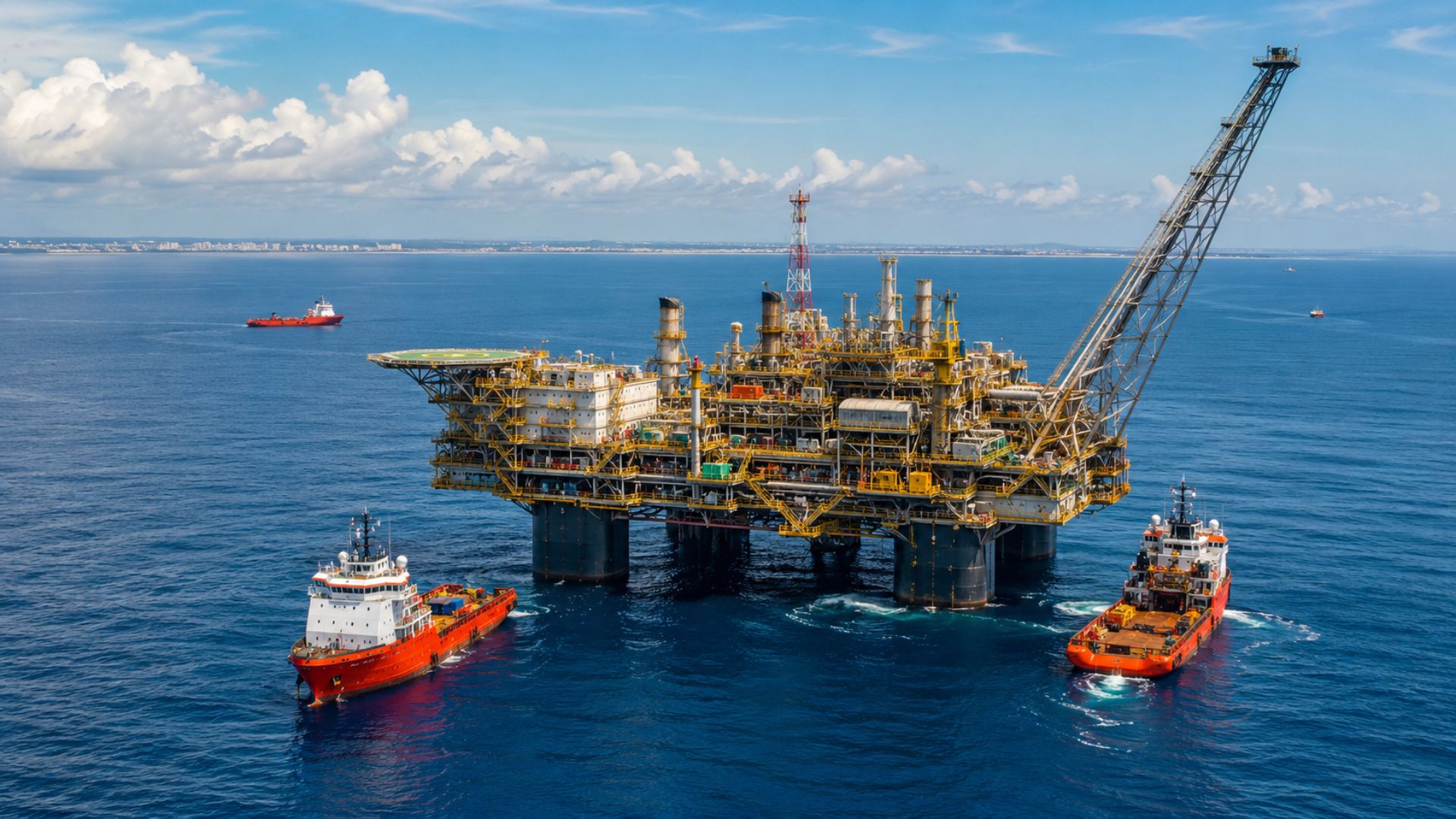

Petrobras approved the FID for SEAP I in the Sergipe-Alagoas Basin, consolidating a new production frontier in the Northeast with an investment exceeding R$ 60 billion in SEAP I and SEAP II modules, a capacity of 240 thousand barrels per day, and a forecast of over 1 billion barrels of oil equivalent starting in 2030.
Petrobras approved the Final Investment Decision (FID) for the SEAP I (Sergipe Deep Waters) project, consolidating the development of a new oil and natural gas production frontier in the Sergipe-Alagoas Basin, in Brazil’s Northeast region. The FID for the SEAP II module had already been approved by Petrobras in December 2025, and with the approval of SEAP I, the two projects together represent total investments exceeding R$ 60 billion, a combined installed capacity to produce 240 thousand barrels of oil per day and process 22 million cubic meters of natural gas per day, and a forecast to generate over 1 billion barrels of oil equivalent (boe) over the fields’ lifespan. The signing of contracts is scheduled for May 2026, after fulfilling governance steps and approvals with partners, a milestone that drives the execution phase of projects that Petrobras positions as strategic to increase natural gas availability in the country.
The feasibility of the two projects resulted from project optimizations and a review of contractual terms conducted by Petrobras in conjunction with the supplier market. The joint negotiation of platforms P-81 (SEAP I) and P-87 (SEAP II), which will be built by SBM Offshore under the BOT (Build, Operate and Transfer) model, allowed for capturing synergies and economies of scale that increased financial returns and enabled the inclusion of SEAP I in Petrobras’s Base Implementation Portfolio. “The choice of the BOT contracting model contributed to enabling the start of production in less time. This result reflects the joint work of Petrobras, its partners, and the supplier market aimed at adding value to projects and strengthening the company’s strategy,” stated Renata Baruzzi, Petrobras’s Director of Engineering, Technology, and Innovation, in an official statement.
What each module of the Petrobras project will produce in the Sergipe-Alagoas Basin
SEAP I covers light oil fields in blocks BM-SEAL-10 and BM-SEAL-11, where Petrobras operates with 100% and 60% stakes, respectively. The Agulhinha, Agulhinha Oeste, and Palombeta fields that comprise SEAP I will have the capacity to produce 120 thousand barrels of oil per day and process 10 million cubic meters of natural gas per day through platform P-81, with a partnership with IBV Brasil Petróleo, which holds 40% in block BM-SEAL-11. The oil from the SEAP I fields is classified as light and of good quality, a characteristic that favors refining and adds commercial value to the production that Petrobras plans to start in 2030.
-
With a record production of nearly 3 million barrels per day, Petrobras resumes importing diesel in July, highlighting the bottleneck in Brazilian refining.

-
Qantas and Airbus Invest in Company Aiming to Convert Unsorted Household Trash into Jet Fuel

-
Brazil’s ANP Opens 86 New Oil Blocks in the Equatorial Margin, Expanding the Amazon River Mouth Frontier

-
OPEC+ Boosts Oil Supply by 188,000 Barrels per Day in July 2026, Leading to Price Drop from $112 to $89 per Barrel in Under Two Months


SEAP II covers the Budião, Budião Noroeste, and Palombeta fields in blocks BM-SEAL-4, BM-SEAL-4A, and BM-SEAL-10, located approximately 80 kilometers off the coast of Sergipe. Platform P-87 will have a daily processing capacity of 120 thousand barrels of oil and 12 million cubic meters of natural gas, and Petrobras operates the blocks with stakes of 75% (in partnership with ONGC Campos Limitada with 25% in BM-SEAL-4) and 100% in the others. The sum of the two modules results in an installed capacity that places the SEAP complex among the largest oil and gas production projects under development in Brazil, with a total volume exceeding 1 billion barrels of oil equivalent that Petrobras projects to extract over the productive life of the fields.
Why the BOT model was decisive for Petrobras to enable the investment

The BOT (Build, Operate and Transfer) contracting model adopted by Petrobras for the two platforms transfers to SBM Offshore the responsibility for the design, construction, assembly, and operation of the units for an initial period defined in the contract, with subsequent transfer of the assets to Petrobras. This model allows Petrobras to start production in less time than the traditional direct contracting format, because SBM Offshore assumes execution risks and operates the platforms during the initial phase while Petrobras focuses management on the fields and outflow infrastructure, a division of responsibilities that the company considers a mature solution to enable projects even in a scenario of oil price volatility. The joint negotiation of platforms P-81 and P-87 enhanced the model by allowing SBM Offshore and Petrobras to capture economies of scale in the construction of two similar units in sequence.
The conclusion of the negotiation represents a milestone in Petrobras’ supply strategy. Project optimizations and the review of contractual terms that made SEAP I viable demonstrate that the partnership between Petrobras and the supplier market can unlock projects that seemed economically challenging, a result that the company attributes to “active listening” between the parties and that reinforces the BOT model as a flexibility tool for the state-owned company’s investment portfolio. The fact that more than R$ 60 billion in total investment was made viable in a context of uncertainty about oil prices indicates that Petrobras found a balance between financial return and execution risk that satisfied both the company and its partners and the contractor.
What is the importance of SEAP natural gas for the Northeast and for Brazil


The SEAP project is strategic for Petrobras not only for oil production, but for its ability to expand the supply of natural gas in a region that historically depends on importing the input. The undertaking foresees the construction of an outflow gas pipeline approximately 134 kilometers long, with 111 kilometers in the offshore section and 23 kilometers on land, infrastructure that will connect the offshore production of the Sergipe fields to the terrestrial distribution system and that Petrobras plans to have operational for gas export starting in 2031. The 22 million cubic meters of natural gas per day that the two modules can process represent a significant volume in a Brazilian market that seeks to diversify supply sources and reduce dependence on imported gas via LNG regasification terminals.
In addition to the platforms and the gas pipeline, the SEAP complex includes large-scale subsea infrastructure. Petrobras is already in the bidding process for the supply of ANMs (Wet Christmas Trees) and subsea equipment for the two projects, and plans to start bidding for the other infrastructures necessary to connect the 32 wells that will be built and interconnected to platforms P-81 and P-87 in 2026. The opening of a new production frontier in the Northeast by Petrobras generates an effect that goes beyond oil and gas extraction: it moves a chain of suppliers, creates demand for specialized services in the region, and strengthens the energy infrastructure of states that can benefit from the natural gas produced in the Sergipe-Alagoas Basin fields for industrialization, thermoelectric generation, and residential distribution.
What SEAP means for Petrobras’ production strategy until 2030
The approval of SEAP I’s FID places the project on the production growth schedule that Petrobras has outlined for the end of this decade. With oil production expected to start in 2030 and gas export from 2031, the SEAP complex adds 240 thousand barrels per day of installed capacity to Petrobras’ portfolio, a volume that complements pre-salt production in the Santos Basin and geographically diversifies the company’s productive base by opening a front in the Northeast, a region where Petrobras had not operated projects of this scale for decades. The more than R$ 60 billion in total investment confirms that Petrobras is betting on the development of new exploratory frontiers even while the pre-salt remains the main driver of cash generation.
The projected economic return of more than 1 billion barrels of oil equivalent over the fields’ lifespan makes SEAP one of the most relevant investments in Petrobras’ current portfolio. The combination of good quality light oil, significant volumes of natural gas, and outflow infrastructure planned from the project’s inception creates conditions for the SEAP complex to operate with efficiency and financial return that justify the investment, a result that Petrobras achieved by restructuring the negotiation with a focus on synergies between the two modules and on a contractual model that distributes risks among operator, partners, and constructor.
And you, do you think Petrobras’ investment in SEAP will change gas production in the Northeast? Leave your opinion in the comments.








