Portuguese
  Spanish


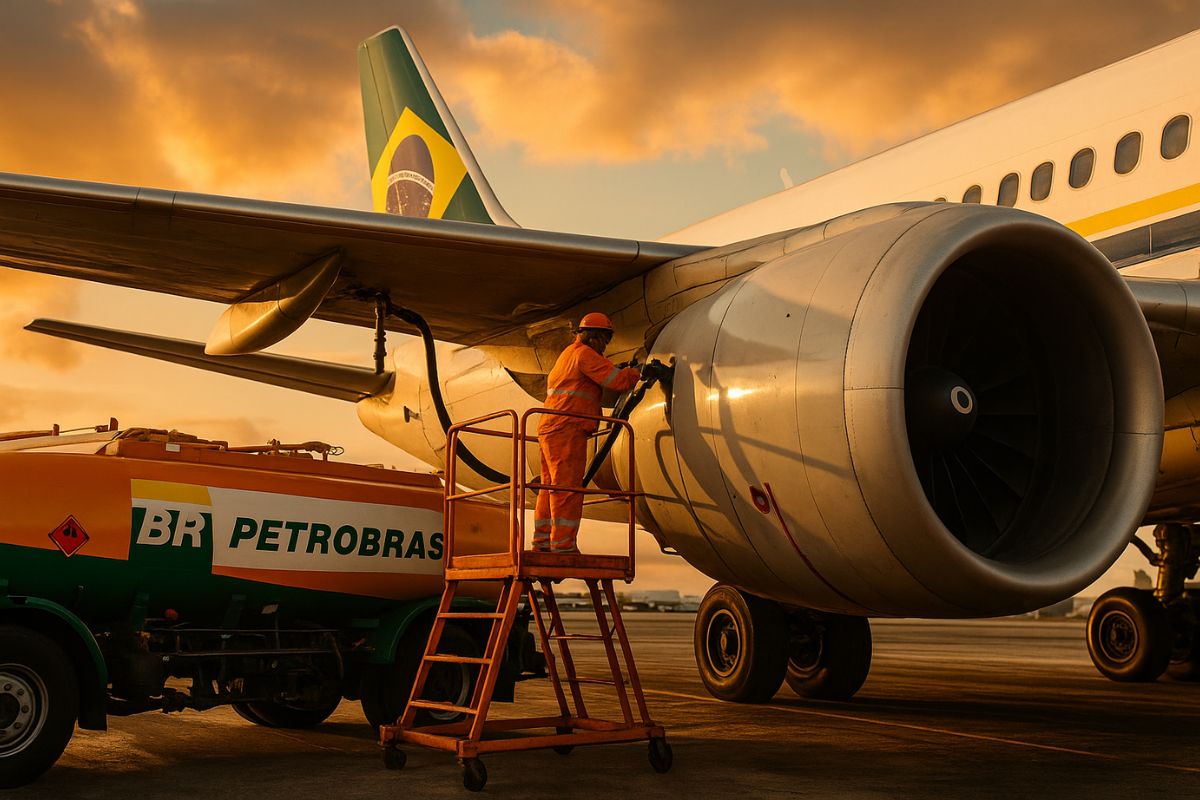

Despite The Reduction Announced By Petrobras, The Cut In The Price Of Aviation Kerosene (QAV) Is Modest: Only R$ 0.13 Per Liter In September And R$ 0.14 In The Accumulated 2025, Showing That The Costs Of The Airline Sector Remain Practically Stable.
Petrobras announced on this Monday (1st) that it will reduce the price of aviation kerosene (QAV) sold to distributors by R$ 0.13 per liter starting in September. The drop corresponds to 3.7% compared to August. In the accumulated of 2025, the reduction is only 3.9%, which keeps the costs of the airline sector practically stable.
According to the portal istoedinheiro, the change follows the policy of contracts signed with distributors, which provide for monthly adjustments at the beginning of each month. However, the cut is considered modest in the face of the cost pressures faced by airlines.
What The Announced Reduction Represents
The QAV is one of the main inputs for the aviation sector and accounts for a large part of the airlines’ expenses. Even so, a drop of R$ 0.13 per liter is unlikely to generate significant relief in the fares charged to passengers. This is because other factors, such as demand, exchange rates, and maintenance costs, also weigh in the final calculation of fares.
-
Drivers are falling for these scams without realizing: operation reveals closed gas stations, adulterated fuel, and hidden losses when refueling.

-
New Fiat EV, priced at R$ 77,000, will bring a reinterpretation of the 147 and a consumption equivalent to 70 km/l.

-
Petrobras surprises the market by cutting diesel by R$ 0.35 per liter, and the decision may ease the tax impact for drivers and transport companies.
-
Gasoline at R$ 4.99 makes drivers wait more than an hour at Havan gas stations in Santa Catarina, during a “zero tax” promotion with a limit of 15 liters per car and 25,000 liters available across five units of the network.





In the accumulated of 2025, the reduction in the average fuel price amounts to R$ 0.14 per liter compared to December 2024. Experts believe that this level of adjustment is insufficient to consistently change the strategy of airlines, which remain pressured by narrow margins and high competitiveness.
How Fuel Sales Work
It is important to highlight that Petrobras does not sell QAV directly to airlines. The product is marketed to distributors, who are responsible for transporting the fuel to airports and passing it on to companies in the sector.
This model makes the pricing process more complex, as aside from the price set by Petrobras, logistical costs and resale margins of the distributors also come into play.
Impact on Airfares
Although the reduction is positive, analysts point out that the effect on ticket prices is likely to be small. Airlines deal with dollarized costs, such as aircraft leasing and maintenance, in addition to exchange rate fluctuations that directly affect their expenses.
Thus, even if the fuel becomes cheaper, there is no expectation of immediate and significant drops in fares for consumers. The market is expected to remain attentive to larger variations in oil prices and demand for flights in the coming months.
The announcement by Petrobras reinforces the attempt to provide predictability to the sector, but shows that cuts in QAV in 2025 are still timid in the face of the size of the operational costs of aviation. For the passenger, the reduction is unlikely to be felt in the wallet in the short term.
And you, do you think these small fuel reductions should have a direct impact on ticket prices or does the airline sector need to reevaluate its pricing policy? Share your opinion in the comments — we want to hear from those who live this in practice.