Portuguese
  Spanish



Initiative Brings Efforts Together For Environmental Conservation, Visitor Management And Sustainable Infrastructure At The Most Visited Tourist Spot In Brazil
The Chico Mendes Institute for Biodiversity Conservation (ICMBio) and Petrobras signed a technical agreement on June 7, 2025.
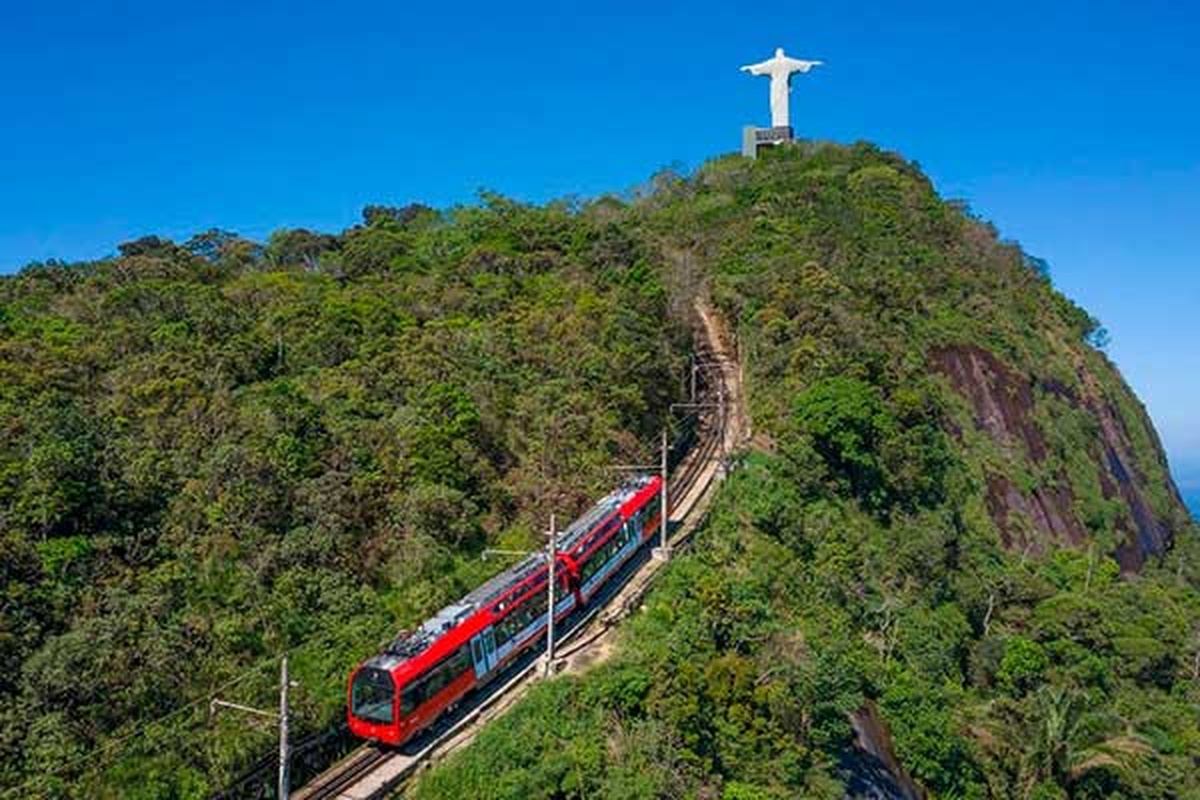
The objective is to revitalize the Tijuca National Park, located in the city of Rio de Janeiro.
The action focuses primarily on the Corcovado area, where the iconic Christ the Redeemer is located.
This unprecedented partnership seeks mainly to promote environmental preservation actions.
Additionally, the team will undertake trail requalifications and improve tourist management.
The site receives more than 1.5 million visitors annually, according to ICMBio data.
-
App Drivers Unite in Major Solidarity Effort to Aid Venezuela Earthquake Victims, Mobilizing the Brazilian Amazon with Donation Campaign

-
Green Roofs on Homes Gain Popularity for Reducing Heat, Noise, and Rain Impact in Brazil
-
Brazilian promises his children to save a river, creates an eco-barrier in his backyard, has already removed more than 40 tons of trash from the water, and even inspires the idea in other states of the country.

-
How a Brazilian company created a system that transforms broken pallets of any brand into new assets, recycles 80 tons of plastic per month, and found a profitable solution to a problem that challenges industries across the country.




The project is part of the Petrobras Socioenvironmental Program. Since 2023, this initiative has expanded its activities with a focus on biodiversity, environmental education, and ecosystem protection.
Thus, the goal is to ensure the sustainability of the conservation unit. At the same time, it seeks to balance human presence with nature protection.
Practical Measures For Environmental Restructuring Are Already Underway
Among the announced measures are actions for the recovery of degraded areas. Maintenance of trails and containment of erosive processes in sensitive areas are also planned.
The project includes initiatives for controlling invasive species and protecting native fauna.
This will be done with technical support and specialized environmental monitoring.
Additionally, informational signs will be installed along the accesses to Corcovado. They will guide tourists and encourage conscious practices within the park.
According to Pedro Fonseca, the park coordinator, the partnership strategically strengthens the management of the unit. He states that the number of visitors has grown by 12% since 2024.
Therefore, investments are urgent to maintain the preservation of the structure and the safety of tourists.
Petrobras reinforces its commitment to the environment.


Agreement Foresees Positive Impact On Visitor Experience
The cooperation agreement between ICMBio and Petrobras has an initial duration of two years.
This period may be renewed, depending on the results observed over time.
During this time, accessibility and environmental education actions for the public will be implemented. The focus is on the integration between nature, tourism, and preservation.
Additionally, training will be provided for guides and staff. They will receive training in sustainable practices, customer service, and first aid.
Another important point is the continuous monitoring of fauna and flora. This will allow tracking the impacts of tourism on the forest ecosystem.
All interventions will follow prior studies.
There will be technical supervision by biologists and conservation specialists.
The goal is to avoid damage to the park’s natural heritage.
Revitalization Affects The Guidelines Of Responsible Tourism In Brazil
The initiative is part of the national agenda for responsible tourism.
The ministries of the Environment and Tourism coordinate this policy in partnership with states and municipalities.
Corcovado, due to its symbolic and ecological relevance, has been included as a priority.
It will be one of the first to benefit from new sustainability investments.
The Tijuca National Park is one of the largest reforested urban forests in the world.
Created in 1961, it houses rare ecosystems of the Atlantic Forest.
Many of the species that live there are threatened with extinction.
Therefore, experts consider it essential to preserve the area to ensure the future of Brazilian biodiversity.
In this way, the joint action represents a model of reference.
It shows how partnerships between the public and private sectors can protect natural areas of high ecological value.
Actions Will Be Monitored Based On Clear Environmental Goals
To ensure transparency, the agreement not only establishes environmental performance indicators but also provides that ICMBio technicians analyze them quarterly.
For its part, the federal agency will be responsible for overseeing all stages and will ensure strict compliance with the environmental standards defined in the project.
Petrobras, on the other hand, will contribute with financial and technical resources, while carrying out all actions in accordance with environmental laws and conservation guidelines.
In this regard, the planning counts on support from specialized ecotourism consultancies, which will ensure that the visitor experience is safe and educational.
Finally, the government hopes to replicate the model in other protected areas.
From then on, similar projects may include new regions of the Atlantic Forest, especially starting in 2026.