





 Portuguese
  English
  Spanish
  2 min of reading


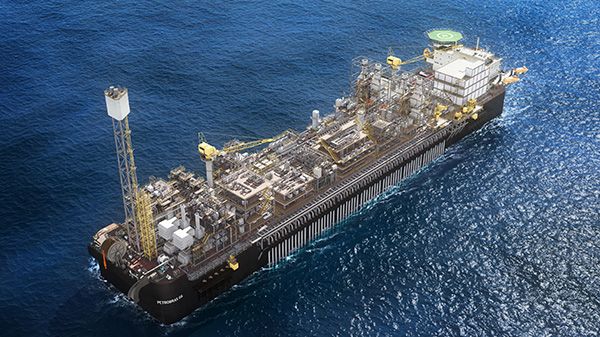
Petrobras’ oil, natural gas, and LNG production in the first quarter of the year registered 2.9 million barrels of oil equivalent per day (boe/d), which represents a decrease of 3.8% compared to the last three months of 2019.
See Other News from Click Oil and Gas:
- Petrobras Expands Pre-Embarkation Testing for Offshore Workers at Airports in Macaé, Vitória, and Others
- Recruitment and Selection for Offshore Contract in Oil and Gas Sector Seeks Vacancies for Maritime Workers Today (04/28)
- The Brazilian Navy’s Submarine Program for 2020 Advances with Several Projects
The company highlighted that the 50% divestment from the Tartaruga Verde field in the Campos Basin and the cessation of operational activities in Africa were responsible for the decrease. Petrobras stated that these operations had an impact of 840,000 barrels of oil per day over the first three months of this year.
According to the company, the numbers for the first quarter of this year represent a significant increase of 14.6% compared to the final months of last year “due to the ramp-up of the seven systems that started production in 2018 and 2019 at the Búzios (P-74, P-75, P-76, and P-77, which have already reached their projected production capacity), Lula (P-67 and P-69), and Berbigão/Sururu (P-68).”
-
90 billion barrels of oil, 1.669 trillion cubic feet of natural gas, and 84% of probable reserves in offshore areas are under the Arctic, and the melting ice that opens maritime routes and exposes this energy treasure is turning the North Pole into a strategic dispute between the USA, Russia, China, and Canada for oil, gas, navigation, and military power.

-
IBS and CBS regulations change credit reimbursement and raise financial alert in the oil and gas industry

-
China puts into operation the largest shallow lithology offshore field in the country, with 79 wells, heavy oil, and a production of 20,000 barrels per day.

-
Petrobras announces an investment of R$ 2.8 billion in Amazonas to expand natural gas production in Urucu and modernize the river fleet, boosting energy, logistics, and the regional economy with new vessels adapted for operation in the Amazon.




The company also added that “when compared to 1Q19, production in 1Q20 was 48.9% higher, reflecting the significant ramp-up of the seven systems that started production in 2018 and 2019 and the company’s strategy to focus its activities on world-class assets in deep and ultra-deep water.”
However, it is worth noting that the measures adopted in response to the coronavirus crisis regarding the company’s production reduction were taken at the end of March and early April, which will result in impacts in the second quarter.
In the Pre-salt, production remained stable even with the entry of new wells into operation, resulting from a higher number of maintenance shutdowns (Lula and Búzios fields).
In its shutdown program for the second quarter, the company revised its schedule to maintain a minimum contingent of people to continue its operations. “We plan to conduct these shutdowns in the second half of this year, maintaining the anticipated impact of 200,000 barrels of oil per day of production for the year, as outlined in the Strategic Plan.”





Be the first to react!