Portuguese
  Spanish


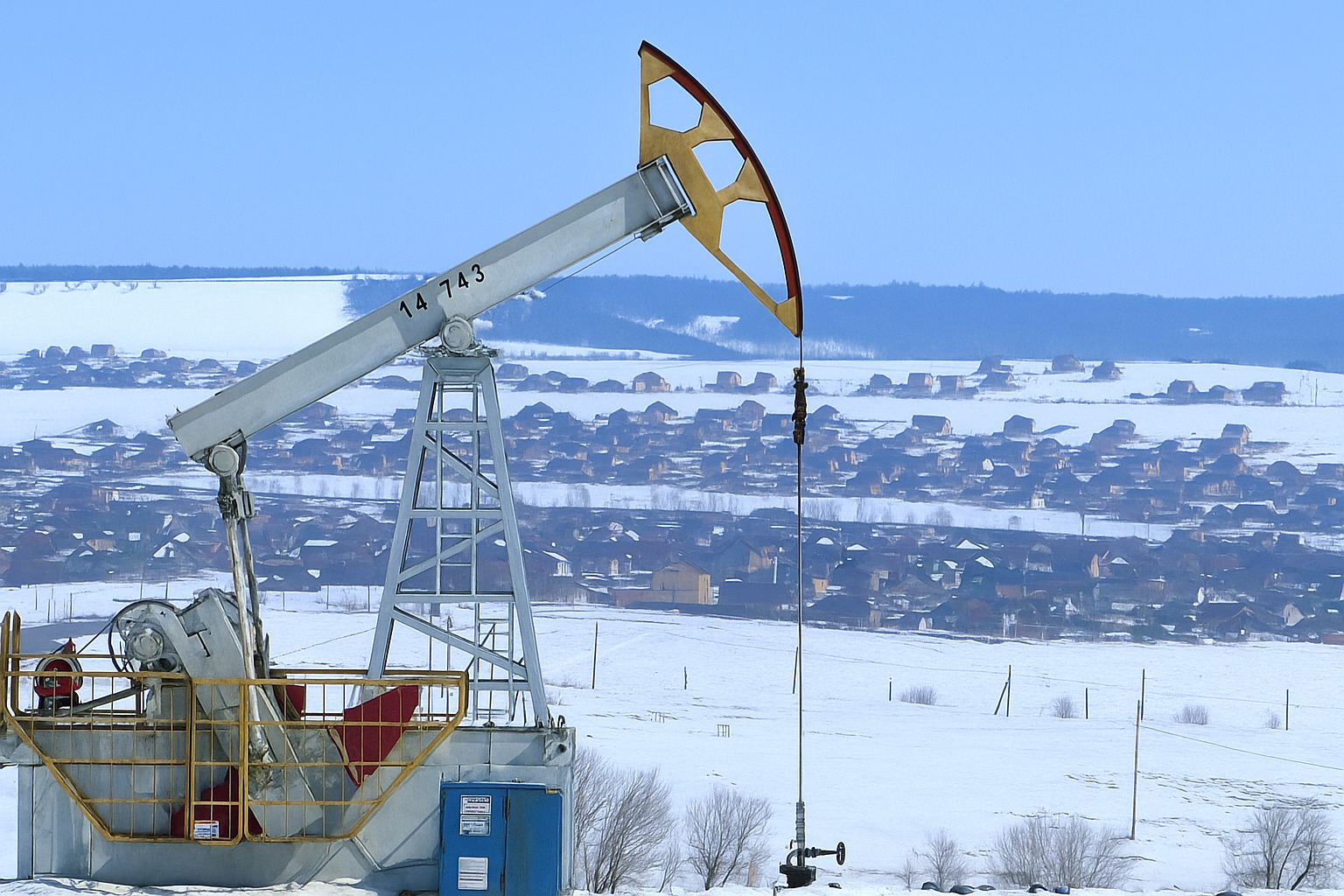

Oil Stabilizes After Diplomatic Gesture from Trump, Prioritizing Peace and Reducing Tension Over Russian Exports.
The oil stabilizes in a scenario that combines international politics, global economy, and investor expectations. This stability arises not only from momentary fluctuations but also from a deeper context.
The announcement that Donald Trump would prioritize peace negotiations in Ukraine reduced pressures on Russian exports. As a result, oil prices remained balanced, which was interpreted as a temporary sign of confidence by the markets.
Although the movement seemed modest, it represents a significant pause in the tensions that have been dominating the energy sector. Since the conflict began, investors have feared severe restrictions on Russian oil.
-
Oil production grows in Rio, but reserve replacement raises a warning sign

-
Petrobras is expected to complete the drilling of the Morpho well in the Foz do Amazonas in August 2026, the first well in the Equatorial Margin, an oil frontier that the ANP estimates at more than 30 billion barrels and could redraw the map of Brazil.

-
Oil returns to the center of concerns with tension between the US and Iran

-
IEA reduces forecast for global oil demand in 2026 after impacts of the Middle East crisis


These restrictions could create instability and increase energy costs in various parts of the world. However, with the signaling of peace, this scenario has lost strength, at least for now.
Moreover, the stability of oil also reflects the maturation of the global market, which has learned to cope with crises and uncertainties in complex economic cycles. The experience of the past decades shows that prices tend to fluctuate, but positive signals of negotiation quickly balance expectations.
The Historical Weight of Oil Stability
Historically, moments when oil stabilizes reflect not only the balance of supply and demand but also global political rearrangements.
Since the crises in the Middle East in the 1970s and 1980s, the world has learned that any instability in producing regions directly affects the price of oil.
For this reason, even small changes in the rhetoric of international leaders can alter expectations and reduce pressure on the markets. In this sense, the meeting between Trump and Vladimir Putin represented more than a diplomatic conversation.
It symbolized an attempt to reposition the United States on the international chessboard, prioritizing peace instead of harsh sanctions.
Thus, investors began to observe developments with greater caution, but also with hope that stability would be maintained.
Another relevant point is that the stability of oil also influences investment decisions in exploration and production, allowing companies to plan long-term projects without the pressure of extreme fluctuations.
The Immediate Impact on Prices
In practice, the market reacted moderately. Brent oil registered a decline of only US$ 0.6, while West Texas Intermediate rose US$ 0.2.
Even though these variations were small, they demonstrated the momentary confidence of investors. After all, in light of a possible peace agreement, the flow of Russian oil could increase, expanding global supply and averting a price shock.
Furthermore, analysts pointed out that the market had already considered more negative scenarios. Therefore, the signaling of moderation brought some relief.
This also reinforces the role of expectations in the energy sector. The mere announcement of changes can be enough to reverse upward or downward trends.
It is important to highlight that oil futures contracts function as a thermometer of expectations, anticipating movements before they occur in the physical market.
Trump, Zelensky, and the Dilemmas of Peace
As Trump announced his intention to meet with Ukrainian President Vladimir Zelensky and European leaders, it became clear that significant obstacles still exist.
While the possibility of peace is real, many European countries resist any agreement that involves territorial concessions.
This dilemma shows how geopolitics still holds great influence over the energy market.
Despite this, Trump’s gesture of not imposing immediate sanctions against countries like China, which continue to buy Russian oil, reinforced the idea of a softer scenario.
This, in turn, reduced the risks of supply disruptions and contributed to the moment when oil stabilizes.
The Market and the Memory of Energy Crises
To better understand this scenario, it is necessary to remember that oil has always been linked to moments of political tension.
From the Arab embargo of 1973, which skyrocketed prices and generated a global crisis, to the invasion of Kuwait in 1990, the energy sector has never strayed from geopolitical disputes.
Therefore, when leaders like Trump and Putin announce peace negotiations, the market reacts immediately, as it knows that the equilibrium of oil depends on international cooperation.
This history helps explain why investors scrutinize every detail of government leaders’ speeches.
Even a more conciliatory tone can be enough to transform a scenario of uncertainty into an environment of relative stability.
Thus, the current pause in pressures fits into a long tradition of dependency between diplomacy and energy.
Furthermore, recent stability allows governments and companies to plan more consistent energy strategies, avoiding emergency decisions that could lead to losses.
Expectations About Monetary Policy
In addition to geopolitics, another factor influences the sector: the decisions of the Federal Reserve.
Investors awaited comments from Jerome Powell at the Jackson Hole meeting, an event that traditionally guides global monetary policies.
If the Fed adopts interest rate cuts, this could stimulate economic growth and consequently increase demand for energy.
Thus, the equilibrium of oil depends not only on diplomacy but also on the trajectory of the global economy.
If interest rates remain high for a longer time, economic slowdown could reduce energy consumption.
However, if there are cuts, the demand for oil may rise, pushing prices higher.
In this way, the current stability proves fragile, subject to factors beyond foreign policy.
Additionally, the interconnection of global markets means that economic decisions in one continent quickly resonate in oil prices in another, demonstrating the complexity of the sector.
An Uncertain Future, But With Clear Lessons
Although the market celebrates the moment when oil stabilizes, it is worth remembering that peace is still under negotiation.
The resistance of some European countries and uncertainties regarding Ukraine’s position keep the scenario undefined.
Moreover, Trump and Putin’s next moves could quickly alter global perception.
However, even amidst uncertainty, this episode offers an important lesson: oil will continue to serve as a thermometer of international relations.
As long as there is no definitive solution to the conflicts, stability will only be partial.
Still, the current episode demonstrates how diplomacy can function as a balancing factor.
Another point to emphasize is that oil stability can encourage investments in energy infrastructure, including refineries, ports, and export terminals, creating positive effects in the global economy.
Stable Oil as a Reflection of Diplomacy
In the end, the message that can be drawn is that oil stabilizes whenever signs of cooperation prevail over hostility.
Although the balance is temporary, it shows that peace has the potential to reduce risks and create a more predictable environment for investors and consumers.
Therefore, monitoring international policy will continue to be essential to understand the future of global energy.
After all, oil is not just a commodity: it reflects the choices of leaders and the pathways of the global economy.