






 Portuguese
  Spanish


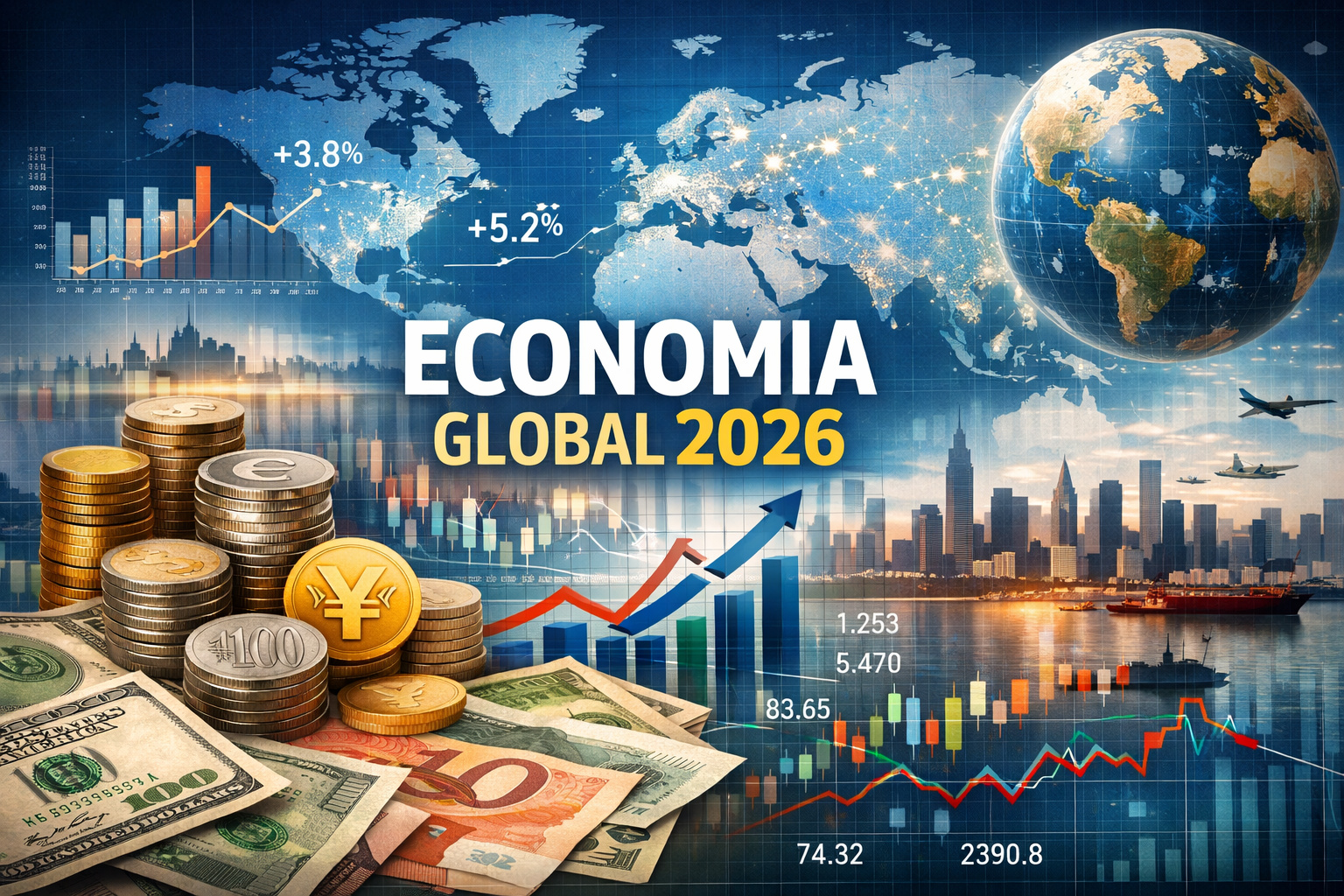


The Advance Projected By International Organizations Indicates Stability Of The Global Economy, However Conflicts, High Interest Rates And Regional Slowdown Place Brazilian Growth Below The Global Average Next Year

The main international organizations project that the global GDP in 2026 is expected to grow at a rate very close to that observed in 2025. Although the numbers indicate some stability, the international economic scenario remains marked by structural uncertainties, geopolitical conflicts, and significant differences between developed and emerging economies.
Estimates for global economic expansion in 2026 range between 2.4% and 3.1%, a range similar to that recorded in 2025, when projections varied between 2.5% and 3.2%. Nevertheless, analysts warn that this global growth will not be evenly distributed, which tends to widen inequalities between countries.
The information was disclosed by recent reports from international organizations, such as the IMF, OECD, Fitch, and PwC, which monitor global economic performance and serve as references for governments and investors.
-
Brazilian Startup Turns Coffee Grounds into Plant-Based Leather, Cutting Water Use by Over 50 Times for High-Impact Sustainable Fashion

-
Eco Invest Auction Aims to Unlock $10 Billion in Investments, Focusing on Green Fertilizers, Critical Minerals, Batteries, and AI for Clean Industry in Brazil

-
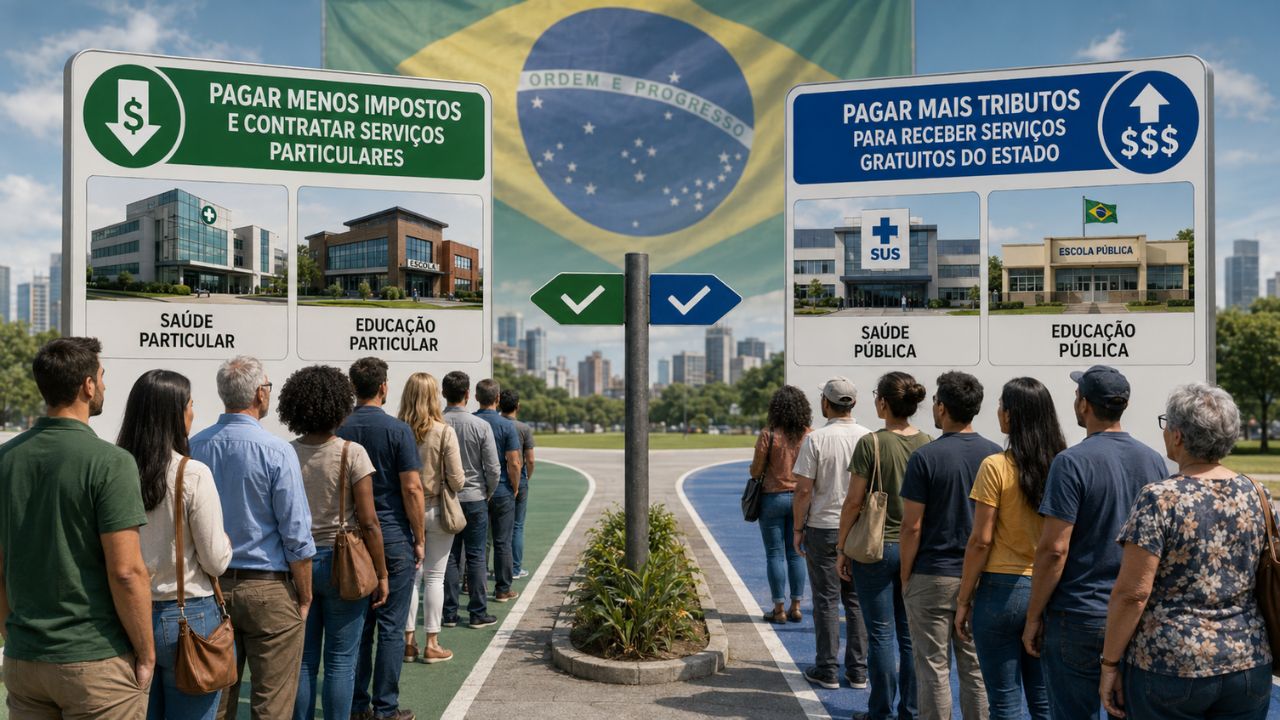
Half of Brazilians Prefer Lower Taxes with Private Health and Education, While 44% Opt for Higher Taxes for State-Provided Services, Datafolha Survey Reveals

-
Brazil’s Most Expensive Toll Rises to R$ 40.60 on Route from São Paulo to the Coast, Nearly Matching Bus Fare to Santos



Global Projections Indicate Resilience, Despite Tensions And Conflicts
According to the credit rating agency Fitch, the global economy is expected to grow 2.4% in 2026. Meanwhile, the consultancy PwC projects slightly higher growth of 2.5%. Both estimates are below the projections of the OECD, which calculates an advance of 2.9%, and the IMF, which maintains a more optimistic projection of 3.1%.
This performance reflects a global economic resilience, even in the face of persistent challenges. These include armed conflicts in different regions, the prolonged impact of restrictive monetary policies, and the effects of still-fragile global supply chains.
One recent highlight was the growth of the United States economy in the third quarter of 2025. The country recorded an annualized increase of 4.3%, the fastest pace in two years. Still, for 2026, estimates indicate a slowdown, with growth ranging between 1.6% and 2.1%, depending on the institution.
G20 Countries Expected To Grow More Than Brazil In 2026
While global growth remains relatively stable, Brazil’s position in the international scenario is noteworthy. At least seven G20 countries are expected to grow more than the Brazilian economy in 2026. These include India, Indonesia, China, Saudi Arabia, Argentina, Turkey, and Australia.
Moreover, Spain, while not formally part of the G20 but participating as a permanent guest, also shows projections for growth exceeding those of Brazil. The United States, in turn, is expected to record growth slightly higher than Brazil’s, according to the IMF and PwC.
The OECD projects identical growth for Brazil and the U.S., both at 1.7%, while Fitch is the only institution forecasting a slightly superior Brazilian performance compared to the U.S. in 2026.
These numbers reinforce the perception that, despite global stability, Brazil faces specific difficulties in accelerating its economic activity in the medium term.
Brazil Expected To Grow Below Global Average And Slow Down In 2026
Projections indicate that the Brazilian GDP in 2026 is expected to grow between 1.6% and 1.9%, falling below the global average. Additionally, international organizations bet on a slowdown of the Brazilian economy compared to 2025.
According to the Focus Bulletin, published by the Central Bank on December 29, the financial market estimates a growth of 1.80% for the GDP in 2026. For 2025, the expectation is for growth of 2.26%, confirming the trend of losing momentum.
The IBGE is only expected to release the official result of the economic activity for 2025 on March 3, 2026, while the Ministry of Finance maintains a more optimistic outlook. The ministry projects growth of 2.2% in 2025 and 2.4% in 2026.
Despite this difference in estimates, the consensus is that Brazil will continue to grow at a pace lower than that of other major economies and below the global average, which may limit social and fiscal gains in the short term.
In the end, the scenario indicates that, although the world maintains stable growth, internal challenges will be decisive in defining Brazilian performance in the coming years.
Do you believe that Brazil will be able to break this cycle of growth below the global average, or will it remain trapped in a slower economic pace?









País sem futuro, minado pala incompetencia e corrupção !
Não tarda entraremos em recessão, anos Dilma vem aí, incompetencia e corrupcao generalizada marca do PT !
O Brasil tem crescido próximo a média global, oque é péssimo uma vez que ainda somos um pais pobre (Brasil precisa crescer 5% acima da média entre 10 e 15 anos para que a renda per capita alcance as menores da Europa). Embora nem o próprio governo consiga entender porquê : Deve crescer pouco mais em 25 (ente 2,5 e 3,3%) e se o governo tiver só um pouco de juízo e o presidente feche a matraca podemos chegar a 3,5 a 5%. (vide BONUS DEMOGRÁFICO)
X