Portuguese
  Spanish


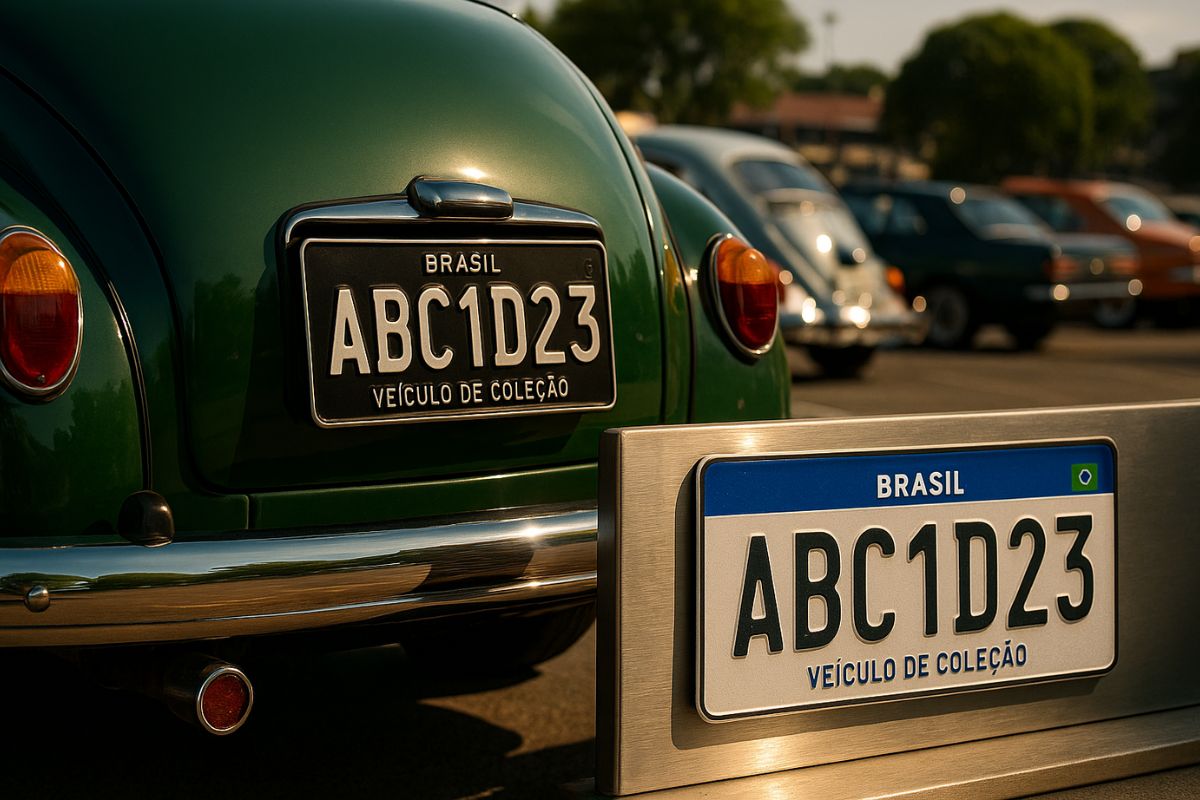


A Symbol of Prestige for Historic Cars, the Black Plate Lost Its Dark Background with the Adoption of the Mercosur Model, Generating Protests Among Collectors.
The black plate was created in September 1997, with the implementation of the Brazilian Traffic Code (CTB), and since then it has become one of the greatest symbols of recognition for collection cars in the country. More than just an identification item, it represented authenticity, originality, and historical status. However, with the adoption of the Mercosur standard, this classic look gave way to a new format, which, while maintaining legal benefits, erased part of the tradition that marked generations of collectors.
According to Vox Piauí, the change occurred with the regulation from the National Traffic Council (Contran), which incorporated collection vehicles into the new vehicle identification rules.
The impact was immediate: whereas before the black background was synonymous with exclusivity, now the plate features a white background with silver characters, generating dissatisfaction among classic car enthusiasts.
-
End of an era in Brazil: beloved sedan by Brazilians is discontinued despite having a 2.0 engine with 151 hp, CVT transmission, 466-liter trunk, and up to 650 km of range.

-
New Law Proposal in Brazil Could Heavily Penalize Drivers: Dangerous Overtaking May Become a Serious Offense with Fines Increased Tenfold and a 12-Month License Suspension; Update on 2026 Progress

-
Electric Revolution: Watts W125 Motorcycle Offers 160 km Range, 90 km/h Speed, and Affordable Price Starting at $3,000
-
General Motors Replaces Over a Thousand Workers with 50 Cobots at Electric Vehicle Plant, UAW Union Criticizes Move Amid Industry’s Automation Push




How the Black Plate Emerged in Brazil
The black plate was born with the purpose of certifying vehicles that preserved their original characteristics. To obtain it, it was necessary to go through a rigorous inspection conducted by accredited entities, which checked every detail of conservation and authenticity of the model.
The approved car received the certification of collection vehicle and proudly displayed the black background with gray letters, immediately recognized on the streets.
This model persisted for over two decades and helped enhance the value of thousands of classic automobiles in Brazil. For many collectors, having the black plate was the pinnacle of legitimacy and a sign that the car was not just old, but a preserved heritage.
The Impact of the Mercosur Standard
The new Mercosur plate system emerged in 2014, aiming to standardize identification among Brazil, Argentina, Paraguay, and Uruguay.
In Brazil, it became mandatory in 2020, replacing the old combination of three letters and four numbers with four letters and three numbers—expanding the capacity for registrations.
With Council Resolution No. 957 from Contran, dated May 17, 2022, collection vehicles were also incorporated into the new model. Thus, the classic black plate ceased to exist visually, although its benefits were maintained.
For collectors, the problem is not in the preserved rights, but in the loss of the visual identity that distinguished their vehicles in traffic.
Reactions from Collectors
The change generated a strong reaction among clubs and federations of vintage vehicles. Many argue that the aesthetics were part of the charm and the aura of exclusivity.
The Brazilian Federation of Antique Vehicles (FBVA) even launched a petition calling for the return of the black background within the Mercosur standard, precisely to restore the tradition.
Despite the pressure, Contran maintained the current model, arguing that international standardization is essential for unifying registrations.
Even so, the feeling of symbolic loss remains, especially since the black plate was, for many, an immediate calling card of authenticity.
Preserved Benefits, Questioned Identity
Although the aesthetics have changed, the guaranteed rights remain. The old Certificate of Originality was replaced by the Collection Vehicle Certificate (CVCOL), which guarantees, for example, exemption from modern adaptations that were not part of the car’s original configuration, like three-point seatbelts or additional lights.
In practical terms, the cars continue to be legally protected as automotive heritage, but they lost the visual icon that distinguished them in traffic.
For collectors and enthusiasts, the current debate is not legal, but cultural: the black plate was part of the history, and the replacement by the white-silver model is seen as an emptiness of its representation.
The black plate, since 1997, has helped to enhance the classic vehicle market in Brazil, becoming a symbol of prestige.
With the Mercosur standard, the benefits were preserved, but the visual that marked the tradition was left behind, generating controversy among collectors.
And you, do you believe that the design change took away the charm of the black plate or do you consider that the most important thing is the legal certification?
Leave your opinion in the comments; we want to hear from those who live this passion in practice.