Portuguese
  Spanish


Study From the University of St. Andrews Reveals That Floating Giant Planets Can Form Miniature Planetary Systems Even Without the Presence of a Star.
Researchers from the University of St. Andrews have revealed that floating giant planets can form miniature planetary systems even without the presence of a star.
The study was published on the arXiv preprint server and utilized data from the James Webb Space Telescope (JWST).
These objects have 5 to 10 times the mass of Jupiter and do not orbit stars. Instead, they wander freely through space, emitting radiation primarily in the infrared.
-
Estonia Constructs Bunkers and Trenches on Russian Border to Strengthen NATO Defense and Signal Baltic Readiness

-
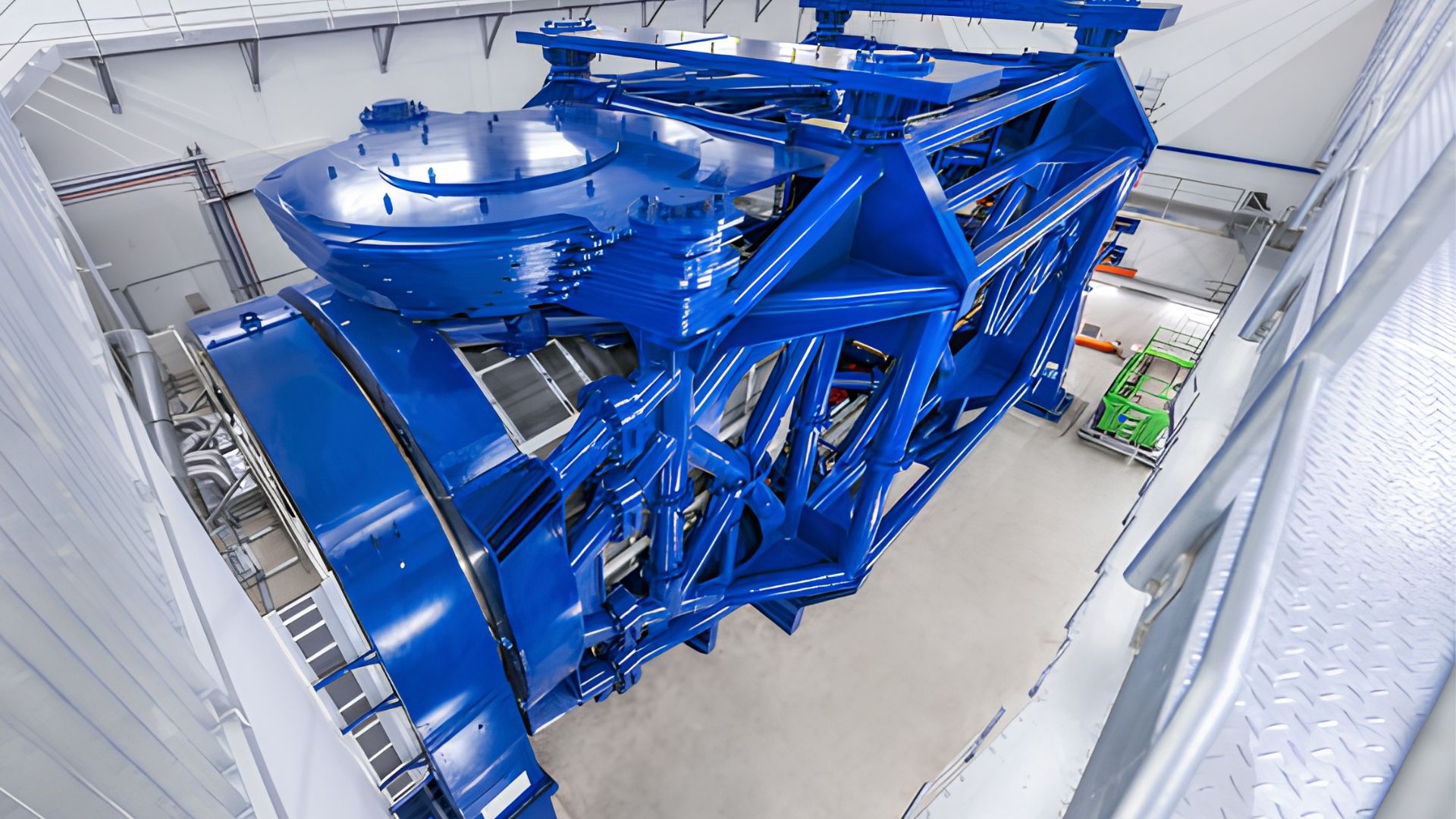
Heidelberg’s 670-ton, 25-meter medical machine rotates 360 degrees to target hard-to-reach tumors with ion beams without surgery.

-
3-Billion-Year-Old Crater May Be Earth’s Oldest Known, with Tiny Minerals Helping Scientists Solve a Billion-Year Mystery

-
Giant Asteroid Impact Crater in Australia Suggests Possible “Gold Rain” 790,000 Years Ago




Most importantly, they exhibit characteristics that may address fundamental questions in astrophysics.
What Are Floating Planets
These celestial bodies resemble giant planets, but differ in that they are not connected to stellar systems. Research indicates that they form in a manner similar to stars, from the collapse of giant gas clouds.
However, they do not accumulate enough mass to initiate nuclear fusion reactions. Another possibility is that they form orbiting a star and are later ejected into interstellar space.
Detailed Observations
The team from the School of Physics and Astronomy at St. Andrews, along with scientists from the US, Italy, Ireland, England, and Portugal, observed eight of these young objects to study their initial phase.
The measurements were conducted between August and October 2024, using two high-sensitivity infrared instruments from the JWST. Spectroscopic data was obtained with unprecedented coverage and sensitivity for this type of object.
Evidence of Planetary Formation
The analyses confirmed that the masses of these bodies are comparable to that of Jupiter. In six of them, excess emissions in the infrared were detected. This is an indication of the presence of hot dust disks, structures that function as nurseries for planet formation.
Additionally, researchers found emission of silicate grains in these disks. This signal points to dust growth and crystallization — initial processes in the formation of rocky planets.
This is the first time silicate emission has been identified in objects with planetary mass. Previously, it had only been observed in stars and brown dwarfs.
Sufficient Time to Create Worlds
Previous studies from St. Andrews indicate that the disks around these floating planets can last millions of years. This period is sufficient for the formation of complete planets, even in such small systems.
According to Dr. Aleks Scholz, the leader of the research, the results show that worlds with mass similar to that of giant planets can create systems similar to ours, but much smaller — up to 100 times more compact.
He emphasizes that it is still uncertain whether these systems actually exist, but the evidence indicates that the potential is present.
Implications for Astronomy
For the lead author, Dr. Belinda Damian, the study demonstrates that the building blocks of planets can emerge even in objects slightly larger than Jupiter and without being linked to stars.
Therefore, the formation of planetary systems is not exclusive to stars. Solitary worlds, dispersed in space, can also give rise to their own sets of planets.
Study available at arxiv.