






 Portuguese
  Spanish


Carnivorous Plants Use Chemical And Mechanical Traps To Catch Insects, Digest Proteins And Survive In Poor Soils, Revealing An Extreme Strategy Of Plant Nutrition.
The idea of a plant that “eats” animals seems like science fiction, but for millions of years certain plants have developed an impressive biochemical strategy: to capture insects, spiders, and other small invertebrates, dissolve tissue and absorb nutrients that the soil does not provide. These species, commonly known as carnivorous plants, do not feed for pleasure nor exhibit animal behavior, but fulfill a specific ecological function: to compensate for the lack of nitrogen and phosphorus in extremely poor soils.
Although photosynthesis remains the basis of energy, it is the proteins obtained from prey that ensure growth and reproduction in environments such as acidic wetlands, peat bogs, and moist fields. It is this set of evolutionary solutions — chemical, structural, and physiological — that fascinates botanists and ecologists.
Poor Soils, Rich Biological Intelligence
To understand why carnivorous plants exist, it is necessary to look at the soil where they live. Regions of swamp, marshes, and peatlands are often water-saturated and exhibit:
-
Brazilian Entrepreneur Turns Door-to-Door Jewelry Sales into a Family Business Empire with Over 70 Stores

-
$75 Million Bridge in Brazil Opens to Connect Cities, Create Jobs, and Cut Travel Time from 30 to 2 Minutes; Spanning 1.24 km, It’s Among the Country’s Largest and Ends Decades of Ferry Queues.

-
Brazilian Farmer Builds 8-Ton Tractor from Army Truck Engine, Plants Over 100 Hectares of Soybeans
-
11-Year-Old Entrepreneur Turns Fear of Bees into Honey Lemonade, Wins $60,000 on Shark Tank, Secures Whole Foods Deal, and Expands Brand Across U.S. Stores




- low nitrogen availability,
- low phosphorus availability,
- acidic pH,
- slow decomposition of organic matter.
Under these conditions, typical plants cannot obtain sufficient nutrients. The evolutionary solution found by genera such as Nepenthes, Sarracenia, Drosera, and Dionaea was to invest in structures that capture prey and allow the extraction of nitrogenous compounds.
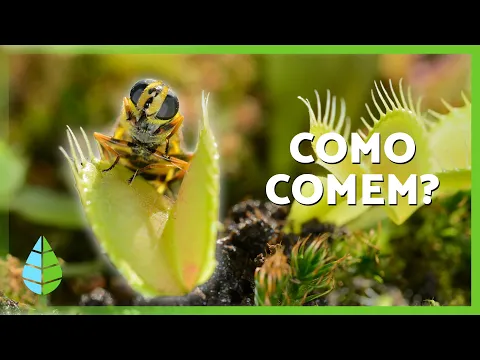

In other words, these plants do not hunt with intention, but instead create passive and chemical traps that significantly increase the chance of contact with prey.
Capture Mechanisms: Miniature Biological Engineering
What makes carnivorous plants so fascinating is not just the fact that they capture animals, but the variety of mechanisms they have developed over evolution. The four most studied are:
1. Mechanical Pressure Traps (Trigger)
Example: Dionaea muscipula (venus flytrap).
The leaves have sensory hairs; when touched twice in quick succession, the lobes close rapidly. It is one of the few plants with rapid movement controlled by turgor gradient.
2. Adhesive Traps (Glue)
Example: Drosera (sundews).
They produce sticky mucilage on tentacles that immobilize the prey. Then, the leaf gradually curls, increasing the contact area for digestion.
3. Jar Traps (Passive)
Example: Nepenthes (tropical pitchers) and Sarracenia (American pitchers).
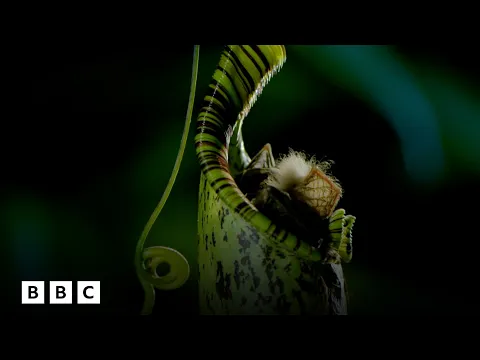
The leaves form deep chambers with attractive nectar, where insects fall and cannot climb due to slippery wax or inclined edges. Inside the jar, there is digestive fluid and, in some species, symmetric bacteria that aid in degradation.
4. Suction Traps
Example: Utricularia (aquatic plant).
They have vesicles that create internal vacuum; when a trigger is activated, the wall of the vesicle sucks in water and small invertebrates. It is one of the fastest known plant mechanisms.
These morphological differences show that “plant carnivory” is not a unique event, but a set of independent solutions that arose multiple times in evolution.
Digestion: Chemistry Without Teeth
After capture comes digestion, and here there is another interesting point: plants do not have stomachs, teeth, or enzymes like animals, but they can convert prey into nutrients using:
- proteolytic enzymes (break down proteins),
- phosphatases (release phosphates),
- chitinases (act on chitin in exoskeletons),
- symmetric bacteria, in some species.
Species like Nepenthes have reached the point of harboring specific internal microbiomes, adjusted to the pH of the digestive fluid. It is a plant way of outsourcing part of the digestion — a partnership that has evolved over millions of years.
It is important to highlight that carnivorous plants do not chew prey and do not seek calories from them; the focus is on nitrogen and minerals, which become scarce in the waterlogged soils where they live.
Ecology: What Function Do These Plants Fulfill?
In tropical and humid temperate ecosystems, carnivorous plants play important ecological roles:
- they control populations of small insects,
- they generate microhabitats inside the jars,
- they sustain communities of microorganisms,
- they provide water and nutrients for small animals.
The case of Nepenthes is emblematic: some jars collect water and serve as a habitat for insects, larvae, and even small amphibians that live inside them. The jar ecology is so complex that some researchers call these leaves “portable ecosystems”.
Geographical Distribution: Where Do Carnivorous Plants Live?
Despite the tropical imagination, the distribution is wide. There are carnivorous plants:
- in humid tropics (Southeast Asia, Amazon, Central Africa),
- in cold peatlands (North America, Northern Europe),
- in coastal regions,
- in lakes and swamps.
This shows that the determining factor is not the climate, but the type of soil. Researchers point out that typical carnivorous plants arise in environments where:
- there are oligotrophic soils, poor in nutrients,
- competition is low,
- water is abundant,
- the pH is acidic.
This pattern explains why foggy tropical mountain regions and cold peat bogs in Siberia can harbor carnivorous plants.
Common Myths And What Science Corrects
The public often has an exaggerated or mistaken view of this group. Among the main myths are:
- “they eat large animals” — this is not true; the diet involves small invertebrates.
- “they are dangerous to humans” — completely false.
- “they only live in tropical climates” — distribution is much broader than one imagines.
- “they replace photosynthesis with meat” — false; they remain photosynthetic.
What truly defines a carnivorous plant is a functional sequence: attraction → capture → digestion → absorption.
When Botany Looks Like Engineering
Carnivorous plants show that evolution is not linear or predictable. Without nerves, muscles, or active behaviors, they have managed to solve an ecological problem — nutrient scarcity — with mechanics, chemistry, and microsymbiosis.
In the end, what impresses is not the fact that they eat insects, but the biological engineering involved, which includes sensors, triggers, mucilages, enzymes, and even internal microecosystems. This raises an inevitable question: if plants can reach this level of complexity merely by reacting to the environment, what other solutions might evolution create in silence, without us noticing?
The answer may be waiting in an acidic swamp, inside a jar full of water and microscopic life.


